

Data centers are consuming staggering amounts of water for cooling, with certain U.S. areas using seven billion liters annually. Traditional evaporative cooling uses drastically more water than conventional air cooling as rack densities increase. Industry experts identify three main alternatives: closed-loop systems, direct-to-chip cooling, and immersion cooling.
The shift toward liquid cooling is driven by physics rather than preference. Increasing power demands and chip temperatures are pushing the limits of single-phase cooling, making liquid solutions necessary. Companies like Microsoft are prioritizing closed-loop designs that eliminate water consumption.
“As data centers are continuing to evolve, as there’s more high density and higher cooling needs, we’re bringing the cooling closer to the chips. So, either at the rack level, at the server level, or at the chips themselves.”
— Jenny Gerson, Senior Director of Sustainability, DataBank
Innovation timelines have compressed dramatically. HVAC product development once required three to five years, but today’s rapid chip evolution demands faster adaptation. Geographic considerations also shape strategies, with warmer climates like Arizona requiring different approaches than cooler regions where free cooling systems can be utilized.
Immersion cooling represents the frontier, submerging entire racks in dielectric fluids to capture 100% of heat, though operational challenges remain.
For the complete analysis on data center cooling evolution, read the full article at ITPro.

Sign Up For Our Resource Library
Enjoying our resource? Get the latest news and articles delivered straight to your inbox.
Can’t see the form? Click here.
Share Article

This article examines how data centers can provide communities with the required compute resources while also limiting negative impacts on the environment and communities, even deliver a net-positive impact.
Learn how data centers are decarbonizing operations and leading the way toward smarter, more sustainable infrastructure.
AI data centers' explosive power growth seems alarming, but innovative energy storage, virtual power plants, and grid flexibility solutions are already addressing demand without requiring panic-inducing infrastructure overhauls.
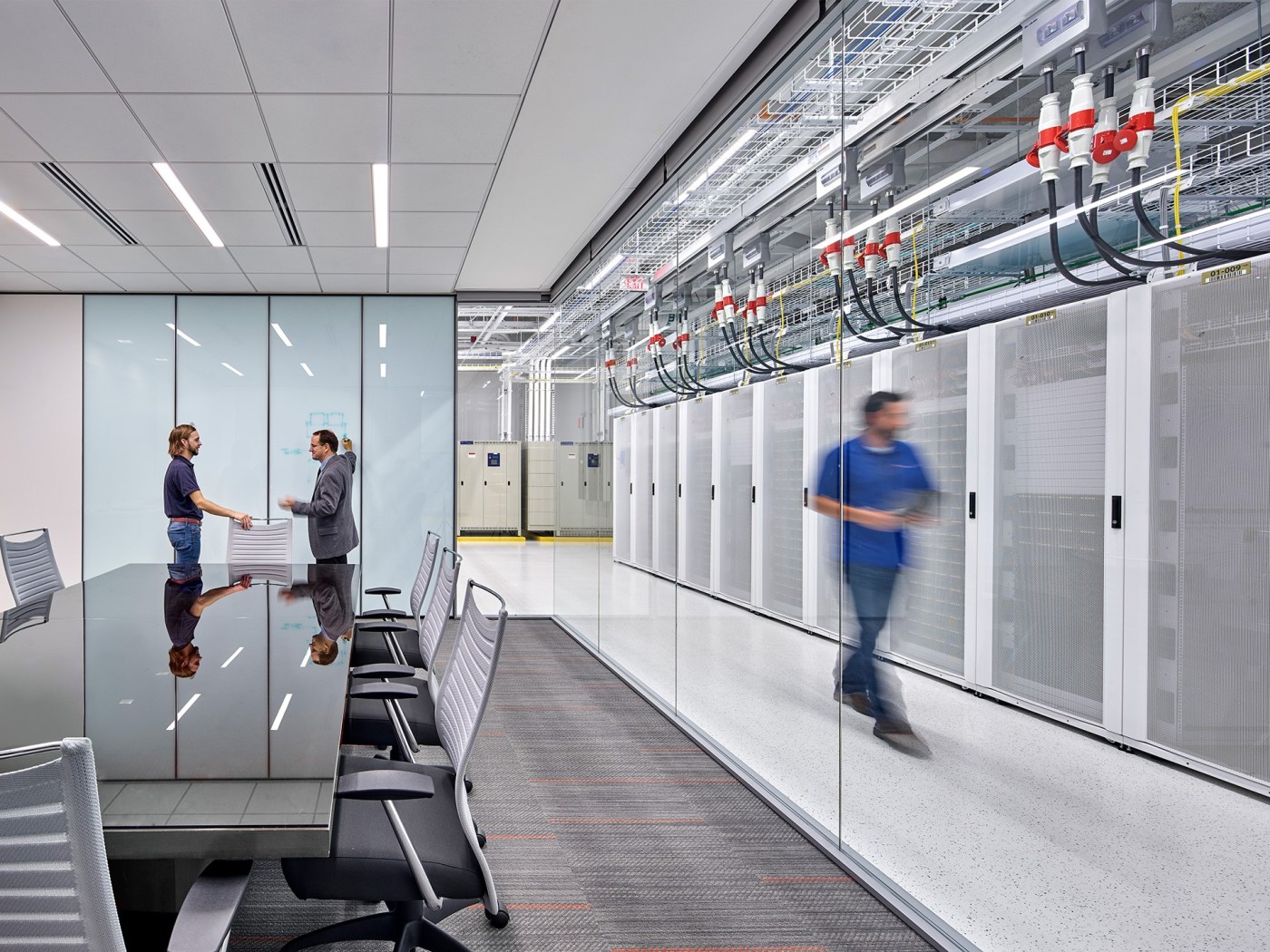
Discover the DataBank Difference today:
Hybrid infrastructure solutions with boundless edge reach and a human touch.
Tell us about your infrastructure requirements and how to reach you, and one of our team members will be in touch shortly.
Can’t see the form? Click here.
Let us know which data center you'd like to visit and how to reach you, and one of our team members will be in touch shortly.
Please understand that we might not be able to accommodate every request for a physical data center tour.
Please allow a minimum of 24-48 hours for a response.
Can’t see the form? Click here.
Enjoying our resource? Get the latest news and articles delivered straight to your inbox.
Can’t see the form? Click here.
Can’t see the form? Click here.