

NPR examines the growing buzz around orbital data centers, driven in part by Elon Musk’s announcement that SpaceX plans to put data centers into orbit to tap the unlimited solar power of space. As AI drives global data center electricity consumption toward nearly 1,000 terawatt-hours annually by 2030, the appeal of power-free computing in orbit is real — but so are the obstacles.
Replicating even a modest 100-megawatt data center in space would require a facility 500 to 1,000 times larger than the International Space Station’s solar array. Add the challenges of heat dissipation in a vacuum, laser-based data transmission between satellites, and launch costs that Google believes must drop by a factor of five before orbital data centers make financial sense, and the timeline grows murky fast.
“It seems like there’s a lot of ifs and a lot of advancements that would have to occur. No one in data center land is losing any sleep.”
– Raul Martynek, CEO, DataBank
NPR profiles DataBank’s IAD1 facility in Ashburn, Virginia — 144,000 square feet consuming around 13 megawatts of power — to illustrate the constant maintenance, upgrades, and on-site workforce that keep terrestrial data centers running, and that no orbital alternative can easily replicate.
Read the full article at NPR.

Sign Up For Our Resource Library
Enjoying our resource? Get the latest news and articles delivered straight to your inbox.
Can’t see the form? Click here.
Share Article

AI workloads are reshaping data center infrastructure with extreme power fluctuations and cooling demands that are forcing operators to rethink everything they build.

Despite AI hype and unprecedented capital deployment, 2026 will see tighter financing, constrained power, and gradual enterprise adoption as the industry returns to fundamentals.
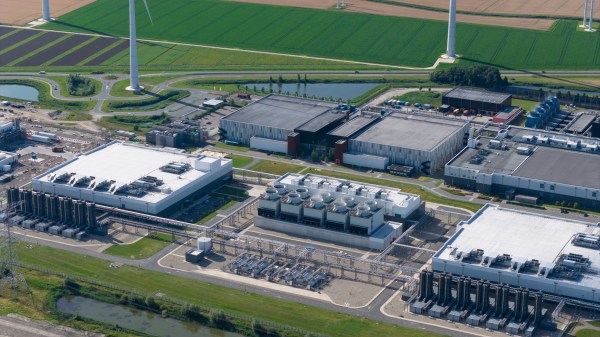
The fundamentals that worked for decades no longer apply in data center construction. Single campuses now require 4,000 workers instead of 750 as the industry adapts to unprecedented scale.
Discover the DataBank Difference today:
Hybrid infrastructure solutions with boundless edge reach and a human touch.
Tell us about your infrastructure requirements and how to reach you, and one of our team members will be in touch shortly.
Can’t see the form? Click here.
Let us know which data center you'd like to visit and how to reach you, and one of our team members will be in touch shortly.
Please understand that we might not be able to accommodate every request for a physical data center tour.
Please allow a minimum of 24-48 hours for a response.
Can’t see the form? Click here.
Enjoying our resource? Get the latest news and articles delivered straight to your inbox.
Can’t see the form? Click here.
Can’t see the form? Click here.