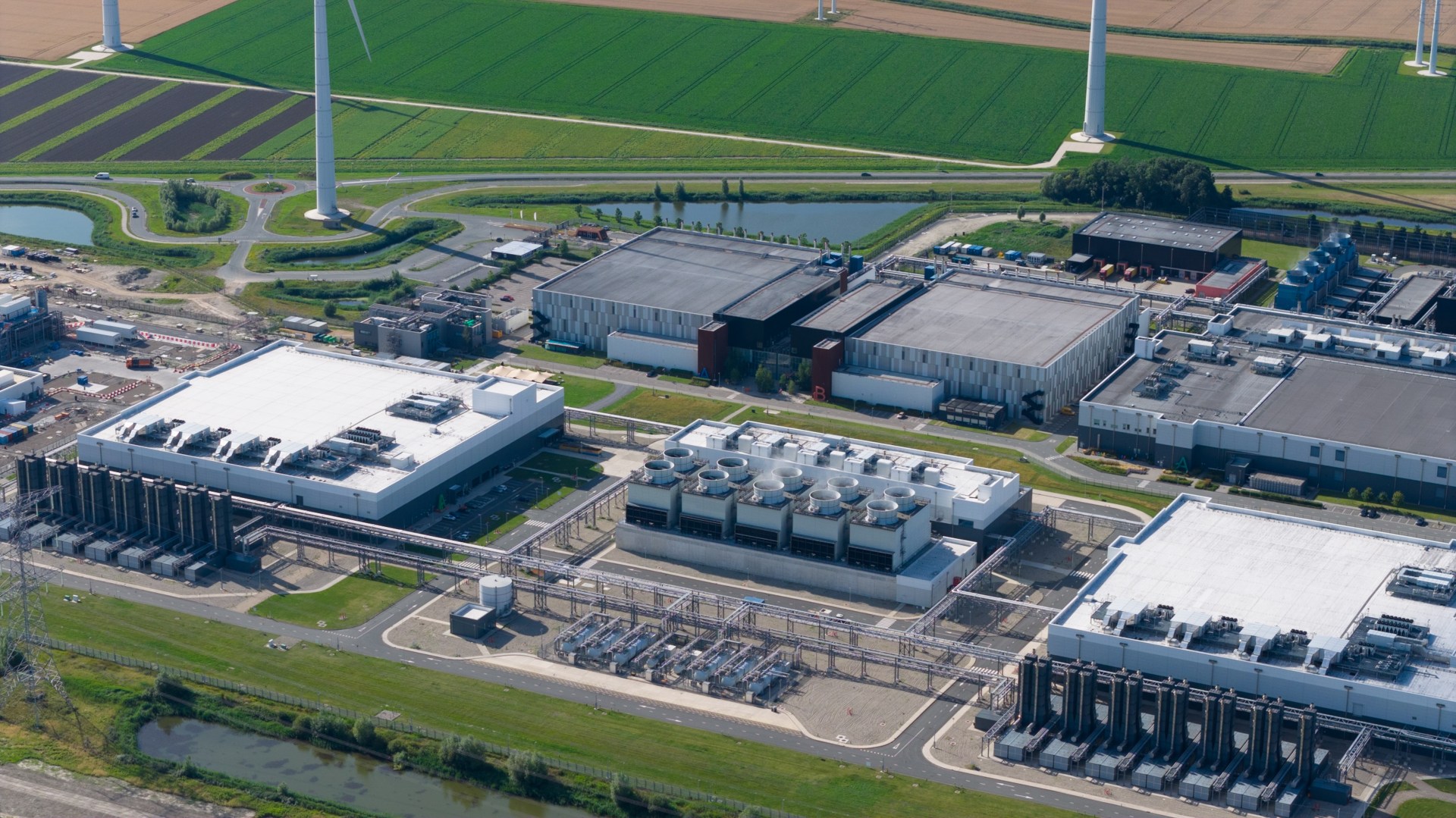
The data center construction industry enters 2026 facing challenges that would have seemed unimaginable just two years ago. Rapid growth is straining every aspect of traditional construction approaches, from securing skilled labor to managing unprecedented project scales.
The fundamentals that worked for decades no longer apply. Single campuses now require 4,000 workers instead of 750. Customer specifications shift mid-deployment as technology evolves faster than buildings can rise. Construction teams must adapt to a new reality where flexibility and forward planning matter more than following established playbooks.
Based on what we’re seeing across our projects, here are the trends that will define data center construction in 2026.
The skilled labor shortage in the data center industry will intensify significantly in 2026 as leased capacity from 2024 and 2025 finally comes online. The second half of 2026 into 2027 will see massive activation across the country, and the industry simply doesn’t have enough qualified workers to meet demand.
Project scales have multiplied beyond recognition. Where peak crew sizes once reached 750 workers, sites like DataBank’s Red Oak campus will hit 4,000 to 5,000 workers by early 2026. That’s the size of a small city, requiring entirely different management approaches than data center builds in the past.
Labor costs are rising accordingly. Workers are relocating from markets like Arizona, where power constraints have slowed construction, to booming regions like Dallas. Increased wages, per diem expenses, and relocation costs are adding up. Some operators are even establishing on-site housing with high-end amenities to attract workers.
The operators who secure skilled labor now, through early contractor commitments and creative workforce strategies, will have significant advantages over those waiting until projects break ground.
Cost increases are hitting every aspect of data center construction: power, materials, and especially people. While DataBank maintains multi-year stocking programs to lock in material pricing and minimize tariff impacts, labor cost escalation is harder to control given the talent shortage.
The type of construction matters significantly for cost management. Operators building exclusively for AI workloads can opt for cheaper approaches like steel buildings with metal panels rather than robust precast structures. However, versatile construction capable of serving any client type costs more upfront while providing long-term flexibility.
Leasing rates are rising to reflect these realities. The question becomes whether operators can absorb increased costs or must pass them to customers. Those with strong vendor relationships, economies of scale through project bundling, and long-term procurement strategies will be better positioned to manage cost pressure than competitors making reactive, project-by-project decisions.
The industry is turning to technology and new construction methods to offset the skilled labor shortage. AI tools are already analyzing pull schedules to identify float and delays that would take humans hours to find manually. Robotics like autonomous site scanners perform 360-degree analysis, comparing progress against 3D BIM models with greater accuracy than human inspections.
These tools won’t immediately replace construction roles. The industry still needs experienced boots on the ground, particularly the skilled general foremen and project leaders who manage complex deployments. Quality control and administrative positions may evolve over the next five years as AI handles more analytical work.
Modular construction and prefabrication are accelerating in parallel. Electrical components, power rooms, and building modules assembled in controlled factory environments address labor constraints more effectively than on-site work. A crew of 20 to 50 workers in a factory can be more productive than managing thousands on a sprawling campus, where workers lose two hours daily just commuting to and from the site.
Managing 4,000-plus workers on a single site can also lead to safety challenges that didn’t exist at smaller scales. Setting clear rules and maintaining safety protocols becomes critical when construction sites rival small cities in population.
Power infrastructure costs are creating a significant barrier to entry. Operators pursuing geothermal energy, high-pressure gas lines with turbines, or small modular reactors face capital requirements in the hundreds of millions before a single tenant moves in. Without committed customers, it’s a major challenge to secure approval for an additional $200 million to $300 million in power infrastructure on top of base construction costs.
Utility commitments amplify the risk. Non-refundable deposits of multi-millions of dollars force developers to decide who will roll the dice and who won’t. Operators with purchase power agreements and facility engineering agreements already locked in can build more speculatively because they’ve de-risked the power equation. Those without these commitments will struggle.
Creditworthiness issues compound the challenge. Many AI-focused tenants lack strong credit profiles, forcing hyperscale cloud providers to serve as backstops for lease financing. This dynamic will intensify in 2026, particularly for shorter-term leases. The combination of massive power infrastructure costs and tenant credit concerns will separate well-financed operators with proven execution from speculative players who entered the market recently. Some will exit entirely when the financial reality becomes insurmountable.
Every liquid cooling deployment involves different customer requirements, and specifications continue shifting mid-project as technology evolves. For example, at our Red Oak campus, a customer’s requirements shifted from nine liquid-cooled data halls to seven mid-deployment as network capacity needs outweighed GPU processing requirements.
Design variations are significant. Some deployments require complex programmable logic controller integration while others use simpler approaches. Cooling distribution unit placement varies from exterior-mounted to in-cabinet configurations. Air cooling remained relevant even in late 2025, with enterprise customers and some financial firms still specifying significant air-cooled capacity alongside liquid infrastructure.
The key is building flexibility into designs from the start rather than attempting expensive retrofits later.
Despite administration comments about fast-tracking AI data centers, the reality on the ground is moving in the opposite direction. Permitting processes are becoming more delayed, with additional third-party engineers reviewing applications and more stringent approval requirements. This trend will continue as a significant challenge over the next few years.
Community engagement has become essential to successful project development. Many communities harbor misconceptions about data centers, conflating them with AI development or robotics manufacturing rather than understanding they enable everyday digital services. Education and early relationship building with local stakeholders are now critical components of the development timeline, not optional add-ons.
The only certainty in data center construction for 2026 is uncertainty. Technology will evolve faster than project timelines. Customer requirements will shift mid-deployment. Costs will surprise even the most careful planners.
Success belongs to construction teams built for adaptation rather than those optimized for efficiency in stable conditions. The ability to pivot quickly, maintain optionality in designs, and solve problems creatively matters more than following the playbook that worked last decade.
Want to see how DataBank is navigating the evolving data center construction landscape? Check out DataBank Digest for more insights on managing talent challenges, cost pressures, and the innovative approaches shaping infrastructure development in 2026.

Sign Up For Our Resource Library
Enjoying our resource? Get the latest news and articles delivered straight to your inbox.
Can’t see the form? Click here.
About the Author

Share Article
Popular Categories
Construction Dive published an op-ed by Tony Qorri, DataBank’s VP of Construction, on how AI is reshaping data center design and construction. Qorri discusses the shift to liquid cooling, supply chain adaptation, and labor challenges as the industry evolves to meet rising AI infrastructure demands.

In the American Builders Quarterly, VP of Construction Tony Qorri shares how DataBank has tripled in size, scaled campuses up to 300 acres, and delivered complex projects ahead of schedule, all while building a high-performance team culture rooted in resilience, trust, and a long-term vision.
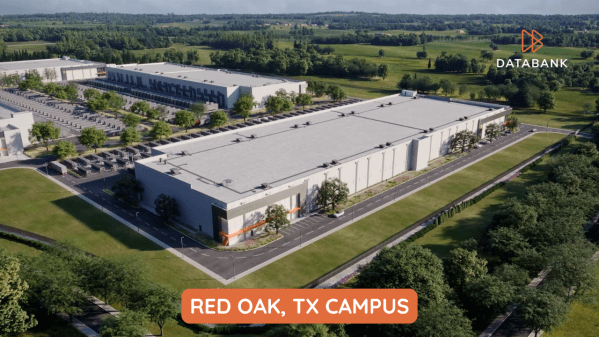
DataBank's Red Oak campus is building the future of Dallas data center infrastructure with eight facilities totaling 3.4 million square feet. The construction numbers reveal just how massive this project is.
Discover the DataBank Difference today:
Hybrid infrastructure solutions with boundless edge reach and a human touch.
Tell us about your infrastructure requirements and how to reach you, and one of our team members will be in touch shortly.
Can’t see the form? Click here.
Let us know which data center you'd like to visit and how to reach you, and one of our team members will be in touch shortly.
Please understand that we might not be able to accommodate every request for a physical data center tour.
Can’t see the form? Click here.
Enjoying our resource? Get the latest news and articles delivered straight to your inbox.
Can’t see the form? Click here.
Can’t see the form? Click here.