

It’s been a busy start to the year as evidenced that I’m writing this in February. After a record year of data center leasing and unprecedented investment announcements, some fundamental questions remain unanswered:
These aren’t small questions, and while in some cases the answers are emerging, there is still a lot uncertainty.
I don’t expect 2026 will be the year of breakthroughs and think it will look and feel a lot like 2025. Yet the gap between ambitious announcements and financial reality will come into much sharper focus.
Here are my thoughts for what’s ahead for the data center industry for 2026.
Despite economic headwinds including tariffs, slowing employment, interest rate questions, and widespread economic uncertainty, enterprise customers will continue investing heavily in technology infrastructure.
We signed a record number of multi-megawatt colocation deals in 2025, and we see that momentum continuing in 2026. Interestingly, this enterprise demand appears largely decoupled from the AI hype cycle. Yes, we are seeing some enterprise GPU deployments, but the bulk of what’s coming into our data centers are still CPUs and traditional compute/storage/network gear.
While AI infrastructure players grab headlines with gigawatt-scale deployments, established enterprise customers are quietly driving steady, sustainable growth in the colocation market. Enterprise customers prioritize reliability, flexibility of solutions, and proven operational expertise over gigawatt-scale campuses. Their needs may be less dramatic than AI training clusters, but they represent predictable, diversified, long-term revenue. For operators focused on this segment, 2026 looks healthy.
The amount of capital being consumed by AI companies and data center developers has reached unprecedented levels.
OpenAI, Oracle, and CoreWeave alone have collectively issued over $100 billion in debt to fund infrastructure buildouts. OpenAI reportedly needs to raise $207 billion of equity before reaching profitability. No company in history has ever raised that much capital.
There are more data center developments and companies in existence today than at any other time in our sector’s history. What do they all have in common? They all need cash to build.
Wall Street is starting to show concern, and this will translate into tighter capital markets in 2026 and beyond. The recent Oracle debt and equity issuance and Nvidia’s recent investment in CoreWeave signal that unchecked spending without alignment with revenues (and profits) will no longer be tolerated. Rightfully so, in my opinion. Only the highest-quality operators with proven execution capabilities will secure financing on favorable terms.
This shift will hit newcomers the hardest. The high number of new real estate developers and newly minted data center operators who have entered the market over the past two years will find it increasing difficult to secure the capital needed to advance their developments.
According to industry reports, the data center industry leased over 15 gigawatts in 2025. The catch? Almost none of that capacity actually came online in 2025. It’s all scheduled to arrive in late 2026 and 2027, which means a massive surge in electricity consumption is about to hit the grid.
Meanwhile, supply remains constrained due to the current administration’s policies throttling near-term renewable energy projects and the long lead times required for natural gas and nuclear generation. The result is straightforward economics: constrained supply meeting sharply increased demand. Electricity prices will continue to rise into 2026 and beyond. This means that accessing power will become more difficult and expensive, and utilities will prioritize established players over new entrants.
Enterprise AI adoption will remain incremental in 2026. Expect two steps forward, one step back. There will be no watershed moment where AI suddenly transforms how businesses operate at scale, driving enterprise AI adoption to accelerate exponentially.
The reason is fundamental: AI is extremely powerful but difficult to control precisely. Businesses need predictable, foolproof outcomes from their systems. The current generation of LLMs delivers non-deterministic results. That tension makes enterprise integration genuinely challenging, not just a matter of overcoming adoption curves or change management.
Microsoft recently revealed that they have sold only 15 million Copilot licenses—a small fraction compared to the hundreds of millions of Office subscriptions. As Satya Nadella said, “We are beginning to distinguish between ‘spectacle’ and ‘substance.’”
Companies will continue experimenting, investing, and learning where AI can drive ROI in 2026. Some will find valuable applications and use cases; others will shutter projects and reduce spend. AI will be transformative, but the journey will take years.
Want more perspectives on where the data center industry is headed? Check out DataBank Digest for more insights on data center industry trends and infrastructure strategy.

Sign Up For Our Resource Library
Enjoying our resource? Get the latest news and articles delivered straight to your inbox.
Can’t see the form? Click here.
About the Author

Share Article
Popular Categories
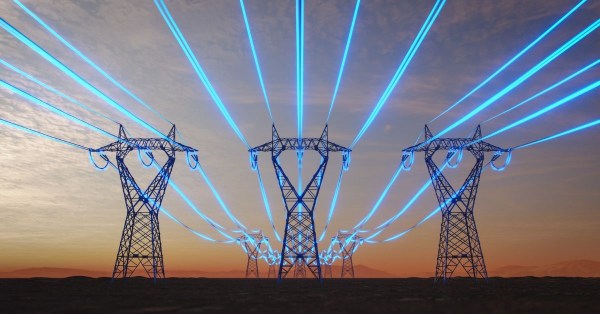
AI data centers' explosive power growth seems alarming, but innovative energy storage, virtual power plants, and grid flexibility solutions are already addressing demand without requiring panic-inducing infrastructure overhauls.
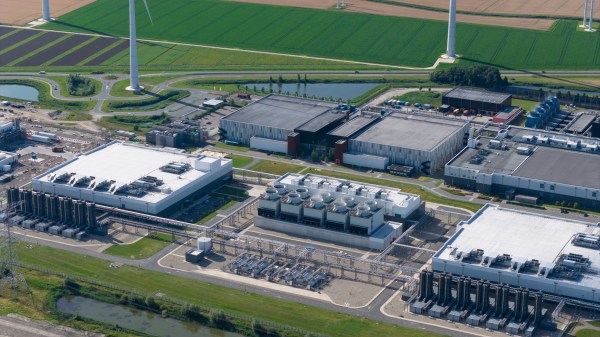
The fundamentals that worked for decades no longer apply in data center construction. Single campuses now require 4,000 workers instead of 750 as the industry adapts to unprecedented scale.

As geopolitical tensions potentially ease in 2026, new security challenges emerge for data center operators. Our CISO examines insider threats, AI vulnerabilities, and the evolution of criminal cyber campaigns.
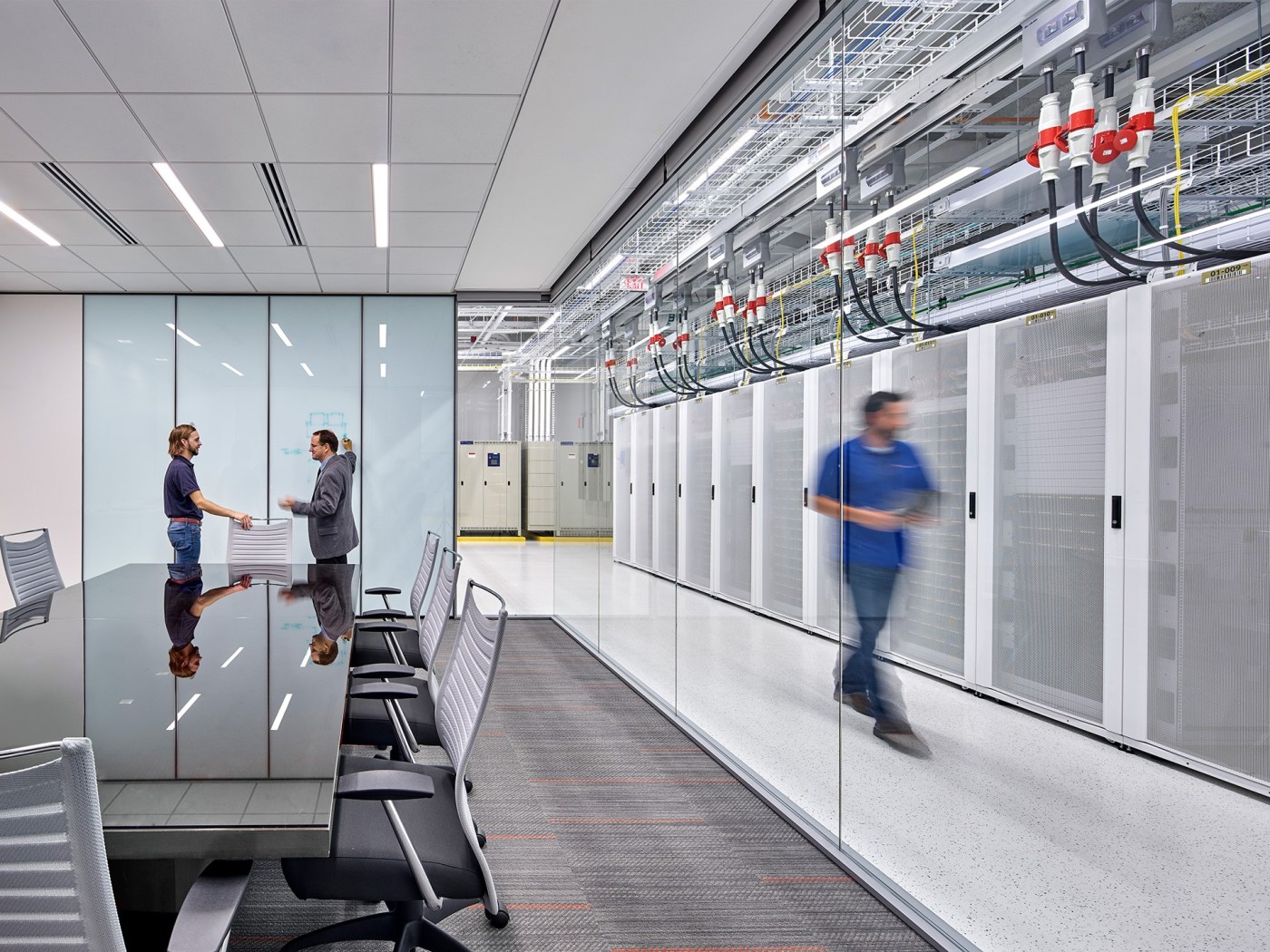
Discover the DataBank Difference today:
Hybrid infrastructure solutions with boundless edge reach and a human touch.
Tell us about your infrastructure requirements and how to reach you, and one of our team members will be in touch shortly.
Can’t see the form? Click here.
Let us know which data center you'd like to visit and how to reach you, and one of our team members will be in touch shortly.
Please understand that we might not be able to accommodate every request for a physical data center tour.
Please allow a minimum of 24-48 hours for a response.
Can’t see the form? Click here.
Enjoying our resource? Get the latest news and articles delivered straight to your inbox.
Can’t see the form? Click here.
Can’t see the form? Click here.