

Summarize with:
read in < 1 min


The development of 5G looks set to be at least as revolutionary as the development of fiber optic technology. It is already transforming how businesses operate and how they interact with their customers and it’s only just getting started. Here is a quick guide to what you need to know about it.
5G, or fifth-generation wireless technology, is the latest standard for mobile telecommunications. It represents a significant advancement over its predecessors, offering much faster data speeds and increased capacity.
Key technical aspects of 5G include:
Millimeter waves: 5G utilizes higher frequency bands, including millimeter waves, which allow for faster data transmission but have shorter range and are more susceptible to interference.
Massive MIMO (Multiple input multiple output): 5G networks employ advanced antenna technology, such as massive MIMO, which uses multiple antennas to transmit and receive data simultaneously, improving capacity and efficiency.
Low latency: 5G aims to significantly reduce latency, the time it takes for data to travel between devices, enabling real-time applications like remote surgery, autonomous vehicles, and virtual reality.
Network slicing: 5G networks can be divided into virtual networks called slices, allowing operators to allocate specific resources and quality of service parameters to different types of applications and users.
Dynamic spectrum sharing (DSS): 5G networks can dynamically allocate spectrum resources between 4G and 5G services based on demand, allowing for a smoother transition and optimal spectrum utilization. This flexibility maximizes efficiency and enables faster deployment of 5G networks while ensuring compatibility with existing infrastructure.
Data centers are centralized facilities that house computing resources such as servers, storage systems, networking equipment, and software applications. They are designed to ensure high availability, reliability, and security of data and applications, serving as the foundation for cloud computing, big data analytics, e-commerce, and numerous other online services.
Connectivity is essential for data centers to function optimally and deliver services seamlessly to end-users. Data center connectivity refers to the network infrastructure that enables communication between servers, storage devices, and other components within the data center, as well as external networks and the internet.
High-speed, low-latency connectivity is crucial for facilitating data transfer, access, and processing in real-time. It allows organizations to leverage distributed computing architectures, deploy hybrid cloud solutions, and support emerging technologies like artificial intelligence and the Internet of Things (IoT).
Robust connectivity also ensures business continuity, disaster recovery, and scalability, enabling data centers to adapt to changing demands and workload requirements effectively.
The intersection of 5G and data center connectivity represents a significant advancement in telecommunications infrastructure, offering transformative benefits for businesses and organizations.
By leveraging millimeter-wave frequencies and advanced antenna technologies like Massive MIMO (Multiple Input Multiple Output), 5G networks can achieve data speeds several times faster than previous generations.
This ultra-low latency enables data centers to process and respond to requests in real time. It therefore enables faster decision-making and improved overall performance.
5G networks are designed to be highly resilient, with built-in redundancy and failover mechanisms that ensure uninterrupted connectivity even in the event of network congestion or hardware failures. This reliability is crucial for data centers, which must maintain continuous operations to meet the demands of modern businesses and digital services.
Furthermore, 5G enables data centers to scale their capacity and resources dynamically in response to changing workloads and user demands. Through technologies like network slicing and dynamic spectrum sharing, data centers can allocate bandwidth and computing resources efficiently, optimizing performance and cost-effectiveness.
This scalability allows data centers to support a wide range of applications and services with varying requirements, from low-latency IoT devices to high-throughput cloud applications.
5G opens up numerous exciting opportunities for businesses. Here are just three examples of how it could be leveraged.
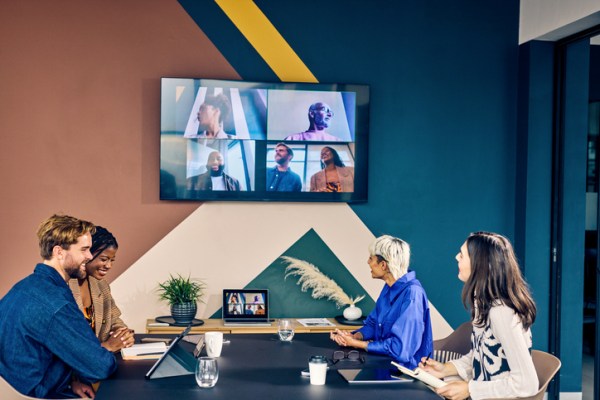
Real-time remote collaboration: The high data speeds and low latency of 5G networks support high-quality video conferencing, file sharing, and virtual meetings, allowing employees to collaborate effectively from anywhere. This enhances productivity and efficiency by facilitating instant communication and decision-making, regardless of geographic location.
Edge computing applications: By leveraging the low latency and high bandwidth of 5G networks, businesses can support edge computing applications such as real-time analytics, AI inference, and content delivery. This reduces latency, improves response times, and enhances the performance of latency-sensitive applications, enabling faster decision-making and improving user experiences.
Enhanced customer engagement: The high data speeds and low latency of 5G networks support high-quality streaming of augmented reality (AR) and virtual reality (VR) content, such as interactive gaming, virtual tours, and remote product demonstrations. This enhances customer engagement, drives brand loyalty, and creates new opportunities for businesses to showcase products and services in innovative ways.

Sign Up For Our Resource Library
Enjoying our resource? Get the latest news and articles delivered straight to your inbox.
Can’t see the form? Click here.
Share Article
Popular Categories

Explore the transformative role of 5G connectivity in reshaping hybrid IT infrastructures. Find out how it delivers significantly better network speed and a capacity revolution. Learn about the security risks it brings and how they can be managed. Discover what 5G could do for your hybrid IT system and its applications.

Right now, the development of 5G is widely considered to be one of the biggest breakthroughs in networking technology ever achieved. Its potential is hugely exciting. Even so, people are...
Explore the partnership between the internet of things (IoT) and colocation. Gain an overview of both the IoT and colocation. Find out what steps colocation providers have taken to adapt their services to support the IoT. Learn three key practicalities of implementing the IoT through colocation.
Discover the DataBank Difference today:
Hybrid infrastructure solutions with boundless edge reach and a human touch.
Tell us about your infrastructure requirements and how to reach you, and one of team members will be in touch shortly.
Can’t see the form? Click here.
Let us know which data center you'd like to visit and how to reach you, and one of team members will be in touch shortly.
Can’t see the form? Click here.
Enjoying our resource? Get the latest news and articles delivered straight to your inbox.
Can’t see the form? Click here.
Can’t see the form? Click here.