At DataBank, we believe community investment is most meaningful when it helps create lasting local impact. That is why we were proud to support the George Washington Carver Agriculture Research Center and its work to expand the Carver Food Enterprise Center in Culpeper, Virginia.
Founded in 2014, the George Washington Carver Agriculture Research Center (GWCARC) works to sustain, strengthen, and enhance agriculture and the environment in Virginia’s Northern Piedmont. Based at the historic George Washington Carver Center in Rapidan, the organization serves a five-county region through initiatives focused on agriculture, food security, workforce development, and research.
One of those initiatives is the Carver Food Enterprise Center (CFEC), a shared-use commercial kitchen and food business incubator created to strengthen the local food system. What began as a simple idea — giving local growers, food producers, and entrepreneurs a place to preserve, process, and create — grew over the course of eight years into a community-supported facility with the potential to make a lasting regional impact.
“This project will help expand opportunities for local farmers and food entrepreneurs while strengthening food access and support for schools across our region. We are deeply grateful to DataBank for its support and for helping encourage additional community investment at a critical time.”
— Gretchen Ledmor, Executive Director of the George Washington Carver Agriculture Research Center
Since opening the Carver Food Enterprise Center in 2023, the organization has:
Helped launch 36 new businesses and 133 new products
Supported the creation of 129 jobs and provided workforce training to 548 participants
Rescued more than 9,470 pounds of food, transforming it into 26,949 servings for the community
Produced approximately 8,000 Farm to School meals
These outcomes demonstrate the Center’s growing role as a driver of entrepreneurship, workforce development, food access, and regional agricultural resilience.
Strengthening Local Agriculture and Food Access
Today, the Carver Food Enterprise Center provides affordable, certified kitchen space, equipment, technical assistance, job skills training, and food processing support for farmers, food entrepreneurs, and community partners across Culpeper, Fauquier, Madison, Orange, and Rappahannock Counties.
Its work also helps address food insecurity by turning rescued produce into healthy meals for food pantries and hunger relief organizations, while supporting workforce development and value-added processing for local agriculture.
When the George Washington Carver Agriculture Research Center reached out to share that the Carver Food Enterprise Center expansion still faced a funding gap, we were glad to help. The project had already built strong momentum through federal support, local partnership, and community backing, and this final push represented a meaningful opportunity to help move an important regional resource closer to completion.
Our contribution supported the next phase of the Carver Food Enterprise Center’s expansion, part of a larger $1.2 million USDA Regional Food Systems Infrastructure initiative. This expansion will increase the Center’s ability to support local farms, food entrepreneurs, regional food manufacturing, and community-based programs such as Farm to School and Feeding 500.
“This project will help expand opportunities for local farmers and food entrepreneurs while strengthening food access and support for schools across our region,” said Gretchen Ledmor, Executive Director of the George Washington Carver Agriculture Research Center. “We are deeply grateful to DataBank for its support and for helping encourage additional community investment at a critical time.”
Expanding Impact Through Partnership
What made this opportunity especially meaningful was the collaboration behind it. In response to the project’s remaining funding gap, DataBank made a contribution and also helped encourage support from construction partners AE Comm/Tishman and Service Point. Together, those commitments helped build momentum for the next phase of the Carver Food Enterprise Center expansion.
That kind of partnership matters. Projects like the Carver Food Enterprise Center depend on organizations, local leaders, and businesses working together around a shared purpose. By helping bring additional supporters to the table, this effort shows how community investment can create momentum beyond a single contribution.
The Carver Food Enterprise Center is a long-term community asset designed to create opportunity, strengthen local supply chains, support schools and families, and build a more resilient regional food system.
Part of Our Commitment to Culpeper
Supporting the Carver Food Enterprise Center is one example of DataBank’s ongoing commitment to Culpeper and the surrounding community. As our presence in the region has grown, so has our focus on creating positive local impact beyond our core business operations.
That commitment includes helping create economic opportunity and workforce pathways in the area. Through our work in Culpeper, we have highlighted the ways data center investment can support job creation, career development, and long-term economic growth. We have also shared how strong local partnerships can help communities benefit from infrastructure investment in practical, lasting ways.
Our support for organizations and initiatives in Culpeper reflects that same mindset: Investing in projects that strengthen the community, expand opportunity, and create durable value for the future.
At DataBank, we are honored to support organizations like the George Washington Carver Agriculture Research Center that are building practical, lasting solutions in the communities they serve. We look forward to seeing the continued impact of the Carver Food Enterprise Center for years to come.
Corporate social impact programs highlight how organizations support communities, education, and social initiatives.
At DataBank, we believe that being a good neighbor means more than just operating reliable infrastructure. It means showing up for the communities where our teams live and work, supporting the people who need it most, and creating a culture where giving back is woven into everything we do.
DataBank Cares empowers employees to give back through volunteer time, charitable donations, and community partnerships across all our locations.
2025 was a remarkable year for DataBank Cares, our company-wide initiative that empowers employees to lead community engagement efforts through volunteer time, organized campaigns, and direct support. From coast to coast, DataBank teams demonstrated what’s possible when technology companies commit to making a tangible difference beyond the data center walls.
The numbers tell an impressive story: 857 hours of Volunteer Time Off (VTO) contributed across dozens of initiatives, thousands of pounds of food and supplies donated, hundreds of letters written to troops overseas, and a groundbreaking employee hardship fund that raised over $40,000.
Yet, behind every statistic are the people who made it happen: employees who chose to give their time, energy, and resources to support their neighbors.
Here’s how DataBank teams showed up in 2025.
Environmental Stewardship: Earth Day and Beyond
We kicked off the year in April with Earth Day initiatives that demonstrated our commitment to environmental responsibility in the communities we serve. Teams across our network organized cleanup events and donation drives that made immediate, visible impact.
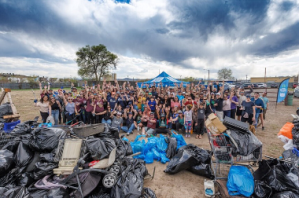
In Denver, our metro team joined forces with 250 volunteers in partnership with Protect Our Rivers, removing nearly 5,000 pounds of trash from local waterways. The effort represented hours of hands-on environmental work that directly improved the natural spaces on which our community depends.
DataBank employees joined 250 volunteers in partnership with Protect Our Rivers to remove nearly 5,000 pounds of trash from local waterways during Earth Day 2025.
Meanwhile, at our Salt Lake City campus, the team organized a comprehensive donation drive for the SLC Rescue Women’s Shelter, collecting 24 bags and 7 boxes of clothing and feminine products, along with $400 in cleaning supplies. The initiative addressed immediate needs while demonstrating how data center teams can mobilize resources to support vulnerable populations.
Kindness in Action: Supporting Women Experiencing Homelessness
These weren’t just supply kits. They were carefully curated packages of essential items that provide dignity and support during difficult circumstances. The campaign brought together employees from multiple locations who shared a commitment to addressing homelessness with compassion and practical assistance.
Women of DataBank employee resource group members assemble Kindness Kits during a company-wide initiative that created over 650 kits for women experiencing homelessness across four cities.
The initiative reflected DataBank’s belief that employee resource groups aren’t just internal networks. They’re engines for community impact. When employees lead efforts they’re passionate about, the results are more authentic, more meaningful, and ultimately more effective.
Fighting Food Insecurity Across Four Markets
From August through September, DataBank launched a company-wide food drive that mobilized teams across our 65+ data center locations. The results exceeded our own expectations:
Denver led the charge again, donating 1,806 pounds of food to the Food Bank of the Rockies. That’s enough to provide 1,500 meals for families facing food insecurity across the Rocky Mountain region.
Salt Lake City collected 554 pounds of food and raised $300 for Tabitha’s Way, a Utah organization serving families in need. The team went further by contributing 43 bags of clothes and six boxes of additional items to Tabitha’s Way, plus approximately 25-30 handmade fleece blankets and clothing for Primary Children’s Hospital, bringing comfort to young patients during difficult times.
Houston gathered 286 pounds of food for the Houston Food Bank, carefully assembling donations that included over 130 cans of soup and chili, more than 100 cans of vegetables, 70-plus boxes and bags of pasta and rice, dried fruit, juices, and 12 bottles of prenatal vitamins, essential nutrition for expectant mothers.
Dallas-Fort Worth contributed 174 pounds of food to the North Texas Food Bank, translating into 145 meals for families in need. The team extended its giving through a month-long Season of Giving initiative that included toy drives benefiting Toys for Tots.
Orangeburg, New York delivered a diverse collection of food items to the Church of the Ascension in New Milford, New Jersey, partnering with local faith organizations to maximize community impact.
DataBank employees across eight locations wrote over 500 letters of gratitude to U.S. military service members through A Million Thanks.
Research consistently shows that letters from home significantly boost morale and mental wellbeing for deployed troops. These personal connections remind service members that their sacrifices are recognized and valued by the communities they protect.
The campaign also highlighted individual dedication, like Senior Security Architect Stephen Maiorca, who has been handcrafting wooden pens for deployed service members since 2017. Each pen requires about two hours of work, and Maiorca donates them to “For The Troops,” a Simi Valley organization that creates care packages. His ongoing commitment, inspired by veterans in his own family, exemplifies the personal passion many DataBank employees bring to community service.
During the launch event for the library’s STEAM (Science, Technology, Engineering, Arts, and Mathematics) class, students gathered to watch the technology in action, selecting from pre-loaded designs and learning how these machines transform digital files into physical objects. Each student left with a 3D-printed holiday figurine he or she painted and personalized. Yet, more importantly, students left with deeper understanding of modern manufacturing technology and the creative possibilities it opens up.
DataBank partners with Red Oak Library to bring hands-on STEAM learning and 3D printing technology to local students.
The take-home aspect makes this program is particularly impactful. By allowing families to check out the printer kits, the library removes barriers to technology access and gives students the chance to experiment at their own pace. When you’re building significant infrastructure like our Red Oak campus—a 292-acre development that will deliver eight data centers and 3.4 million square feet of AI-ready infrastructure— being a good neighbor means investing in the young people who represent the future workforce.
Holiday Season Giving
DataBank teams closed out the year with widespread holiday initiatives. Across eight data centers, employees donated over 500 toys and $200 to the U.S. Marine Corps Toys for Tots drive, spreading holiday joy to children in need.
Throughout the year, DataBankers also participated in the #DataCentersSleevesUp2025 virtual blood drive and helped build homes for the Sleep in Heavenly Peace Foundation, demonstrating the breadth of causes our teams support.
Supporting Each Other: The DataBank Cares Fund
Perhaps, the most significant development in 2025 was the launch of the DataBank Cares Fund, created to help employees facing unforeseen disasters or personal hardships. The fund relies on support from DataBank Holdings Ltd. and individual donations from employees, partners, and the general public.
Launched in November 2025, the employee giving campaign exceeded all expectations. DataBank employees gave anonymously and surpassed the company’s internal goal, raising nearly $23,000. DataBank matched these donations, creating a fund of over $40,000 to assist any DataBank employee in need.
This initiative reflects a fundamental truth: When we take care of each other, we build stronger teams and stronger communities. Every donation contributes to a safety net that provides grants when they’re needed most.
A Culture of Giving Back
The success of DataBank Cares in 2025 demonstrates what happens when employees lead initiatives about which they’re passionate. From employee resource groups organizing Kindness Kits to individuals handcrafting gifts for troops, these efforts reflect genuine commitment rather than corporate obligation.
Operating critical infrastructure comes with responsibility to support the communities where we’re located. DataBank teams find meaningful ways to give back year-round—from food banks and schools to children’s hospitals and our own employee support systems.
We’re proud of what our teams accomplished in 2025 and grateful to the organizations serving people in need. As we look toward 2026, we remain committed to being the neighbors our communities deserve—present, engaged, and ready to help when it matters most.
Together, we’re building stronger communities, one act of service at a time.
Want to see more stories about DataBank’s community involvement and industry leadership? Check out DataBank Digest for more insights on data center industry trends and infrastructure strategy.
Decarbonizing data centers refers to reducing greenhouse gas emissions by improving energy efficiency, increasing renewable energy use, and optimizing infrastructure operations.
By Jenny Gerson, Senior Director of Sustainability
In today’s climate-conscious world, data center operators are playing a vital role in driving sustainable innovation. As organizations work toward net zero goals, modern data centers are stepping up, not just by delivering high-performance infrastructure, but by focusing on energy efficiency and environmental responsibility.
From greener power sources to smarter facility design, leading data center providers are taking steps to decarbonize operations. It’s a strategic shift that supports both global climate targets and the evolving sustainability priorities of investors and customers.
Understanding the Three Scopes of Emissions
Decarbonizing isn’t just about cutting carbon. It also involves knowing where emissions come from and tackling them with new approaches and more effective solutions.
For data centers, emissions fall into three categories or “scopes,” as defined by the Greenhouse Gas (GHG) Protocol. Each scope represents a different piece of their overall sustainability strategy. Most data center operators are making progress across all three.
Scope 1: Reducing On-Site Emissions at the Source
Scope 1 covers direct emissions from sources owned or controlled by the data center operator. In a typical facility, that includes backup diesel generators, on-site natural gas systems, and fugitive emissions from refrigerant leaks or HVAC systems for cooling.
Many data centers are replacing older equipment with low-emission or renewable-fuel generators, using next-generation cooling technologies, and implementing monitoring systems that detect and reduce refrigerant leaks. These actions help shrink a facility’s carbon footprint and also enhance efficiency and reliability.
Scope 2: Cleaning Up the Power Supply
Scope 2 emissions come from the electricity a data center purchases to power its infrastructure. While data centers are designed to be energy efficient, electricity is still a key part of the equation.
The good news: Data centers are leading the way in transitioning to cleaner, greener power. Many are investing in renewable energy through power purchase agreements (PPAs), renewable energy credits (RECs), and partnerships with utilities. Others are locating facilities in regions with low-carbon grid mixes or developing their own on-site solar or wind capacity. These efforts are dramatically reducing Scope 2 emissions without sacrificing performance.
Scope 3: Tackling Emissions Across the Supply Chain
Scope 3 includes all other indirect emissions – everything from the materials used to build the data center to the equipment it runs and what happens when that equipment reaches end-of-life. It also includes downstream activities, such as how tenants or cloud customers use leased infrastructure.
While Scope 3 is often the most complex to address, it’s also where data center leaders are making long-term investments that pay off. By sourcing low-carbon building materials, extending the lifespan and reuse of IT hardware, and working with vendors and partners who share sustainability goals, operators can reduce emissions. By helping customers optimize workloads and power usage, they’re creating ripple effects that benefit the entire digital ecosystem.
Together, Scopes 1, 2, and 3 offer a complete view of a data center’s carbon footprint and a roadmap for meaningful progress. With this framework in mind, let’s look at the practical steps data center operators can take today – and what DataBank is doing right now.
How DataBank is Leading with Smart, Sustainable Strategies
At DataBank, sustainability isn’t just a goal. It’s built into how we operate, grow, and serve our customers. While we’re addressing all three emission scopes, our most immediate impact comes from reducing Scope 2 emissions, starting with renewables.
By integrating sources such as solar and wind into their energy mix, data centers are shrinking their carbon footprints while maintaining the reliability and performance their customers depend on. We’re also exploring carbon capture and sequestration opportunities with utility partners, investing in innovations that reduce emissions at the source, not just in our facilities, but at the grid level. These investments align with a larger shift in how data centers interact with the energy ecosystem.
As power grids evolve, flexibility becomes just as important as efficiency. Hyperscalers are able to optimize load shifting to move power-intensive workloads like AI training to times of day when renewable energy is most available and cost-effective. Not only does this help flatten demand curves and stabilize the grid, it opens the door for more renewables to come online.
While hyperscalers are able to do this, most colocation operators can’t. Instead, DataBank engages in demand response using large-scale batteries and generators to stabilize the grid. By aligning our operations with grid dynamics, we’re not only enhancing our sustainability efforts but also contributing to a more resilient and efficient energy system.
Such a flexible approach can pay off. Recent research featured on the “The Potential for Flexible Data Centers” episode on the Catalyst podcast reveals that if data centers could be flexible – just 0.25% of the time approximately 22 hours per year – it would be possible to add up to 76 gigawatts of new data center capacity without necessitating additional grid infrastructure. This shows the significant impact that even minimal operational flexibility can have on accommodating growth sustainably.
Driving Sustainability Through Action
DataBank is making meaningful progress toward its sustainability goals by implementing a wide range of energy-efficient practices and proactive environmental initiatives.
Net zero commitment: DataBank has set a corporate goal to achieve net zero carbon emissions by 2030, focusing on reducing emissions across Scope 1 (direct emissions) and Scope 2 (indirect emissions from purchased electricity). This includes replacing fossil-fuel-based systems with more sustainable alternatives, expanding renewable energy sourcing, and exploring innovative technologies like carbon capture.
Green power usage: By the end of 2024, over 60% of DataBank’s total energy consumption (823GWh) now comes from renewable sources. This includes contractually bundled, load-following RECs and renewable power from the grid, representing a significant step toward our decarbonization goals.
Water conservation: DataBank’s use of internal closed-loop chilled-water systems in many of its data centers eliminates the need for continuous water replenishment. In 2023, the company reported zero water withdrawals at 42 of its facilities, demonstrating the effectiveness of these systems in minimizing water consumption across its operations.
EPA recognition: For the fourth consecutive year, DataBank was recognized by the U.S. Environmental Protection Agency (EPA) and ranked 54th on its National Top 100 List of the largest green power users. Additionally, the company ranked 15th on the Top 30 list of green power consumers in the Tech & Telecom sector.
Energy efficiency measures: To improve facility efficiency and reduce emissions, DataBank continues to standardize high-efficiency air-cooled technologies and deploy closed-loop chilled-water systems across its data centers. These systems both reduce energy consumption and eliminate the need for continuous water replenishment, aligning with long-term environmental sustainability goals.
Operational monitoring: DataBank tracks and reports its energy consumption, energy intensity, and Power Usage Effectiveness (PUE) to its Board of Directors quarterly and to the public annually through its Corporate Responsibility Report. This practice ensures accountability and continuous improvement in energy efficiency.
Together, these efforts demonstrate DataBank’s commitment to environmental stewardship and support its goal of building more sustainable, future-ready data centers.
Building a Greener Digital Future
As demand for digital infrastructure grows, so does the responsibility to build it sustainably. With a clear strategy and bold action across all three scopes of emissions, DataBank is not only lowering its carbon footprint; it’s helping lead the data center industry toward a cleaner, more energy-resilient future.
The environmental impact of data centers includes energy use, water consumption, and land use, which operators address through efficiency, sustainability programs, and community engagement.
By: Jenny Gerson, Senior Director of Sustainability, DataBank
Many communities view data centers as large and loud neighbors they don’t want in their backyard. Among their claims: Given the square footage they take up, data centers don’t employ that many people, and municipalities could allocate the land for other uses. Some communities also see negative impacts on power and water pricing, and availability.
To address these concerns, data center companies need to engage in lengthy stakeholder discussions that include local governments and community representatives. Together, they can work on solutions that provide the area with the required computing resources while also limiting negative impacts on the environment and communities.
This includes discussions about energy consumption, water use, and carbon emissions. While the industry has made strides in sustainability —reducing environmental impact and increasing efficiency— forward-thinking operators now need to go beyond neutrality. They must embrace a net-positive approach that actively benefits the communities they serve and the environment at large.
Beyond Sustainability: The Shift to a Net-Positive Impact
Traditionally, sustainability efforts in data centers focused on minimizing harm: reducing carbon emissions, limiting water use, and improving energy efficiency. However, leading operators can take a more ambitious stance: Rather than simply offsetting their impact, they can invest in ways to create positive environmental and social contributions.
Here are a few examples of how data centers can lead the charge toward Net Zero emissions and other positive actions to protect the environment:
Mitigate habitat impacts by making improvements such as planting trees and investing in conservation.
Remove carbon from the air through direct air capture.
Utilize cooling systems that don’t consume water.
Use low-carbon or green materials such as concrete and steel, investing in local, time-matched renewable power.
Sponsor projects that improve water availability and quality by generating more renewable power than needed and deliver excess to the grid.
Operate as a virtual power plant (VPP). A DataBank data center in Irvine operates as a VPP. This approach enables batteries to charge during times of excess renewable generation and discharge during peak energy demand hours. This also provides an alternative to utilities having to ramp up dirty peaker power plants.
Waste Heat and Renewable Energy Innovations
One of the most straightforward, net zero initiatives in the industry is the repurposing of waste heat—excess thermal energy generated by servers. This includes converting flared methane from oil wells to electricity.
By cycling waste heat, data centers can operate as assets to their communities rather than liabilities. This shift is not just about corporate responsibility; it’s a strategic response to increasing regulations, stakeholder expectations, and the demand for environmentally conscious IT infrastructure.
Instead of venting this heat into the atmosphere, data centers can warm homes, businesses, and even greenhouses. This requires infrastructure to connect a data center to a nearby building or add it to a district heating system.
For example, data centers in Scandinavia and other parts of Europe already use this approach by connecting their infrastructure to district heating systems. This significantly reduces the demand for fossil fuels in residential areas.
This kind of innovation, which DataBank delivers in one of its Atlanta data centers, transforms data centers into contributors to local energy ecosystems rather than consumers of massive amounts of power. This approach is much easier to deploy in Europe, where data centers rely on district heating. The US largely does not, so the use-case is not as strong—unless nearby buildings can easily accept the waste heat.
Additionally, some operators invest directly in renewable energy projects, not just to offset their own consumption but also to stabilize and expand clean energy for entire regions. By partnering with utilities, data center operators can provide excess power during peak production hours and reduce the strain on local grids while enhancing overall energy security.
Water and Resource Conservation
Water usage remains a key sustainability challenge for data centers, particularly those operating in drought-prone regions. To ensure they do no harm, some facilities implement advanced cooling systems that minimize water dependency.
This includes air and liquid cooling advancements that reduce the need for traditional water-cooled systems. Another tactic involves AI-driven resource optimization to adjust cooling strategies dynamically and ensure efficient operations with minimal environmental impact.
By prioritizing water conservation and innovative cooling strategies, data centers can significantly reduce their impact on local water resources while maintaining operational efficiency.
Community Investment and Economic Growth
As demand for digital infrastructure grows across the US, leading data center operators understand their impact on surrounding communities. This is why many focus on opportunities to invest in local community initiatives such as workforce development, power and connectivity improvements, and road and utility updates. In addition, data centers bring significant property and business tax revenue, which can fund schools, municipal improvements, and other public services.
Leading operators also launch STEM education programs in regions where they build facilities. In some cases, they provide training and career pathways in technology, engineering, and data center management for higher-ed students to sustain the growing demand for the future of AI and cloud infrastructures.
Others work closely with local governments to develop workforce training programs that prepare residents for high-paying, skilled jobs in data center operations, security, and engineering. Some data centers also partner with local nonprofits through grants, sponsorships, and donations—further providing critical assistance to surrounding communities.
Moreover, data centers can focus on engaging with industry infrastructure partnerships to enhance regional connectivity by investing in fiber networks, smart grid technologies, and emergency response systems. This not only benefits data center customers but also improves digital access for surrounding communities.
The Future of Net-Positive Data Centers
While achieving a truly net-positive status requires long-term investment and collaboration, the industry is making significant strides. By focusing on renewable energy, resource efficiency, community engagement, and regulatory alignment, data centers can prove they are more than just power-hungry infrastructure; they are drivers of positive change.
As enterprises evaluate their IT infrastructure partners, choosing data centers that prioritize these initiatives will reduce their own environmental impact and contribute to broader sustainability goals. The future of data centers is not just about doing less harm; it’s about creating more good.
Ethical AI focuses on using artificial intelligence responsibly by addressing data privacy, security, transparency, and potential bias in automated systems.
Ethical AI: Balancing Innovation and Security
By Mark A. Houpt, Chief Information Security Officer and Jenny Gerson, Head of Sustainability & Corporate Responsibility – DataBank
Artificial intelligence is quickly transforming how businesses operate today. Powerful new AI tools have the potential to transform many business processes to enhance productivity, automate workflows, and generate valuable new insights.
At the same time, these AI tools and their many uses also present new and unpredictable risks. As a result, many organizations are currently wrestling with how to encourage and enable ethical AI adoption while making sure it remains secure and completely aligned with corporate risk management and governance policies.
The Security Dilemma: Enabling AI While Managing Risk
So many security leaders and professionals are skeptical about AI’s role in their organizations. This is not because they oppose innovation – especially when it’s proven to deliver so many benefits – but because there are simply too many unknowns related to its use.
Put another way: Security teams must do all they can to enable the business to use AI tools in a way that is as risk-averse and secure as possible. Still, the unknown and quickly changing aspect of AI is a security risk unto itself.
While AI tools such as ChatGPT and Microsoft Copilot can now provide a seemingly infinite range of new benefits, they also raise security concerns. Without the proper controls, these tools could inadvertently access and/or expose the organization’s most sensitive information.
For example, consider the case where a corporate attorney uses Microsoft Copilot to draft a summary of ongoing litigation for an internal briefing. Because Copilot is trained to find as much relevant information as possible, it scans the company’s emails, internal memos, and various legal documents stored in SharePoint to compile key details.
However, without strict access controls, this search includes privileged attorney-client communications and other highly sensitive information that was not properly secured. Copilot pulled these results into its summary document without the attorney realizing how sensitive this data was. Worse, the financial information was injected into Copilot’s public large language model (LLM) during an external source, resulting in the permanent loss of control of the information within the AI infrastructure.
The Challenges of Data Classification and Access Controls
Many organizations – especially those outside of highly regulated industries – still lack strong, comprehensive data classification policies, or have yet to implement them effectively. In contrast, government agencies and companies in highly regulated sectors have established processes and frameworks to help manage sensitive data.
As AI tools continue to proliferate and expand, organizations in all industries must now take a closer look at their approach to data security and governance.
More specifically, this now means Chief Information Security Officers (CISOs) and other security leaders should ask these questions:
What data is the AI tool accessing and compiling in response to various requests?
What might it share without our knowledge?
Where does this data go once it’s processed?
These concerns are more than theoretical possibilities since it’s likely the use of AI could lead to unintentional data leakages, breaches, and other adverse outcomes.
The Risk of Unintentional Data Exposure
Security teams must carefully consider how AI interacts with structured and unstructured data. Another example: Imagine the scenario where a marketing manager uses ChatGPT to help conduct a detailed market analysis report that includes the top 500 potential buyers of its new product.
Without the right security controls in place, ChatGPT may also pull external information that has been loaded into the LLM, including sensitive purchase histories, contract values and even personally identifiable information (PII).
Without realizing it, the marketing manager includes these AI-generated insights into the report, and in doing so, potentially exposes confidential customer data to unintended recipients. Not only does this violate internal security policies and present compliance concerns, but it also shares information about the company’s product and go-to-market strategies.
Here’s one more example. A healthcare company uses an AI tool to analyze various demographic data to begin determining how many individuals could be susceptible to a particular disease or condition. If sensitive information is not properly detected, it could result in the loss of data, representing a significant HIPAA compliance violation that exposes patients’ health and PII data and presenting the organization with very real legal issues and possible fines.
Ethical AI and Governance Challenges: Is AI Eating its Own Tail?
Beyond the immediate security risks, AI also presents a deeper challenge: governance and integrity. As businesses rush to adopt AI-driven tools, they must consider not just what these systems can do, but also how reliable their outputs really are.
One of the growing concerns in the AI space is that AI models are increasingly trained on AI-generated content, creating a kind of feedback loop – sometimes referred to as AI “eating its own tail.” The Atlantic recently explored this phenomenon in its article, “AI Is an Existential Threat to Itself,” highlighting the risk that future iterations of AI models will be trained AI-generated or poor-quality data. It’s the classic example of “garbage in, garbage out,” raising concerns about the accuracy and quality of AI results.
This raises a fundamental governance issue: How do organizations ensure that AI remains grounded in factual, high-quality information rather than recycling and amplifying any inaccuracies? If a significant portion of an AI model’s training data originates from other AI systems, it risks reinforcing biases, misinformation, and degraded content quality over time.
While AI developers don’t always disclose the exact sources of their training data, it’s a valid concern. Consider ChatGPT, which (as of now) has built-in knowledge only through 2021. If an enterprise relies on such a system without access to more recent data, is it truly a reliable platform for making critical business decisions?
Also, if the next versions of AI models are trained primarily on AI-created content, poor-quality information, or worse, deliberately infiltrated by a nation-state threat actor, how will that impact the integrity of the outputs?
From a governance perspective, companies need to take proactive steps:
Audit AI-generated outputs: Validate key insights rather than taking them at face value.
Set data sourcing policies: Ensure AI tools are trained on verifiable, high-quality, and up-to-date information.
Maintain human oversight: AI should assist, not replace, human decision-making, especially in critical areas like security, compliance, and risk management.
Governance is a core pillar of corporate responsibility, and AI must be held to the same standards as any other business initiative. Businesses that fail to address these issues may find themselves making strategic decisions based on AI-generated hallucinations – an outcome no CISO or governance executive wants to face.
Balancing Innovation and Responsibility
AI’s potential is undeniable, but its risks – both security related and ethical – cannot be ignored. Security leaders and organizations must recognize that AI is not just another “set-it-and-forget-it” tool. It requires carefully designed governance, continuous oversight, and a commitment to responsible adoption.
Striking the right balance means embracing AI’s advantages while mitigating its vulnerabilities, ensuring that innovation does not come at the cost of security, compliance, or trust. In an era where AI is shaping the future of business, those who proactively manage these challenges will be best positioned to lead with confidence.