From Pearl River Day to the Little League fields, DataBank’s local involvement reflects a commitment to putting people first.
Being part of a community means more than operating a facility there. It means getting to know the people who live nearby, understanding what matters to them, and finding meaningful ways to contribute.
For DataBank, a recent opportunity to put that commitment into practice was Pearl River Day, where employees from our nearby LGA3 data center joined residents and local businesses for a day of conversation and community celebration.
Showing Up at Pearl River Day
Each fall, Pearl River Day brings approximately 25,000 people to Central Avenue to celebrate the businesses, organizations, and traditions that make the area special. With more than 200 businesses and vendors, food trucks, and live music, the festival gives neighbors a chance to connect — and businesses like DataBank a chance to introduce the people behind their local operations.
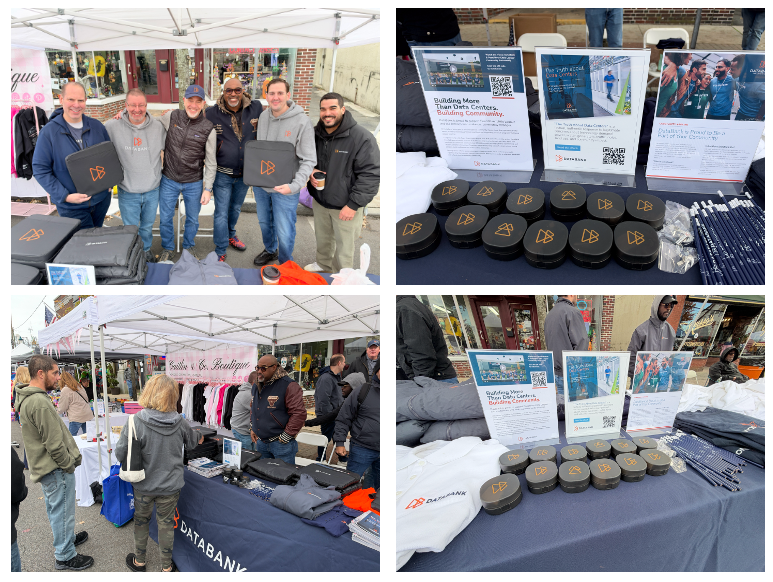
DataBank employees staffed a Pearl River Day booth to meet community members, answer questions, and build connections with local neighbors.
DataBank has been a premier sponsor of the festival for several years. This year, employees from our data center operations, construction, and sales teams also staffed a booth, spending the day meeting residents and introducing the people behind our local operations.
Despite cold, blustery weather, the team welcomed hundreds of visitors, answered questions, and handed out DataBank blankets, stadium cushions, and warm jackets that were particularly appreciated as temperatures dropped.
Alongside those giveaways, our employees distributed more than 150 copies of The Truth About Data Centers, providing a resource to help residents better understand these facilities, their role in everyday life, and important context needed in the public dialogue. Just as importantly, the booth created space for face-to-face conversations. Visitors could ask questions about DataBank and our local presence, while our employees had an opportunity to listen, learn, and get to know the people who live and work around LGA3.
That personal interaction matters, especially when development brings questions or concerns. A community festival offers something a website or project announcement cannot: an informal conversation with the people who work at a facility. Building trust takes time, and showing up is an important part of that work.
A Partnership Built Next Door
DataBank’s community connections also extend to the baseball fields neighboring our Orangeburg property. When work on the facility initially prompted concerns among local residents, conversations with Pearl River Little League representatives helped establish a relationship with an organization that has long been important to area families. Meeting league representatives during construction gave our team an opportunity to understand their needs and identify practical ways to help.
DataBank invested nearly $20,000 to help improve the dugout sheds and provide field lighting, contributing to facilities used by young athletes throughout the season. Our involvement has continued through approximately $5,000 in annual support for general sponsorship and student-athlete scholarships, helping sustain the partnership beyond that initial investment.
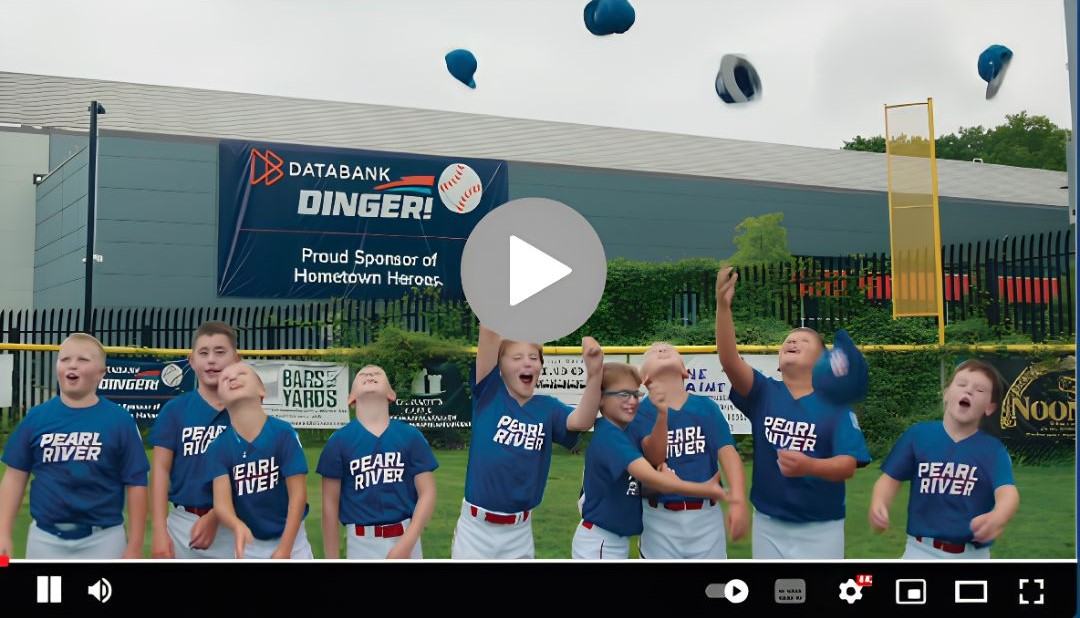
The relationship also includes a creative connection between the data center and the diamond: the “DataBank Dinger.” A poster on the facility gives players a home-run target, with qualifying home runs generating DataBank contributions toward scholarships. It adds excitement to the game while supporting opportunities for young people—a way to make the partnership both meaningful and memorable.
A Personal Connection to the Fields
For Ryan Buchan, a Junior Critical Infrastructure Engineer at LGA3, supporting Pearl River Little League is more than a workplace initiative. Ryan grew up in Orangeburg and played on these same fields. His father was also a dedicated league supporter and a member of its board, making the organization an important part of his family’s life. Today, Ryan works for a company helping care for the place where he once played.
Discover how DataBank supports Pearl River Little League through field improvements, sponsorships, and scholarships, and hear employee Ryan Buchan share his personal connection to the league.
“One of DataBank’s core values is ‘putting people first,’” Ryan says. “We want to be a positive influence on the community.”
For Ryan, that means supporting the people who live near the facility and contributing to the organizations that matter to them. Seeing DataBank help improve the fields where he played carries personal significance and connects his work today with his own childhood experiences. His story is also a reminder that the people working inside a data center can have deep roots in the surrounding area, with family histories and personal ties to the programs DataBank supports.
Continuing to Build Community Relationships
Pearl River Day and the Little League partnership put the same commitment into practice in different ways. One creates opportunities to meet residents, answer questions, and make our team accessible. The other supports an organization that brings families together and helps young athletes build confidence, learn teamwork, and make lasting memories. Both reflect the importance of listening and following through.
As DataBank continues its work in Orangeburg, we’ll keep looking for meaningful ways to support the people and programs that help the local community thrive.
Our recent food drive continued that commitment, bringing DataBankers together to support hunger relief in the communities we call home. Through hands-on volunteering, local food donations, and an Amazon wish list that let employees contribute from wherever they work, DataBankers supported a shared goal: helping our neighbors put food on the table.
Denver Volunteers Make a Hands-On Impact
Our Denver Metro team took a hands-on approach to hunger relief by volunteering at the Food Bank of the Rockies.
Employees volunteered their time sorting and packing food boxes for distribution to the community. During their shift, the team helped move 508 boxes containing 12,620 pounds of food — the equivalent of 10,516 meals.
Sorting and packing are essential steps in getting donated food to the people who need it. By taking on that work together, our Denver team helped the Food Bank of the Rockies get thousands of meals ready for local families.
Doubling Down on Giving in Dallas
Our Dallas Metro team built on last year’s food drive in a big way, collecting more than twice as much food.
The team delivered 440 pounds of food, representing 337 meals, to the North Texas Food Bank. The increase highlights how individual donations can add up to meaningful support our neighbors.
Participation also reached beyond the Dallas team. Through an Amazon wish list, employees across DataBank could purchase food and have it shipped directly to our Dallas headquarters. This gave DataBankers in other locations a straightforward way to join the effort and support hunger relief in the Dallas community.
Part of an Ongoing Commitment
The food drive is one of many ways DataBank Cares puts our commitment to our communities into action. Throughout the year, employees have opportunities to contribute their time and resources to causes that matter in the places where we live and work.
This year’s effort showed how different forms of participation can support a common goal. From packing food boxes in Denver to collecting donations in Dallas and contributing through the Amazon wish list, DataBankers helped provide food for neighbors facing hunger.
Thank you to everyone who volunteered, donated, or helped organize the drive. Your generosity made this effort possible and continues to shape a culture of giving back at DataBank.
At DataBank, we believe community investment is most meaningful when it helps create lasting local impact. That is why we were proud to support the George Washington Carver Agriculture Research Center and its work to expand the Carver Food Enterprise Center in Culpeper, Virginia.
Founded in 2014, the George Washington Carver Agriculture Research Center (GWCARC) works to sustain, strengthen, and enhance agriculture and the environment in Virginia’s Northern Piedmont. Based at the historic George Washington Carver Center in Rapidan, the organization serves a five-county region through initiatives focused on agriculture, food security, workforce development, and research.
One of those initiatives is the Carver Food Enterprise Center (CFEC), a shared-use commercial kitchen and food business incubator created to strengthen the local food system. What began as a simple idea — giving local growers, food producers, and entrepreneurs a place to preserve, process, and create — grew over the course of eight years into a community-supported facility with the potential to make a lasting regional impact.
“This project will help expand opportunities for local farmers and food entrepreneurs while strengthening food access and support for schools across our region. We are deeply grateful to DataBank for its support and for helping encourage additional community investment at a critical time.”
— Gretchen Ledmor, Executive Director of the George Washington Carver Agriculture Research Center
Since opening the Carver Food Enterprise Center in 2023, the organization has:
Helped launch 36 new businesses and 133 new products
Supported the creation of 129 jobs and provided workforce training to 548 participants
Rescued more than 9,470 pounds of food, transforming it into 26,949 servings for the community
Produced approximately 8,000 Farm to School meals
These outcomes demonstrate the Center’s growing role as a driver of entrepreneurship, workforce development, food access, and regional agricultural resilience.
Strengthening Local Agriculture and Food Access
Today, the Carver Food Enterprise Center provides affordable, certified kitchen space, equipment, technical assistance, job skills training, and food processing support for farmers, food entrepreneurs, and community partners across Culpeper, Fauquier, Madison, Orange, and Rappahannock Counties.
Its work also helps address food insecurity by turning rescued produce into healthy meals for food pantries and hunger relief organizations, while supporting workforce development and value-added processing for local agriculture.
When the George Washington Carver Agriculture Research Center reached out to share that the Carver Food Enterprise Center expansion still faced a funding gap, we were glad to help. The project had already built strong momentum through federal support, local partnership, and community backing, and this final push represented a meaningful opportunity to help move an important regional resource closer to completion.
Our contribution supported the next phase of the Carver Food Enterprise Center’s expansion, part of a larger $1.2 million USDA Regional Food Systems Infrastructure initiative. This expansion will increase the Center’s ability to support local farms, food entrepreneurs, regional food manufacturing, and community-based programs such as Farm to School and Feeding 500.
“This project will help expand opportunities for local farmers and food entrepreneurs while strengthening food access and support for schools across our region,” said Gretchen Ledmor, Executive Director of the George Washington Carver Agriculture Research Center. “We are deeply grateful to DataBank for its support and for helping encourage additional community investment at a critical time.”
Expanding Impact Through Partnership
What made this opportunity especially meaningful was the collaboration behind it. In response to the project’s remaining funding gap, DataBank made a contribution and also helped encourage support from construction partners AE Comm/Tishman and Service Point. Together, those commitments helped build momentum for the next phase of the Carver Food Enterprise Center expansion.
That kind of partnership matters. Projects like the Carver Food Enterprise Center depend on organizations, local leaders, and businesses working together around a shared purpose. By helping bring additional supporters to the table, this effort shows how community investment can create momentum beyond a single contribution.
The Carver Food Enterprise Center is a long-term community asset designed to create opportunity, strengthen local supply chains, support schools and families, and build a more resilient regional food system.
Part of Our Commitment to Culpeper
Supporting the Carver Food Enterprise Center is one example of DataBank’s ongoing commitment to Culpeper and the surrounding community. As our presence in the region has grown, so has our focus on creating positive local impact beyond our core business operations.
That commitment includes helping create economic opportunity and workforce pathways in the area. Through our work in Culpeper, we have highlighted the ways data center investment can support job creation, career development, and long-term economic growth. We have also shared how strong local partnerships can help communities benefit from infrastructure investment in practical, lasting ways.
Our support for organizations and initiatives in Culpeper reflects that same mindset: Investing in projects that strengthen the community, expand opportunity, and create durable value for the future.
At DataBank, we are honored to support organizations like the George Washington Carver Agriculture Research Center that are building practical, lasting solutions in the communities they serve. We look forward to seeing the continued impact of the Carver Food Enterprise Center for years to come.
In another example of DataBank employees giving back to the community, employees from across the country recently came together for a backpack drive to help local students start the school year off right. This time, the effort centered on something every kid needs on day one: a backpack stocked with supplies.
The effort came together in two rounds of generosity. First, DataBank employees, along with vendors and customers, donated funds to purchase backpacks and the supplies to fill them. Then, many of the same volunteers gathered at our Salt Lake City data center to stuff the backpacks before delivering them to a local elementary school. In total, contributors gave over $1,250 toward the project in addition to their time.
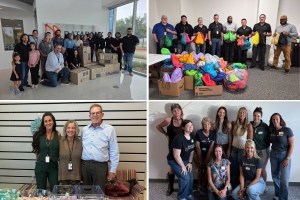
DataBank employees participated in a backpack drive to donate 60 backpacks of school supplies to students and teachers at a local school.
Twenty-Seven Volunteers, One Classroom-Ready Delivery
Twenty-seven DataBank employees pitched in to pack the backpacks, some of which were branded with the DataBank logo. Each one was filled with a water bottle, notebook, ruler, crayons, pocket folder, pencil pouch with pencils, eraser, pencil sharpener, glue stick, and kid scissors. The team also set aside extra water bottles, notebooks, erasers, pocket folders, pencils, and crayons for teachers, recognizing that classroom needs do not stop with students.
The finished backpacks were delivered directly to Bluffdale Elementary, giving local kids and their teachers a boost heading into the school year. It is a small gesture with an outsized impact for families who could use the help.
A Culture of Giving Back
Backpacks are one more example of a commitment that shows up across DataBank markets throughout the year. A few recent examples:
Kindness Kits: Employees across Houston, Dallas, Salt Lake City, and Denver assembled and donated 852 care packages this spring for organizations serving women, children, and individuals in need.
DFW Metro Blood Drive: DataBankers, customers, and vendor partners came together at our DFW3 facility, with 21 donors giving blood and two giving double donations.
Letters to the Troops: Teams across eight data centers wrote and sent more than 500 letters of gratitude and encouragement to U.S. service members.
DataBank employees consistently look for ways to support the neighborhoods surrounding our data centers, and Salt Lake City’s backpack drive is a good example of that spirit in action.
We are proud of every DataBank employee, vendor, and customer who contributed to this effort. We are especially proud of our Salt Lake City team, who stepped up a second time to pack and deliver the backpacks, making sure Bluffdale Elementary students and teachers started the year with what they needed.
Want to learn more about how DataBank is investing in the communities where we operate? Visit our Community Relations page or explore DataBank Digest for more stories about our people, our partners, and the neighborhoods we’re proud to call home.
Some workplace initiatives fade after the first year. The DataBank Cares Kindness Kit program has done the opposite. Each spring, DataBank employees across multiple cities come together to assemble care packages filled with personal hygiene and household essentials, then donate them to local shelters, recovery programs, and advocacy organizations serving women, children, and individuals in need.
DataBank employee-owners in Houston, Dallas, Salt Lake City, and Denver assembled 852 Kindness Kits for organizations serving women, children, and individuals in need.
What began as a modest single-city effort has grown into one of DataBank Cares’ signature annual campaigns, reaching more volunteers, more markets, and more people with each passing year.
This spring brought the program’s strongest results yet. Across four metro markets — Houston, Dallas, Salt Lake City, and Denver — 83 DataBank volunteers assembled and donated 852 Kindness Kits, contributing 216 volunteer hours in the process. Employees also donated or helped secure nearly $2,500 in goods and financial support for partner organizations.
Three Years and Growing
Now in its third consecutive year, the DataBank Cares Kindness Kit program continues to grow. Employees assembled 340 kits in 2024, 650 in 2025, and 852 this year, representing more than 150% growth over two years.
That momentum reflects expanding participation across DataBank markets and the energy of employee resource groups (ERGs) like the Women of DataBank, one of several ERGs that channel employee passion into community action. From the Veterans Network and Volunteer Corps to the Multicultural Group and Pride at DataBank, these ERGs give employees a structured way to lead meaningful initiatives beyond the workplace.
This year’s kits reached four organizations doing vital work in their communities:
Houston Area Women’s Center (Houston): HAWC provides crisis intervention, counseling, and shelter services for survivors of domestic violence and sexual assault. This year, 22 DataBank volunteers showed up with 300 Kindness Kits and 44 hours of their time.
Children’s Advocacy Center of Collin County (Dallas): The center serves children who have experienced abuse and trauma. Dallas fielded the program’s largest volunteer turnout, with 25 employees contributing 100 hours alongside 202 donated kits.
Alpine Recovery Lodge (Salt Lake City) Alpine Recovery Lodge supports women on the path to recovery from addiction. Twenty-six Salt Lake City volunteers dedicated 52 hours and delivered 300 kits to the organization.
Hope House Colorado (Denver) Hope House empowers young mothers living in poverty through education and wraparound support services. Ten Denver volunteers contributed 20 hours and donated 50 kits to the cause.
Together, these four organizations represent the range of need that exists in the communities surrounding DataBank’s facilities. They also reflect a shared belief among DataBank employees: that showing up for neighbors matters, whether that means powering critical infrastructure or assembling a care package for someone who needs one.
Community Is Part of the Infrastructure
Kindness Kits are one expression of a larger commitment that shows up across DataBank’s markets in different forms throughout the year.
Atlanta career exploration: DataBank’s Atlanta campus hosted a career exploration event for local young people, showcasing the diverse, high-paying opportunities available in the data center industry beyond traditional college pathways.
The numbers tell part of the story. The rest belongs to the 83 DataBankers who gave their time this spring to make sure 852 people received something they needed.
Want to learn more about how DataBank is investing in the communities where we operate? Visit our Community Relations page or explore DataBank Digest for more stories about our people, our partners, and the neighborhoods we’re proud to call home. Read more about our DataBank Cares programs.
At DataBank, doing the right thing does not always mean doing the easy thing. That belief was put to the test three years ago, when construction on two of our Atlanta data center facilities turned up something unexpected and set in motion one of the most meaningful environmental initiatives in our company’s history.
When Construction Met Conservation
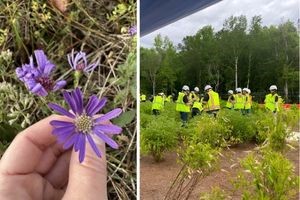
While breaking ground on the property, we discovered Georgia Asters growing on the site. This rare wildflower is listed as a threatened species by the State of Georgia and serves as a critical late-season food source for Monarch butterflies during their annual migration. Pollinators like the Georgia Aster play an important role in our food supply since roughly one-third of the fruits and vegetables we consume depend on a healthy pollinator ecosystem.
To protect the threatened Georgia Aster discovered on our property, DataBank partnered with Pollinator Partnership to create a thriving native habitat in its place.
When development clears large tracts of land, the ecosystems and migration pathways pollinators depend on can disappear with them. Replacing them with a protected natural habitat matters well beyond the environment. In many cases, it is essential to preserving the food systems communities depend on.
We could have cleared the flowers from the site and moved on. Instead, we carefully relocated them to a protected area of the property, even though no regulation required us to do so. It was the right call, and it planted the seed for something bigger.
Building a Pollinator Habitat from the Ground Up
That decision led us to Pollinator Partnership, the leading nonprofit dedicated to protecting pollinator habitats across North America. Working with their team, we replaced what could have been vast areas of water-intensive sod grass on the property with a native wildflower mix that is better for the local ecosystem and more sustainable to maintain.
This past week, we took that commitment a step further by planting a manicured pollinator garden at the front entrance of two of our Atlanta facilities. It was a true community effort, with Atlanta-area DataBankers, local community members, and representatives from our neighbors at the American Legion all picking up shovels.
The work was not easy. The DataBank property sits in an area known as Boulder Park for good reason, and digging more than 60 holes through dense, rock-strewn Georgia red clay meant everyone earned their keep. More than a few people took a turn with the pickaxe.
The DataBank Way
Projects like this one reflect something we think about often: what it means to be a responsible neighbor in the communities where we operate. It would have been easier, and entirely legal, to clear that original patch of Georgia Asters without a second thought. We chose a different path.
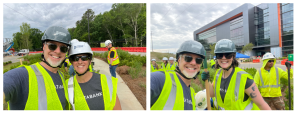
DataBank employee-owners roll up their sleeves to plant a native pollinator garden at our Atlanta data center campus, part of our ongoing environmental stewardship efforts.
What started as a small act of environmental care has grown into a model for how we approach land stewardship across our portfolio. We are grateful to our sustainability team, our construction and landscape partners at Kimley Horn and Brasfield & Gorrie, the representatives from Pollinator Partnership, and the many DataBankers and community members who showed up and got their hands dirty. This one was a team effort in every sense.
Want to learn more about how DataBank is investing in the communities where we operate? Visit our Community Relations page or explore DataBank Digest for more stories about our people, our partners, and the neighborhoods we’re proud to call home.
This past April, DataBank employee-owners across several markets stepped away from their desks and into their communities, marking Earth Day with hands-on volunteer work that ranged from environmental cleanups to sustainable farming.
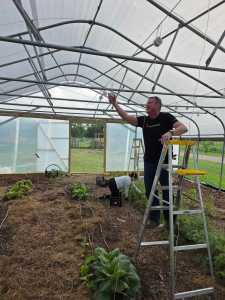
Three DataBankers headed out early to volunteer at BonTon Farms Extension in Dallas, lending a hand with morning chores that included milking goats, feeding chickens, trellising new tomato plants, and weeding garden beds — a full day’s commitment that the team embraced.
A DataBank employee works on a step ladder inside a greenhouse at Bonton Farms Extension, a 40-acre urban farm in Dallas.
Bonton Farms is a South Dallas nonprofit on a mission to disrupt food insecurity in one of the city’s most underserved communities. Its Extension Farm spans 40 acres and serves as both a working farm and an educational platform, introducing volunteers to animal husbandry, sustainable gardening, and the importance of rotating fields. The farm supplies local farm-to-table restaurants while also connecting neighbors to fresh, healthy food that has historically been out of reach.
DataBankers’ efforts helped keep the farm’s daily operations running smoothly — from ensuring animals are fed and cared for on schedule to keeping garden beds productive for the season ahead. On a working farm serving a community in need, that kind of reliable volunteer support makes a tangible difference.
Cleaning Up Clear Creek in Denver
For the third consecutive year, DataBank’s Denver team joined a local Earth Day cleanup organized by Protect Our Rivers, working alongside roughly 300 volunteers to remove more than 5,000 pounds of trash from Clear Creek. That is a meaningful result for a waterway that runs through the heart of the Denver metro area.
DataBank’s Denver team gathers after removing more than 5,000 pounds of trash from Clear Creek during an Earth Day cleanup with Protect Our Rivers.
Clear Creek winds more than 60 miles from the Continental Divide through the Denver metro before joining the South Platte River, making it a popular corridor for outdoor recreation that depends on exactly this kind of community stewardship to stay healthy and accessible.
Protect Our Rivers organizes volunteer events throughout Colorado focused on restoring and protecting the state’s rivers and watersheds. For DataBank’s Denver team, showing up three years running is less a tradition than a commitment.
Hitting the Trails in Tysons, Northern Virginia
DataBank’s Northern Virginia teams marked Earth Day with a trail cleanup at Scott’s Run Trail in Tysons, Virginia, and the timing carried extra significance. The event also coincided with the 150th anniversary of the Tysons area, making it a community moment as much as an environmental one. For many on the team, it was their first volunteer outing together.
Among the more interesting finds along the trail: baseballs, a lawn chair, old street signs, and what appeared to be the remains of a campsite. The team made a day of it, with lunch together afterward.
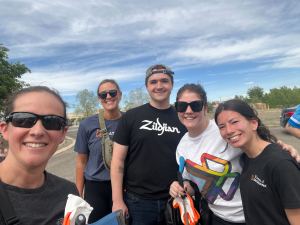
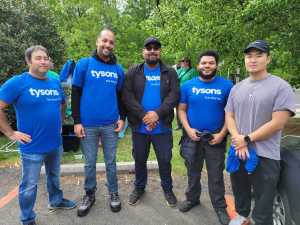
Five DataBank employees prepare to clean up Scott’s Run Trail in Tysons, Virginia, as part of an Earth Day volunteer outing.
Scott’s Run Trail is part of the Scotts Run Stream Valley Park system in Fairfax County, offering a green corridor in one of the most densely developed areas of Northern Virginia. It is a good reminder that preserving that kind of space requires ongoing care from the people and organizations that call the area home.
Coming Up in May
This month, DataBank will once again bring its Kindness in Action campaign to life as employee-owners, customers, and community partners come together to assemble Kindness Kits for women and people experiencing homelessness. The kits are distributed to local shelters across multiple DataBank markets — a hands-on effort organized by the Women of DataBank employee resource group that grows in participation each year.
Also in May, DataBank will serve as a community sponsor of the 4th Annual 7×24 Cloud Run on Saturday, May 30, in Ashburn, Virginia. The race route runs alongside DataBank’s Northern Virginia data centers, and the event brings together data center professionals, families, and neighbors for a fun, casual day in the community. Options include a 4.999K race and a one-mile fun run. More information and registration are available here.
DataBank Cares: Giving Back Is What We Do
From blood drives and food donations to assembling Kindness Kits, writing letters to deployed troops, and supporting STEM education in underserved communities, DataBankers across the country have consistently shown up for the people and places around them. That commitment does not stop after these events.
To learn more about DataBank’s community partnerships and employee volunteer initiatives, visit our Community Relations page.
Want to learn more about how DataBank is investing in the communities where we operate? Visit our Community Relations page or explore DataBank Digest for more stories about our people, our partners, and the neighborhoods we’re proud to call home.
DataBank recently partnered with the Culpeper Technical Education Center (CTEC) in Culpeper, Virginia, as part of its ongoing commitment to engage and support the communities where we operate Over two days, this hands-on program gave 40 electrical students an up-close look at the data center industry and the career opportunities it holds.
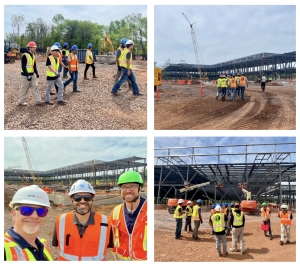
CTEC electrical students and DataBank team members tour the Culpeper campus currently under construction during a two-day career exploration program.
The Culpeper program is part of the same commitment: The view that being a good neighbor means investing in the people and places where we build and operate.
A Community Partnership Takes Shape
CTEC is a career and technical education school located directly across the street from our new Culpeper data centers currently under construction. Its electrical program students had built an impressive lab model of a data center data hall, complete with raised floors, electrical power and distribution systems, low-voltage and network cabling and conduit, backup power, cages, servers, and more.
DataBank wanted to support CTEC students and help expand their understanding of the data center industry. We saw an opportunity to do what good neighbors do: Open our doors, share what we know, and give these students a firsthand look at an industry that needs their talents.
Day One: Meeting the Students and the Site
On the first day, we brought together a team spanning operations and construction to make the trip to CTEC. Matthew Uveges, Regional Director of Data Center Operations for the Mid-Atlantic Region, and Thomas Barrett, Project Manager for our Culpeper campus, represented the hands-on expertise these students were hungry to learn from. We were welcomed by CTEC Principal Shaun Summerscales, Electrical Instructor Doug Keaton, and Bryan Rothamel, Director of Economic Development at Culpeper County and the Culpeper Tech Zone.
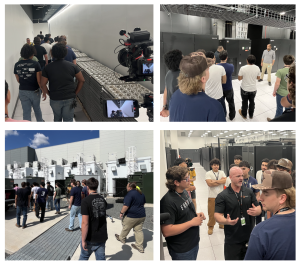
CTEC electrical students get an inside look at a fully operational DataBank facility in Ashburn, Virginia, during the second day of their career exploration program.
The DataBank team met with 40 Level 1 and Level 2 electrical students ranging in age from 16 to 18. After an overview of the data center business, Uveges and Barrett evaluated the students’ data hall model, offering feedback and noting how closely their work reflected a real-world facility.
The group then boarded a bus across the street to tour the Culpeper campus, where they met with construction teams and contractors, walked the site, and took in the scale of two facilities under development: a 72MW building currently under construction as well as planned 120MW data center.
Day Two: Seeing the Finished Product
On the second day, the older Level 2 students, those nearing graduation, traveled by bus to Ashburn to visit two of our operational facilities, IAD1 and IAD3, and see what a completed, fully operational data center looks like.
They met with Patrick Greene (Data Center Manager, IAD3), James Mathes (Data Center Manager, IAD1), and Mike Ocampo and Isaiah Benjamin (Data Center Technicians, IAD3), who shared their experiences and offered firsthand perspective on careers in data center operations. The conversations covered everything from day-to-day responsibilities and shift work to career progression, certifications, and what employers actually look for when hiring technicians.
Students also got a candid look at how their electrical training maps directly to the skills needed on the data center floor, and how quickly that training can translate into a stable, well-paying career.
From Blueprint to Operations: A Complete Picture in 48 Hours
In just two days, these students experienced the full arc of a data center: from a 30-foot-long lab model, to a 100-acre campus under construction, to a fully operational 40MW facility. They heard directly from construction and operations professionals about how their electrical training translates into immediate, well-paying careers in a growing industry.
That kind of end-to-end experience is rare, and it doesn’t happen without the right people saying yes. We’re grateful to the CTEC faculty and Culpeper County leadership for making this partnership possible, and proud of the DataBank team members who gave their time and expertise to make it meaningful.
Culpeper is one of more than 25 markets where DataBank operates across the United States, and programs like this reflect how we think about our role in each of them. Building data centers is what we do. Being a good neighbor is who we are. Whether that means opening our doors to students in Atlanta, bringing 3D printers to a library in Red Oak, or spending two days with 40 young people in Culpeper who are about to launch their careers, we believe the communities we operate in deserve more than our infrastructure. They deserve our investment.
We look forward to continuing our relationship with CTEC and finding new ways to support workforce development, STEM education, and career opportunity in Culpeper and beyond.
Want to learn more about how DataBank is investing in the communities where we operate? Visit our Community Relations page or explore DataBank Digest for more stories about our people, our partners, and the neighborhoods we’re proud to call home.
At DataBank, we believe that being a great company means more than building world-class infrastructure. It means showing up for the communities where we live and work. That spirit was on full display recently at our DFW3 facility in Dallas-Fort Worth, where DataBankers, customers, and vendor partners came together for the DFW Metro Blood Drive.
A Small Event with a Big Impact
Hosted in partnership with Carter BloodCare, the drive drew donors from across the DataBank community. Carter BloodCare set up donation stations inside the facility and in mobile trucks and vans on site. To keep things festive, a taco truck was parked on site for anyone looking to fuel up before or after donating.
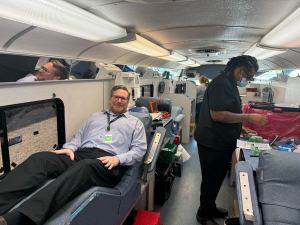
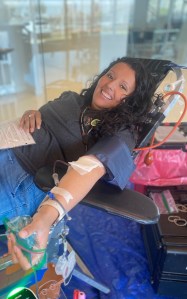
A DataBank employee donates blood in one of Carter BloodCare’s mobile units, part of the DFW Metro Blood Drive hosted at DFW3.
All told, 21 donors participated, with two giving double donations. The turnout speaks to the kind of workplace culture DataBank works hard to build. DataBankers across the country bring that same spirit to local blood drives in their own cities and markets, showing up throughout the year in recognition of an ongoing and critical need for blood donations.
What made the day even more meaningful was seeing that spirit extend beyond our own team. A DataBank vendor also joined employees to donate. When partners show up for something like this, it speaks to the kind of relationships worth building.
According to Carter BloodCare, a single donation can save up to three lives. With 21 donors and two double donations, what started as a four-hour event carries the potential to save dozens of lives.
A Tradition Worth Continuing
This wasn’t a one-time event. Last year, DataBankers joined the data center industry’s annual #DataCenterSleevesUp campaign, a virtual blood drive organized by the Data Center Coalition in partnership with the American Red Cross and Vitalant.
A DataBank employee donates blood inside DFW3, one of 21 donors who participated in the DFW Metro Blood Drive hosted in partnership with Carter BloodCare.
That spirit carried right into this year’s DFW Metro Blood Drive, and we’re proud to keep building on it.
About DataBank Cares
DataBank Cares is our companywide commitment to corporate social responsibility, supporting the employees, communities, and organizations that make our work meaningful. Through DataBank Cares, we invest in causes that matter: from health and wellness to education, sustainability, and local community organizations.
We’re proud of what our team accomplished at DFW3, and we’re already looking forward to the next opportunity to give back.
Want to learn more about DataBank Cares and our community initiatives? Check out DataBank Digest to see how DataBankers go beyond the data center to give back to the communities where we live and work.
When Anthony Hayes, DataBank’s Critical Facility Manager in Atlanta, received a call from Dexter Edmonds of Opportunity Runway asking if DataBank would host a career exploration event, he didn’t hesitate.
The mission was simple but powerful: Open DataBank’s doors to young people, pull back the curtain on what data centers are, and show them that lucrative, fulfilling careers exist beyond the traditional four-year college path.
The event served two purposes. It would counter misconceptions about the data center industry while opening doors for the next generation. It also gave Hayes a chance to give back in a meaningful way. “What good is it for me to have this knowledge and these skills if I don’t share them?” Hayes said. “I wanted to tell my story, share my journey, and give young people different paths to success.”
Beyond the Headlines
The event, held on a Saturday at one of DataBank’s Atlanta facilities, drew nearly 20 young people eager to learn about an industry many had never considered.
For Hayes, it was a chance to move past the headlines and misconceptions about data centers –especially those related to water consumption and environmental impact— and focus on what matters most: the opportunities these facilities create for communities.
“A lot of the rhetoric about data centers comes from people who don’t understand the technology,” Hayes explained. “We wanted to show them real examples: what closed-loop cooling systems actually mean, how modern data centers operate, and most importantly, the career paths available in this industry.”
A Team Effort
The day featured multiple components designed to give attendees a comprehensive view of data center careers.
A data center industry expert from Method Experts, a training organization dedicated to equipping operators and technicians in mission-critical environments with essential skills for safety and operational excellence, delivered an educational session on data center fundamentals, their diverse applications, and the wide range of career paths available. He covered everything from physical security and cybersecurity to MEP (mechanical, electrical, and plumbing), operations, and rack-and-stack positions.
Brian Wilkerson from PRT Staffing, a placement service that works with the industry, provided lunch for attendees and even brought his 15-year-old son to the event—a powerful statement about the real conversations families are having about alternative career paths.
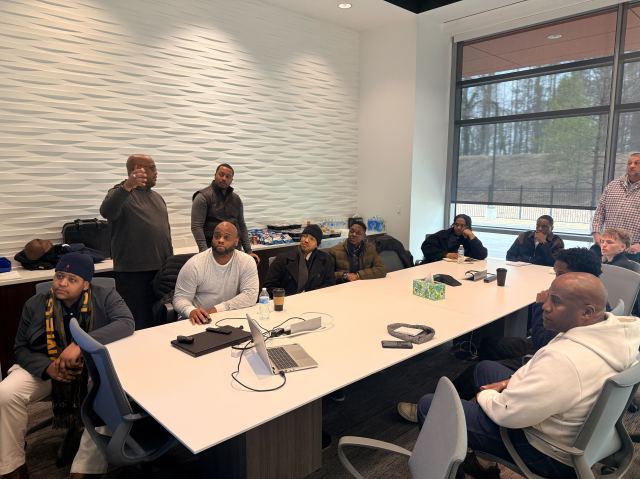
In this session, DataBank employees and data center experts presented career opportunities to students interested in learning more about the data center industry.
Hayes also invited members of his own team, Leon LaMar III and Clyde Ward, to share their personal journeys into the data center field. “Everybody in a data center has a unique story about how they got there,” Hayes said. “We’re in a field that didn’t exist 30 years ago, and now it’s exploding with opportunities young people may not even know exist.”
The Eye-Opening Reality
Hayes made a compelling case when he compared career paths side by side. The traditional college route often means four years of debt accumulation for a degree that might yield a $60,000 starting annual salary. Meanwhile, trade paths like becoming a journeyman or full electrician offer a dramatically different trajectory.
“You can join the IBEW, pay union dues, and get paid to learn,” Hayes told the group. “In the same four years someone else is in college, you can complete your training and come out making $45 to $55 an hour, which is close to six figures right from the gate.”
Hayes was also careful to note that choosing technical training doesn’t mean abandoning education entirely. Workers can return to school later to develop other skills like professional communication and presentation abilities. “The hard part is the technical knowledge,” he explained. “Once you have that, you can focus on perfecting your soft skills and positioning yourself for bigger roles over the years.”
The message clearly struck a chord. Many attendees connected with Hayes on LinkedIn after the event, staying behind to ask questions about what he looks for when hiring, whether he hires people without experience, and how they could break into the industry.
“The eye-opening realization that you don’t have to go to college but can still make real money,” Hayes said. “That was the biggest thing they took away.”
Creating Legacy
The event held special significance for Hayes. His own children are in high school, navigating similar decisions about their futures.
“It was an opportunity to show them that community is important, and that it’s important to have leaders who don’t gatekeep,” he said. “Your path might be different from mine, but it doesn’t hurt for you to understand my path and see there’s opportunities for you.”
Hayes also appreciates working for a company that actively supports community initiatives like this. “I really enjoy working for DataBank,” he said. “I’ve worked in toxic work environments before. This is so far from that. There’s a strong culture here that values giving back and investing in the communities where we operate, and that matters.”
Looking Ahead
The Atlanta event is just the beginning. Hayes continues to represent DataBank at career fairs and community events, partnering with organizations like Opportunity Runway to connect with young people exploring their career options.
“When we open our doors and share our story, we create pathways for others and strengthen the communities we call home,” Hayes said. “That’s what being a good neighbor really means.”
Want to see more stories about DataBank’s community involvement and industry leadership? Check out DataBank Digest for more insights on data center industry trends and infrastructure strategy.