

Summarize with:
read in < 1 min


Computer networks are the backbone of modern business operations (and, arguably, of modern life in general). Ensuring fast, reliable network connectivity is, therefore, a top priority for most, if not all, businesses. Here is a quick guide to what you need to know about how data centers ensure they deliver the highest standards of network connectivity.
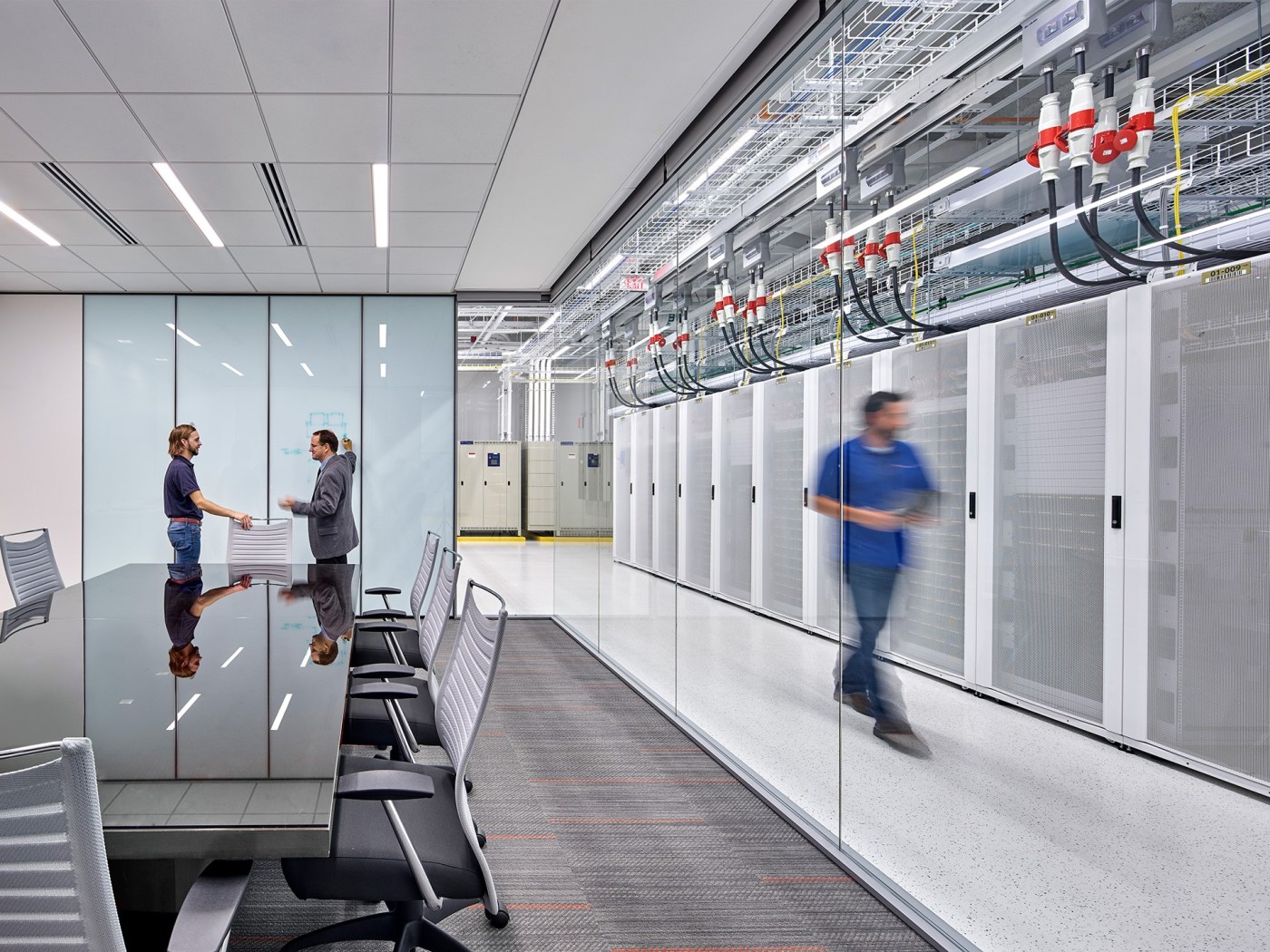
A data center is a facility used to house computer systems and the infrastructure needed for them to operate. The key infrastructure components are power, climate control, and network connectivity.
Fast, reliable network connectivity is crucial for data centers because it ensures efficient data transmission, low latency, and high availability of services. It therefore enhances overall operational efficiency. In particular, it enables data centers to handle peak loads and high traffic volumes without degradation in performance.
Here are five specific data center functions that depend on fast, reliable network connectivity.
Virtualization: Fast, reliable network connectivity is essential for virtualization technologies like VMware vSphere or Microsoft Hyper-V to ensure seamless communication between virtual machines (VMs), host servers, and storage systems. This enables efficient resource sharing, live migration of VMs, and high availability features.
Distributed storage systems: In distributed storage environments like SAN (Storage Area Network) or NAS (Network Attached Storage), rapid and reliable network connectivity is critical for accessing and replicating data across multiple storage nodes. This supports data redundancy, disaster recovery, and high-performance storage operations.
Content delivery networks (CDNs): CDNs rely on fast and reliable network connectivity to deliver content (e.g., web pages, videos, software updates) to users quickly and efficiently. This involves caching content at edge servers located closer to end users and using optimized routing to minimize latency and ensure a smooth content delivery experience.
High-performance computing (HPC): HPC clusters require fast interconnects, such as InfiniBand or high-speed Ethernet, to enable parallel processing and communication between compute nodes. This facilitates complex scientific simulations, data analysis, and modeling tasks that demand high throughput and low latency.
Database clustering and replication: Database clustering and replication setups rely on fast and reliable network connectivity to synchronize data between primary and secondary database instances. This ensures data consistency, fault tolerance, and high availability for critical database applications.
There are four key components of network connectivity that combine to determine the quality of the user experience. Here is an overview of them.
The physical network infrastructure of a data center comprises cables, switches, routers, and other hardware components. These elements form the foundation of the network, facilitating communication between devices.
High-quality, shielded twisted pair (STP) or fiber optic cables ensure efficient data transmission with minimal interference. Enterprise-grade switches and routers provide the necessary bandwidth and routing capabilities to manage network traffic effectively.
Network topology refers to the arrangement of devices and connections within a network. In data centers, a redundant mesh topology is commonly employed to ensure fault tolerance and high availability. Each network device is connected to multiple others, creating multiple paths for data transmission.
This redundancy minimizes the impact of single points of failure, such as link or device failures, by allowing traffic to be rerouted dynamically. Mesh topologies also support scalability, as additional devices can be seamlessly integrated into the network without disrupting existing connections.
Network protocols govern communication between devices in a network, defining rules and formats for data exchange. Next-generation network protocols play a vital role in addressing the evolving requirements of modern networking environments.
IPv6, for example, offers a larger address space compared to IPv4, enabling the accommodation of the increasing number of connected devices in the Internet of Things (IoT) era.
MQTT (Message Queuing Telemetry Transport) is optimized for efficient messaging in IoT deployments, prioritizing low bandwidth and low latency communication. QUIC (Quick UDP Internet Connections) enhances web communication by reducing latency and improving security through features such as encryption and connection multiplexing.
These next-generation protocols are essential for optimizing network performance, ensuring data integrity, and supporting emerging technologies in data center environments.
Selecting Internet Service Providers (ISPs) is a critical decision for data centers to ensure reliable connectivity to the internet and other networks. Factors influencing ISP selection include network reliability, bandwidth capacity, latency, and geographic coverage.
Data centers often establish redundant connections with multiple ISPs to mitigate the risk of network downtime or performance issues. This redundancy provides alternative paths for data traffic, enhancing overall resilience and fault tolerance.
Negotiating service level agreements (SLAs) with ISPs is also essential to ensure quality of service and timely issue resolution.
By carefully considering these factors and implementing redundant connectivity, data centers can maintain high availability and ensure seamless access to services for their users.

Sign Up For Our Resource Library
Enjoying our resource? Get the latest news and articles delivered straight to your inbox.
Can’t see the form? Click here.
Share Article
Popular Categories

The term “interconnection solutions” refers to the mechanisms and technologies used to establish seamless connections between networks, systems, and data centers. Interconnection solutions play a vital role in modern business...

Gain insight into the importance of comprehensive network monitoring in colocation. Find out what makes colocation networks different from networks in on-premises data centers. Learn the basics of network monitoring in colocation and find out how advanced network monitoring tools improve on it.

A carrier hotel is a building that houses telecommunications equipment and serves as an interconnection point for multiple network service providers. Carrier hotels enable efficient and cost-effective interconnectivity between different networks.
Discover the DataBank Difference today:
Hybrid infrastructure solutions with boundless edge reach and a human touch.
Tell us about your infrastructure requirements and how to reach you, and one of team members will be in touch shortly.
Can’t see the form? Click here.
Let us know which data center you'd like to visit and how to reach you, and one of team members will be in touch shortly.
Can’t see the form? Click here.
Enjoying our resource? Get the latest news and articles delivered straight to your inbox.
Can’t see the form? Click here.
Can’t see the form? Click here.