

Summarize with:
read in < 1 min


Edge digital infrastructure is playing a key role in the ongoing process of making digital infrastructure faster and more reliable. With that in mind, here is a straightforward guide to what you need to know about how edge computing infrastructure enhances the overall digital infrastructure landscape.
Digital infrastructure is the infrastructure needed to power digital services. It covers everything from data centers and the infrastructure they require to software such as apps.
The growing use of digital services means that digital infrastructure has become increasingly important not just for modern business but also for modern life. This means that optimizing digital infrastructure has become a top priority for everyone involved with technology.
Over recent years, part of that optimization process has been reversing part of the ongoing move to the cloud. Clouds offer many, significant benefits but they are often dependent on centralized data centers. This means that their response times are relatively slow.
As a result, there is an increasing preference for keeping clouds for use cases where power is more important than speed. Where speed is the priority, organizations now aim to process data locally. This has resulted in the development and growth of edge computing.
Edge computing is computing undertaken at the edge of a network. In other words, it’s computing undertaken in the place where data is generated and/or used.
Practically speaking, edge computing trades power for speed. As edge data centers are located as close as possible to their user base, they have to be small. This limits their processing capability. The processing they can do, however, they can do with minimal delay as they eliminate the need for data to travel to and from a centralized data center.
As a result, edge computing is typically used for applications that require fast answers to relatively simple questions (e.g. what color are traffic lights?). It is also often combined with other solutions such as cloud computing to create a more powerful environment.
Here is an overview of 7 characteristic features of edge digital infrastructure.
Distributed architecture: Unlike traditional centralized cloud systems, edge infrastructure is decentralized, with multiple processing nodes scattered across various locations. This structure enhances resilience and ensures continued operation, even if some nodes go offline.
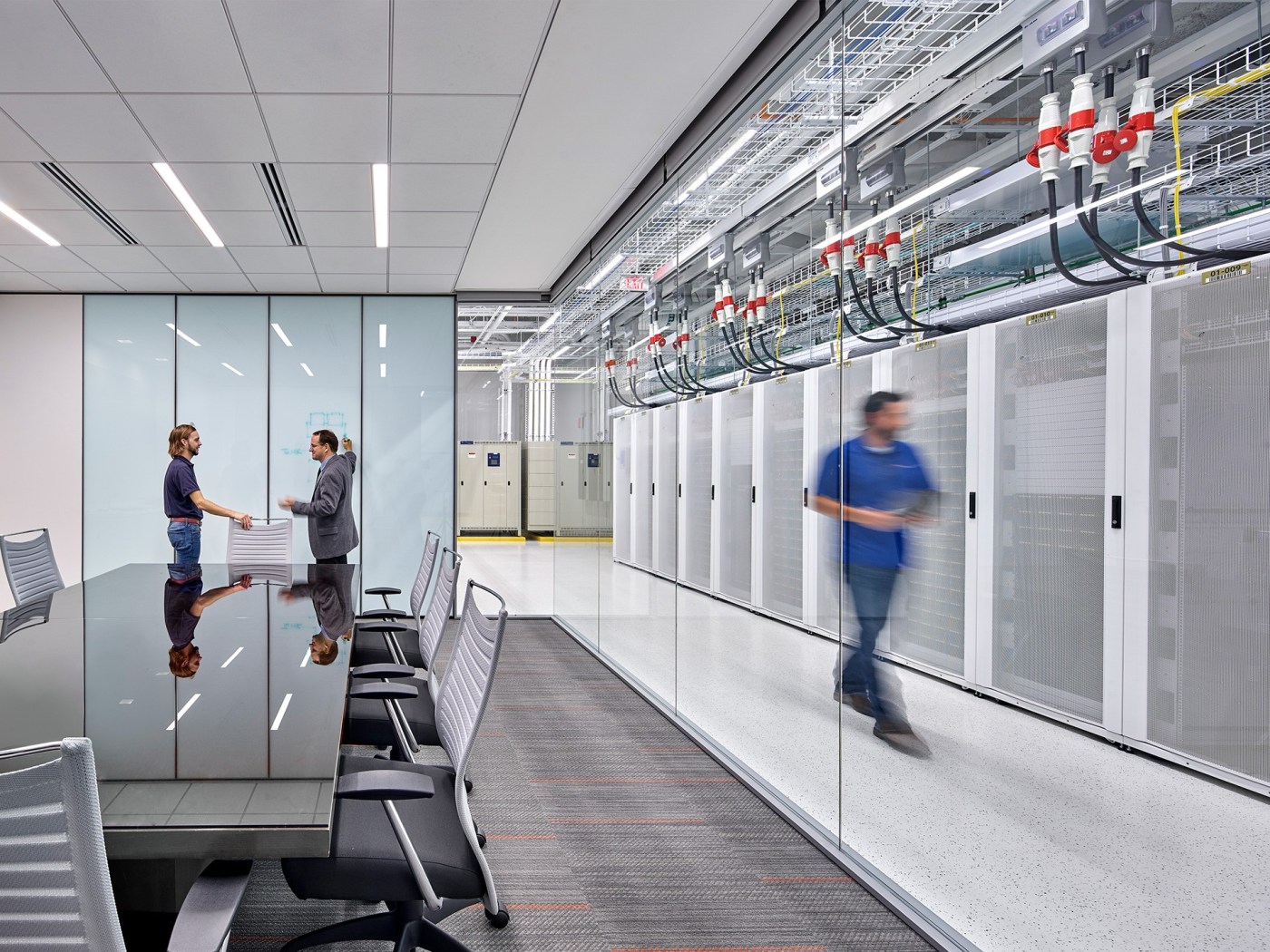
Micro data centers: Edge digital infrastructure often relies on compact, self-contained data centers close to data sources. These micro data centers house computing, storage, and networking resources, allowing localized data handling.
Edge nodes: Edge nodes are processing units positioned at various points in the network, handling data locally and reducing dependency on a central server. These nodes are essential components of edge infrastructure, enabling distributed computing.
Real-time processing capabilities: Edge digital infrastructure is equipped with high-speed processors and memory to handle data processing tasks directly at the source. This feature supports applications that require instant data handling, such as AI or machine learning models.
Connectivity options: Edge devices use multiple connectivity technologies like Wi-Fi, LTE, 5G, and Ethernet, enabling them to operate in various network environments. This flexibility ensures connectivity across different deployment settings.
Data caching and storage: Edge digital infrastructure includes local storage capabilities, allowing data caching and temporary storage before transmission. This feature helps manage data efficiently by storing recent or relevant data for immediate use.
Autonomous management systems: Many edge systems have built-in monitoring, diagnostics, and automation for self-management. This enables edge nodes to perform self-healing, updates, and troubleshooting independently.
Getting the most from edge computing infrastructure requires organizations to deploy it strategically and manage it carefully. With that in mind, here are five key best practices that are essential to optimizing the performance of edge computing infrastructure.
Place edge nodes strategically: Position edge nodes as close to data sources as possible to minimize latency and enhance real-time processing. Consider factors like geographical distribution and proximity to end users for optimal performance.
Ensure scalability and flexibility: Design edge infrastructure to be modular, allowing for easy addition or removal of nodes. Choose hardware and software that support future upgrades to adapt to evolving needs without requiring a complete overhaul.
Prioritize security at every layer: Deploy strong security measures across all edge devices and nodes, including encryption, authentication, and access controls. Since edge infrastructure is distributed, each device should have secure protocols to prevent unauthorized access.
Optimize for bandwidth efficiency: Implement data filtering and compression at the edge to reduce the volume of data transmitted to central servers. This minimizes network congestion and maximizes bandwidth usage, particularly in data-heavy applications.
Plan for data interoperability: Select edge devices and platforms that adhere to open standards and can integrate with various systems. Interoperability ensures that edge infrastructure can support diverse devices and applications, enabling seamless data exchange across environments.

Sign Up For Our Resource Library
Enjoying our resource? Get the latest news and articles delivered straight to your inbox.
Can’t see the form? Click here.
Share Article
Popular Categories

All types of edge computing adhere to the same basic principle. They aim to process as much data as possible at the edge of a network. As edge computing is developing, however, different types of edge computing are implementing this principle in different ways.

Edge computing may prove to be the same kind of breakthrough as the cloud has been. It has the potential to address many of the issues that are currently hindering the effective use of networking.

Every company faces many IT risks when sharing digital assets and integrating systems with third parties. If vendors let their guard down when exchanging data with your IT systems, cybercriminals could find their way into your IT infrastructure. Here’s how to keep your entire IT supply chain strong.
Discover the DataBank Difference today:
Hybrid infrastructure solutions with boundless edge reach and a human touch.
Tell us about your infrastructure requirements and how to reach you, and one of our team members will be in touch shortly.
Can’t see the form? Click here.
Let us know which data center you'd like to visit and how to reach you, and one of our team members will be in touch shortly.
Please understand that we might not be able to accommodate every request for a physical data center tour.
Please allow a minimum of 24-48 hours for a response.
Can’t see the form? Click here.
Enjoying our resource? Get the latest news and articles delivered straight to your inbox.
Can’t see the form? Click here.
Can’t see the form? Click here.

