Summarize with:
read in < 1 min


Despite the popularity of the cloud, it’s clear that data centers are on an upward trajectory. With that in mind, here is a data center market forecast for 2026. It lists 12 key growth drivers to watch.
Generative AI and large-model workloads depend on dense clusters of GPUs and specialized accelerators that require significantly higher power density than traditional server racks. Training and fine-tuning tasks generate sustained thermal output and push memory bandwidth to platform limits, which increases demand for liquid cooling and advanced airflow designs.
Enterprises and hyperscalers are expanding deployments of Blackwell and Hopper class accelerators, which draw far more power per rack than previous generations. This shift creates strong demand for data centers and colocation facilities capable of delivering high rack power, robust cooling capacity, and guaranteed access to GPU-ready space.
Modern AI and HPC racks now draw between 30 kW and 100 kW per rack, far beyond traditional 5 kW to 10 kW designs. This load forces data centers to redesign electrical systems to prevent voltage drop, thermal overload, and breaker instability. Operators increasingly adopt medium-voltage distribution to reduce transmission loss and support higher amperage.
Facilities also require larger substations, expanded UPS capacity, and redundant feeders to maintain reliability under sustained peak draw. Cooling systems must shift toward direct liquid cooling, cold-plate loops, or full immersion to dissipate dense thermal output. These upgrades raise capital expenditure but increase achievable rack density and revenue per square foot, while ensuring that facilities can support the next generation of AI-driven workloads.
Edge computing for real-time use cases places capacity closer to users and sensors. Telecom rollout of 5G, and planning for 6G, drives distributed micro-data-center demand in metro and suburban locations.
These edge sites require local interconnection, small-footprint power, and low-latency networking to support AR/VR, industrial automation, and autonomous systems. The edge trend multiplies site counts and expands market geography.
Hyperscalers continue to expand global footprints while enterprises buy colocation to avoid lock-in and gain better economics. Major operators added hundreds of megawatts in 2024-2025, and regional colocation demand is shifting to tier-two metros. This split-growth model increases capacity demand across market tiers and raises interconnection importance.
Enterprises accumulate more structured and unstructured data for analytics, compliance, and AI training. Growing datasets force larger on-site storage and stronger east-west bandwidth. Storage growth increases floor space, networking, and backend compute requirements, changing how operators size and price facilities. Data gravity makes colocated or on-prem options financially attractive for heavy-data workloads.
Operators face pressure to decarbonize, improve PUE, and secure renewable energy contracts. Buyers demand transparent emissions reporting and guaranteed renewable power where possible. Regulatory and investor scrutiny pushes providers to optimize cooling efficiency, reuse waste heat, and co-locate with renewable projects. Sustainability choices now influence customer selection and project approvals.
Governments and regulators tighten rules on data residency, cross-border transfers, and auditability. Industries with strict compliance needs prefer controlled environments where physical access, chain-of-custody, and network routing are explicit. These constraints drive demand for private-cloud and colocation solutions within specific jurisdictions.
Organizations increasingly adopt hybrid models that mix public cloud, private cloud, and colocation. Cost predictability, compliance, and performance concerns push selective repatriation of workloads to on-prem or colocated environments. Firms that plan hybrid architectures in advance avoid costly, disruptive reversals later. The repatriation trend influences where new capacity is bought and how contracts are structured.
Demand for dense, low-latency interconnection grows as more services require direct peering and partner ecosystems. Carrier-neutral facilities and internet exchanges concentrate traffic, creating value for sites with rich ecosystem presence. Strong interconnection reduces transit costs and supports multi-cloud architectures. Location choice increasingly depends on ecosystem density.
Rising demand for specialized components, plus global supply-chain constraints, lengthens delivery times for critical gear. Construction cost indices show increasing CapEx, especially for high-density and secure facilities. These pressures favor operators with scalable pipelines, pre-approved sites, or existing campus availability. Project economics now require tighter procurement strategies and contingency planning.
High-density, GPU-heavy and edge deployments demand new operational skills in power engineering, liquid cooling, and accelerators. Shortages of trained technicians and data-center engineers raise operating risk and slow rollouts. Operators that invest in training, managed services, and local talent pipelines gain speed-to-market advantages.
Investors and strategic buyers remain active in the sector, concentrating assets that package power, fiber, and interconnection. Consolidation shifts market power to large platform owners while unlocking capital for hyperscale and AI-focused expansions. These financial flows accelerate build-outs and influence regional capacity availability.

Sign Up For Our Resource Library
Enjoying our resource? Get the latest news and articles delivered straight to your inbox.
Can’t see the form? Click here.
Share Article
Popular Categories
Explore the topic of future-proofing data centers and the importance of anticipating growth. Learn the basics of capacity planning and find out the 5 key factors that influence capacity requirements. Discover three best practices that will help to ensure you implement robust capacity planning.
An HPC (High-Performance Computing) cluster refers to a group of interconnected computers that work together to execute complex computations rapidly and process large amounts of data. These clusters are widely used in scientific research, engineering, finance, and other fields that require substantial computational power.
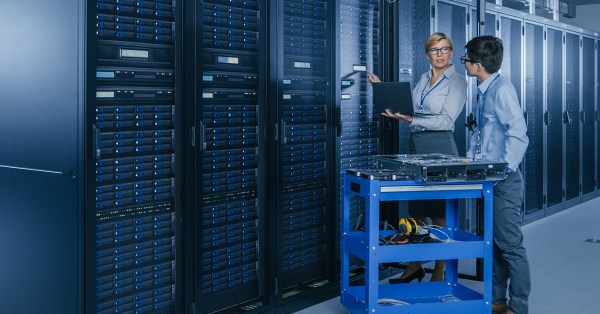
The future of the data center industry is being driven by growing demand for capacity, fueled by AI and digital transformation. Learn more in our latest article on how companies can secure the infrastructure they need to stay competitive.
Discover the DataBank Difference today:
Hybrid infrastructure solutions with boundless edge reach and a human touch.
Tell us about your infrastructure requirements and how to reach you, and one of our team members will be in touch shortly.
Can’t see the form? Click here.
Let us know which data center you'd like to visit and how to reach you, and one of our team members will be in touch shortly.
Can’t see the form? Click here.
Enjoying our resource? Get the latest news and articles delivered straight to your inbox.
Can’t see the form? Click here.
Can’t see the form? Click here.