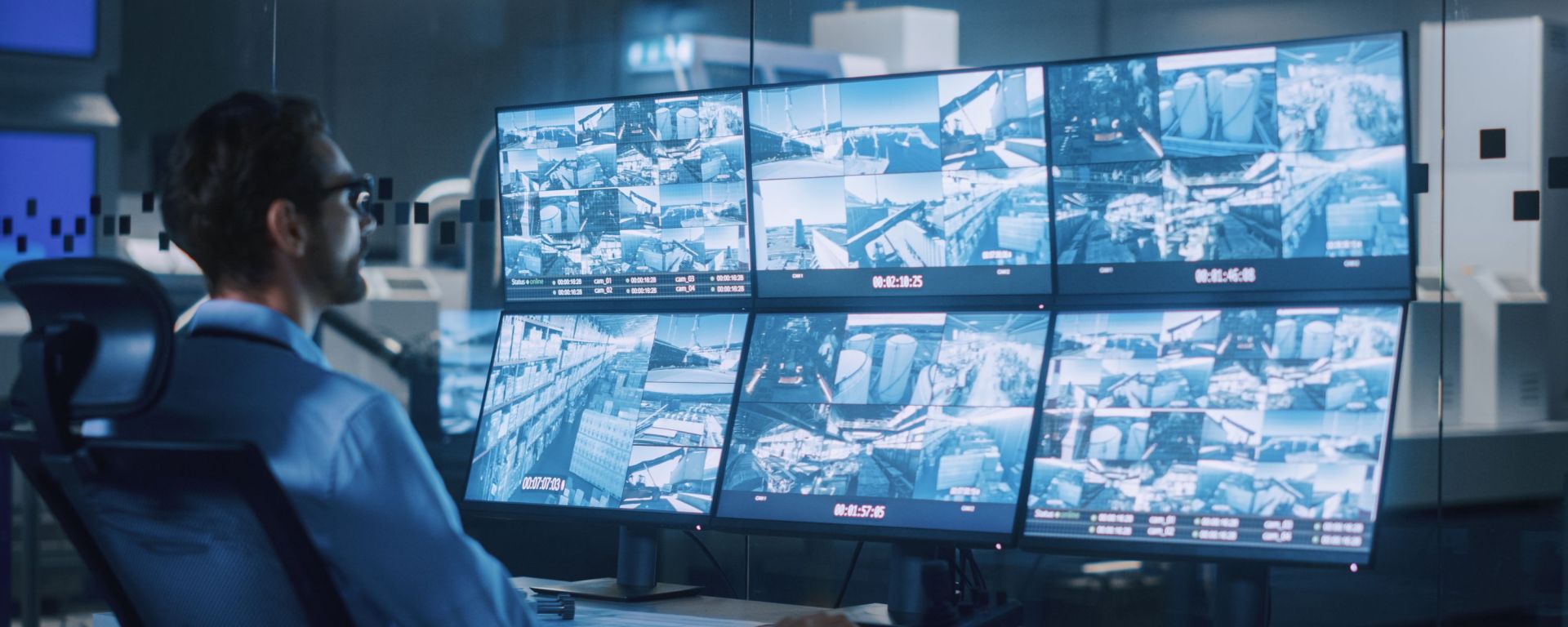

As we enter 2026, security considerations for data center operators continue to evolve in ways that demand both vigilance and adaptability. While I’m cautiously optimistic that we’ll see some geopolitical tensions ease by year’s end, with conflicts in Ukraine and the Middle East potentially moving toward de-escalation, the threat environment isn’t simplifying. It’s shifting.
Nation-state actors are getting more sophisticated. Insider threats are multiplying. The attack surface keeps expanding as AI workloads drive unprecedented connectivity requirements. Regulatory frameworks are tightening globally, creating new compliance burdens on top of operational security challenges.
Here’s what’s keeping me up at night, and what should be on your radar.
The most concerning physical security trend we’re tracking is the emergence of sophisticated insider threats tied to nation-state actors.
Industry intelligence suggests a troubling possibility: Individuals connected to foreign governments may be presenting themselves as legitimate job candidates and attempting to get hired at data centers, in technology roles in general, or in situations where intellectual property has value, to position themselves for future directed activities.
In some cases, reports indicate intellectual property theft. In others, these individuals may be lying dormant, potentially waiting to disrupt operations by pulling switches or disconnecting critical infrastructure if geopolitical tensions escalate. Security professionals are increasingly warned about this threat vector, and it’s fundamentally changing how we need to think about personnel security and background verification.
This isn’t paranoia. This is a documented threat pattern that requires data center operators to strengthen pre-employment screening, maintain heightened awareness of unusual employee behavior, and implement security controls that assume insider risk rather than blindly trusting credentials.
Physical security systems have increasingly relied on biometric authentication such as facial recognition and fingerprint scanners as more reliable than or as an addition to traditional access controls. That reliability is now under assault.
We’re seeing rapid advances in biometric spoofing, where attackers use 3D-printed face models, latex fingerprints, and other techniques to defeat biometric systems. What makes this particularly concerning is the convergence with AI. Threat actors can now take detailed 3D scans and use AI to generate remarkably convincing physical models that can fool facial recognition systems. What used to be exciting material for movies is now reality.
The fingerprint spoofing is slightly less advanced, but attackers have successfully created latex glove overlays that mimic fingerprints well enough to bypass some scanning systems. As these techniques become more accessible and refined throughout 2026, data center operators will need to implement multi-factor authentication even for biometric systems and consider liveness detection technologies that can distinguish between real human features and sophisticated fakes.
The AI security threat is no longer theoretical. We’ve already seen instances in late 2025 where AI systems were weaponized to launch attacks against multiple organizations. One AI platform was exploited to target approximately 30 organizations before the provider detected and stopped the attack. Unfortunately, this is just the beginning.
In 2026, we’ll see AI evolve as both an attack tool and an attack surface. Smaller AI providers without robust security controls will become particularly vulnerable, and their tools could be hijacked to conduct sophisticated attacks. More concerning is the emergence of what security researchers call “ghost inputs.” These are carefully crafted prompts designed to trick AI systems into performing malicious actions while believing they’re doing something legitimate.
The intersection of AI and physical security creates additional vulnerabilities. Attackers are already exploring how to use AI to generate the biometric spoofing tools I mentioned earlier, creating a feedback loop where AI enables more sophisticated physical intrusions.
Data center operators should be evaluating their AI security posture now, implementing strong governance frameworks, and recognizing that AI systems need the same security scrutiny as any other critical infrastructure component.
Here’s a prediction that might surprise you: as nation-state cyber warfare potentially de-escalates with improving geopolitical conditions, we’re going to see criminal advanced persistent threats (APTs) surge to fill that void.
These aren’t your typical ransomware crews. These are sophisticated organizations, often with plausible deniability connections to nation-states, focused on economic espionage, high-value intellectual property theft, and supply chain extortion. They’ve realized that disrupting supply chains creates cascading economic impacts that can be monetized multiple ways.
Our just-in-time supply chain infrastructure makes us particularly vulnerable. When critical systems get disrupted—whether it’s airline operations, shipping logistics, or manufacturing coordination—the financial impact ripples through entire economic sectors. These criminal APTs are betting that companies will pay to avoid or stop these disruptions.
For data center operators, this means renewed focus on supply chain security, vendor risk management, and ensuring that your customers’ critical operations remain resilient against these sophisticated threats.
Despite all our technological advances, business email compromise and social engineering remain devastatingly effective. We’re still seeing incidents where employees click malicious links despite extensive training coupled with advanced detection tools.
Deepfake technology is making social engineering even more dangerous. We’ve seen cases where attackers impersonate vendors with remarkable precision, resulting in millions of dollars redirected to fraudulent accounts before detection. As deepfake audio and video become more convincing throughout 2026, the verification challenge becomes exponentially harder.
Our response includes investing in AI-powered email security solutions—using safe, known AI technologies to detect and prevent compromise attempts—and implementing stronger verification protocols for any financial transactions or sensitive communications.
Later in 2026 and beyond, I’m watching another threat emerge from an unexpected direction: community opposition to data centers potentially escalating beyond political channels into physical risk.
We’re already seeing significant citizenry backlash at zoning meetings, with concerns about power consumption, water usage, and community impact. Many of these concerns are based on incomplete or incorrect information. Right now, this remains in the realm of discussion. However, I am concerned about narratives that could radicalize opposition—stories suggesting that data centers have made housing unaffordable, driven up utility costs, or forced families from generational property.
If someone becomes convinced that a data center has personally harmed him or her economically, that opposition could, potentially, manifest as physical threat. This is still a long-range concern, but it’s something we’re monitoring carefully, and it underscores the importance of proactive community engagement and transparent communication about data center operations.
The security landscape for 2026 demands that we stay ahead of evolving threats without becoming paralyzed by them. At DataBank, we’re addressing these challenges through updated physical security technologies, enhanced detection capabilities, and stronger protocols around both cyber and physical access.
Here’s my advice to the industry: Don’t over-fortify to the point where you create more problems than you solve. When data centers start looking like Fort Knox with robo-dogs and drones, you’re not just deterring threats; you’re drawing attention and fueling the very myths and concerns that create community opposition.
Smart security is about layered, proportionate defenses that protect assets without broadcasting paranoia. It’s about recognizing that in 2026, security threats span from nation-state actors to AI vulnerabilities to supply chain risks, and addressing them all requires both sophistication and restraint.
The year ahead will test our ability to adapt to new threat vectors while maintaining the trust and confidence of the communities we serve. That’s a challenge I’m confident our industry can meet.

Sign Up For Our Resource Library
Enjoying our resource? Get the latest news and articles delivered straight to your inbox.
Can’t see the form? Click here.
About the Author

Share Article
Popular Categories

Cybersecurity education isn't one-size-fits-all. Explore free resources organized by age group to help children, teens, adults, and seniors build stronger defenses against scams and cyber threats.

Effective security awareness best practices require more than annual training. Discover how to integrate security into conversations from the beginning and build lasting organizational culture.
Multi-cloud environments multiply compliance complexity. Learn how to navigate shared responsibility models and choose infrastructure partners that simplify rather than complicate regulatory requirements.
Discover the DataBank Difference today:
Hybrid infrastructure solutions with boundless edge reach and a human touch.
Tell us about your infrastructure requirements and how to reach you, and one of our team members will be in touch shortly.
Can’t see the form? Click here.
Let us know which data center you'd like to visit and how to reach you, and one of our team members will be in touch shortly.
Please understand that we might not be able to accommodate every request for a physical data center tour.
Please allow a minimum of 24-48 hours for a response.
Can’t see the form? Click here.
Enjoying our resource? Get the latest news and articles delivered straight to your inbox.
Can’t see the form? Click here.
Can’t see the form? Click here.