Summarize with:
read in < 1 min


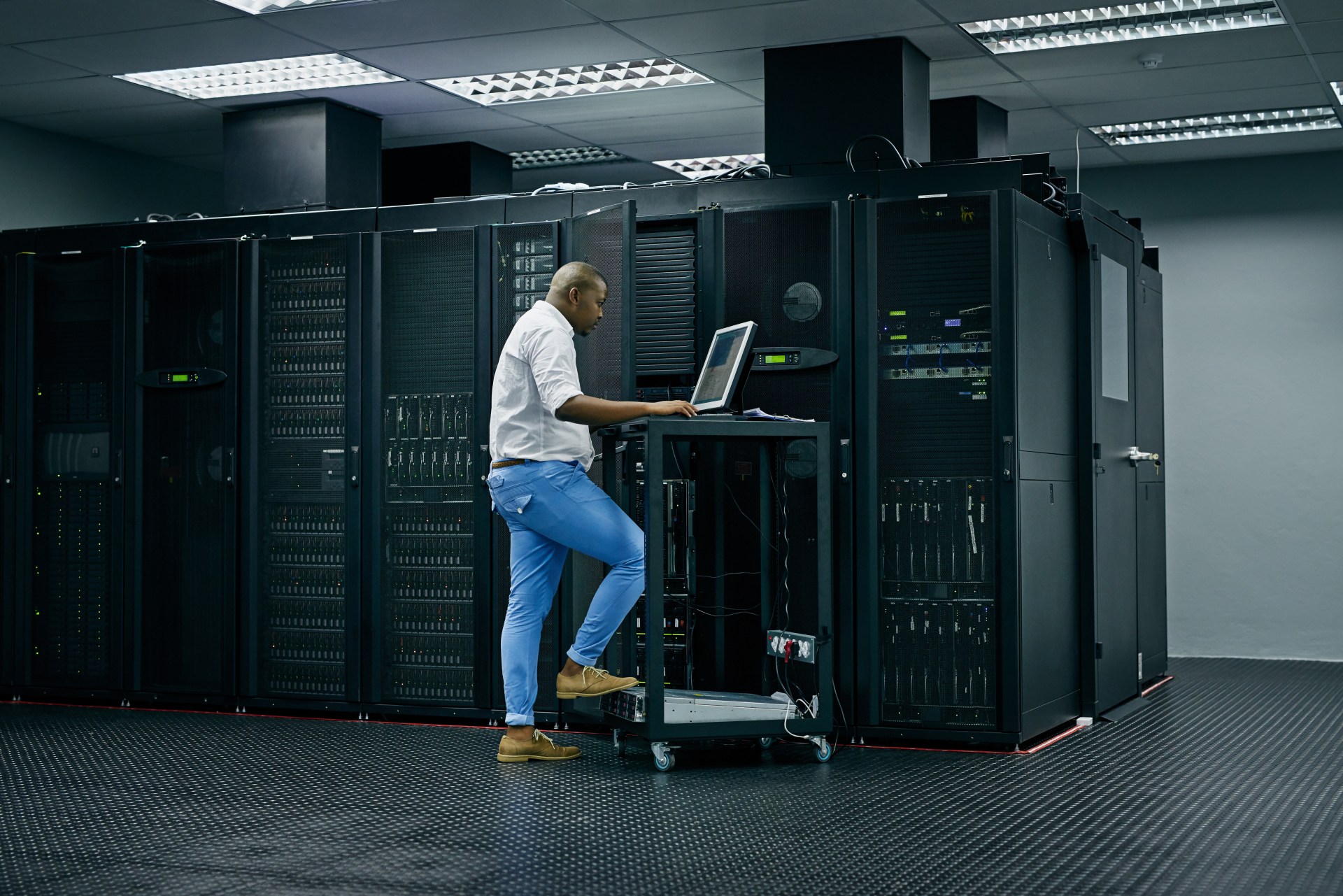
“Data center smart hands” are remotely located IT technicians who offer on-site support for data center maintenance and operations. These technicians are ideal for businesses lacking an in-house IT team. They can also be used to supplement an existing IT team. Here’s a quick overview of what you need to know about data center smart hands.
Data center smart hands play a critical role in ensuring the smooth operation of a data center and are responsible for maintaining and troubleshooting the physical infrastructure that supports the data center’s technology. Some of the tasks they regularly perform include the following.
Equipment installation: Installing and setting up new equipment, including servers, storage systems, and network devices, in the data center.
Equipment maintenance: Performing regular maintenance and upkeep on existing equipment, including cleaning, dusting, and replacing parts as needed.
Troubleshooting: Diagnosing and resolving technical issues with equipment, such as hardware or software problems.
Repairs: Making repairs to equipment as needed, including fixing or replacing broken components.
Cable management: Organizing and managing the cable infrastructure in the data center, including labeling cables, routing cables, and ensuring that all cables are properly connected.
Remote hands support: Providing remote support for customers, including assisting with configuration changes, resetting equipment, and other tasks as needed.
Inventory management: Keeping track of the inventory of equipment and supplies in the data center, including monitoring stock levels, ordering replacement parts, and organizing equipment for easy access.
There are several advantages to using data center smart hands. Smart Hands services improve data center efficiency by reducing downtime through expert on-site technical support, enabling faster issue resolution and cost savings. AI integration is enhancing predictive maintenance and automation. Smart‑hands services will shift toward remote‑assisted robotics, AR‑guided workflows, and AI support detection. By 2026, expect zero‑touch physical ops and incident triage managed via digital assistants. Here are the five main ones.
Increased efficiency: Smart hands technicians are able to quickly and effectively resolve technical issues, reducing downtime and increasing the overall efficiency of the data center.
Cost savings: By reducing downtime and quickly resolving technical issues, smart hands technicians can help lower the overall cost of data center operations.
Expertise: Data center smart hands technicians have the technical knowledge and expertise needed to perform complex tasks within the data center environment, ensuring that critical infrastructure is maintained and operated correctly.
Improved customer satisfaction: With strong customer service skills and a focus on providing a positive experience, smart hands technicians can improve customer satisfaction and build strong relationships with clients.
Flexibility: Data center smart hands can provide on-demand support, allowing organizations to scale their support needs as required.
Using data center smart hands can be very convenient. There are, however, some potential disadvantages businesses would need to be careful to avoid.
Becoming overly dependent on the vendor: There does need to be somebody in-house with the knowledge and experience to manage the vendor relationship effectively. If there isn’t, then a business may become overly dependent on a data center smart hands vendor.
Impacted decision making: Outsourcing IT operations can lead to a loss of familiarity with the IT infrastructure. This can make it difficult for the business to make informed and timely decisions.
Potential for unexpected costs: If businesses use data center smart hands on a contracted basis, it’s vital that the contract really does suit both parties. If it doesn’t, then the business may end up paying for additional services at ad-hoc rates.
Effective communication: Clear communication is critical at the start of a relationship with a smart hands services provider to ensure they have everything they need to provide quality service. Ongoing communication is also necessary to maintain a smooth partnership.
To get the most out of your working relationship with data center smart hands, it helps to apply the following best practices.
Conduct comprehensive research: Investigate the third-party smart hands service provider and their record to guarantee they have a history of delivering quality services.
Set clear goals and expectations: Clearly outline specific objectives and expectations with the provider to ensure they comprehend your needs and can deliver the required level of service.
Secure an SLA: Negotiate a Service Level Agreement (SLA) that outlines the expected quality of service, response times, and compensation for service disruptions.
Preserve control over vital systems: Maintain control over critical systems and processes to secure them and protect your data. Make sure that there is a clear path for your data center smart hands to inform you promptly of any issues with your infrastructure.
Continuously assess performance: Continuously monitor and evaluate the provider’s performance to ensure they are delivering quality services and meeting your expectations.

Sign Up For Our Resource Library
Enjoying our resource? Get the latest news and articles delivered straight to your inbox.
Can’t see the form? Click here.
Share Article
Popular Categories

At a high level, colocation works in much the same way anywhere. At a lower level, however, different areas have different characteristics. With that in mind, here’s a quick guide to colocation in Philadelphia.

ISO 27001 controls include policies, procedures, guidelines, and technical solutions aimed at safeguarding sensitive information, preventing unauthorized access, and ensuring the confidentiality, integrity, and availability of data.

Explore the topic of AI-driven insights for data center capacity planning. Gain an insight into capacity planning and the specific benefits of using AI capacity planning. Find out the most common challenges in AI data center capacity management. Discover the key best practices that will help you to address them.
Discover the DataBank Difference today:
Hybrid infrastructure solutions with boundless edge reach and a human touch.
Tell us about your infrastructure requirements and how to reach you, and one of our team members will be in touch shortly.
Can’t see the form? Click here.
Let us know which data center you'd like to visit and how to reach you, and one of our team members will be in touch shortly.
Please understand that we might not be able to accommodate every request for a physical data center tour.
Please allow a minimum of 24-48 hours for a response.
Can’t see the form? Click here.
Enjoying our resource? Get the latest news and articles delivered straight to your inbox.
Can’t see the form? Click here.
Can’t see the form? Click here.