

Summarize with:
read in < 1 min


Colocation vs cloud in 2026 is a decision that needs to balance cost management with control and performance. With that in mind, here is a brief overview of the key factors to consider when deciding where to host any given workload.
Public cloud pricing combines fixed and variable charges. These include compute, storage, per-request, monitoring, and data transfer.
Predictable workloads often reveal public-cloud bills higher than expected once micro-charges and egress add up. This shifts the total cost of ownership (TCO) calculation toward colocation or private cloud.
Businesses should run full TCO models that include reserved commitments, support tiers, monitoring costs, and likely egress over five years to compare options realistically.
Cloud providers typically charge for outbound data, which penalizes analytics, backups, and multi-region replication patterns. Heavy east-west or cross-region traffic can double or triple operating cost when not accounted for, making colocated storage near compute more economical.
Businesses should map data gravity and quantify recurring transfer volumes before deciding where to place storage and processing workloads.
Multi-tenant public cloud resources can show variable I/O and network latency during peak periods, which undermines transactional and real-time workloads. Dedicated colocation racks and private cloud clusters deliver predictable disk throughput, IOPS, and network latency for sensitive applications.
Businesses should classify workloads by latency tolerance and I/O profile, and place the most latency-sensitive services where hardware guarantees exist.
Public cloud implements a shared responsibility model that leaves customers accountable for many operational controls. On-prem or colocated deployments give direct access to encryption keys, network segmentation, and physical security controls, simplifying some compliance demands.
Businesses with strict data-sovereignty or audit evidence needs often prefer environments where infrastructure control reduces compliance complexity and audit time.
Cloud providers use tiered support models that privilege large spenders, which may delay escalation for mid-market firms. Colocation partners and private cloud vendors frequently provide hands-on engineering support and shorter escalation paths for mission-critical incidents.
Businesses should evaluate incident response requirements and model the cost of premium cloud support versus colocation-based managed support.
Cloud-native managed services accelerate development but create strong platform dependencies. Rewriting serverless functions, proprietary databases, or vendor ML pipelines carries significant engineering cost if migration becomes necessary.
Choosing colocation or designing for portability with containers and open-source stacks reduces long-term lock-in risk and preserves strategic flexibility.
The public cloud is highly elastic. It is therefore an excellent choice for applications with variable workloads, especially when those workloads are hard to predict.
If, however, applications have steady and/or highly predictable workloads, then it’s generally more economical to run them on private infrastructure. The public cloud can be used as a backup to the private system if necessary.
Emerging AI workloads and HPC need GPU density, NVMe fabrics, and power provisioning that hyperscalers supply but that many enterprises prefer to control on-prem. Colocation providers now offer GPU racks and high-density power footprints that support bespoke AI clusters without full hyperscaler lock-in.
Businesses should compare hardware availability, lead times, and unit economics for specialized compute between providers and colocation markets.
User and partner proximity matters for customer-facing apps and integrated systems. Public cloud regions deliver global reach, but cross-region hops add latency. Colocation in regional hubs reduces round-trip times to local user bases and on-prem systems.
Decisions must consider peering, direct cloud interconnect costs, and whether colocating in a carrier-dense facility yields net performance and cost benefits.
Regulators increasingly demand data locality and auditability for certain workloads, which complicates cross-border public cloud deployments. Colocation permits explicit control of physical location and local legal compliance.
Businesses should map regulatory constraints early to avoid costly redesigns or fines when choosing deployment models.
Data center energy costs and sustainability goals affect long-term OpEx. Public cloud operators invest heavily in renewables and efficiency, but colocation providers now offer green power contracts and carbon transparency.
Businesses with sustainability mandates must compare lifecycle energy costs, PUE, and carbon accounting across options to meet corporate ESG objectives.
Hyperscaler and colocation capacity markets tightened in recent years, driven by AI and data center demand. Lead times for high-power cages and grid connections can be years in some markets.
Businesses should assess procurement timelines, prelease risk, and whether hybrid approaches mitigate lead-time exposure for critical workloads.
Shifting workloads on-prem requires staff skilled in capacity planning, networking, storage tuning, and hardware lifecycle management. Cloud-first teams often lack these skills, which increases stabilization time and hidden costs.
Businesses should factor training, managed partnerships, or co-managed service fees into their cost and timeline analysis.
Hybrid strategy succeeds when orchestration, observability, and governance span environments consistently. Investing in container platforms, infra-as-code, and unified monitoring reduces operational friction and keeps workloads portable.
Businesses should prioritize architectures that let them move services between cloud and colocation as business needs evolve.

Sign Up For Our Resource Library
Enjoying our resource? Get the latest news and articles delivered straight to your inbox.
Can’t see the form? Click here.
Share Article
Popular Categories
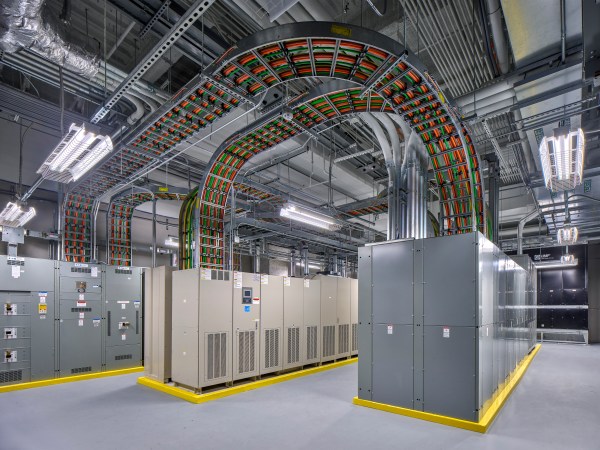
While the cloud is justifiably popular, colocation definitely still has its place. Some businesses use it on its own. Many now use it in combination with the public cloud to create a hybrid cloud. Here is a brief guide to colocation advantages and disadvantages.
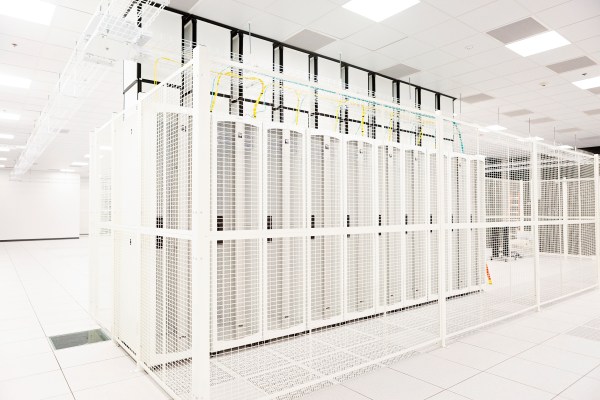
For many businesses, setting up IT infrastructure will mean choosing between colocation vs cloud, more specifically, public cloud. If you are in this situation, then here is a brief guide to what you need to know about colocation vs cloud.

Key Takeaways: Colocation and cloud differ in control, scalability, and cost structure Colocation offers predictable performance for steady workloads Cloud provides flexibility for dynamic environments Hybrid strategies combine strengths of...

Discover the DataBank Difference today:
Hybrid infrastructure solutions with boundless edge reach and a human touch.
Tell us about your infrastructure requirements and how to reach you, and one of our team members will be in touch shortly.
Can’t see the form? Click here.
Let us know which data center you'd like to visit and how to reach you, and one of our team members will be in touch shortly.
Please understand that we might not be able to accommodate every request for a physical data center tour.
Please allow a minimum of 24-48 hours for a response.
Can’t see the form? Click here.
Enjoying our resource? Get the latest news and articles delivered straight to your inbox.
Can’t see the form? Click here.
Can’t see the form? Click here.