

Summarize with:
read in < 1 min


While the public cloud is still immensely important for businesses, it’s clearly not replacing data centers. With that in mind, here is an overview of the top 10 data center trends for 2026. These are the 10 key predictions every IT leader should know.
Enterprises increasingly adopt hybrid models that blend public cloud flexibility with the performance and cost efficiency of private or on-prem environments. This is why mature organizations are now repatriating workloads selectively rather than abandoning the cloud entirely.
This trend matters because hybrid architectures provide workload placement freedom based on cost, performance, and compliance needs. Leaders gain more granular control of infrastructure economics and can avoid the lock-in and variable charges common in large-scale cloud deployments.
Organizations running analytics, machine learning, medical imaging, or financial reporting workloads often face high egress costs and performance challenges in public cloud environments. These workloads move large volumes of data between services, creating unpredictable expenses.
This trend matters because data volumes grow faster than cloud pricing models evolve. Leaders must prepare infrastructure strategies that support both near-term performance needs and long-term budget stability. Repatriation offers predictable bandwidth performance and eliminates per-gigabyte fees, which can improve overall TCO for large datasets.
Many enterprises want the control of on-prem environments without the burdens of managing physical facilities. Colocation offers dedicated power, cooling, connectivity, and physical security while allowing businesses to deploy their own hardware. This is reflected in the fact that repatriation strategies increasingly rely on colocation as the destination environment.
This trend matters because it enables organizations to reduce operational overhead while maintaining architectural sovereignty. Colocation also supports hybrid strategies by providing high-bandwidth, low-latency interconnects to public cloud providers, reducing the complexity of multi-environment workflows.
Performance variability remains a common issue in public cloud deployments due to noisy-neighbor effects and shared virtualization layers. Unpredictable latency has become a common reason for organizations to return applications such as databases, analytics clusters, and ERP platforms to dedicated infrastructure.
This trend matters because performance directly affects revenue, customer satisfaction, and operational continuity. Predictable performance enables consistent SLAs, reduces troubleshooting cycles, and supports applications with strict response-time requirements, such as financial transaction engines or logistics systems.
Regulated industries such as healthcare, finance, and government experience heavy compliance burdens in the cloud due to the shared responsibility model. As a result, cloud deployments often require multiple add-on tools for logging, auditing, and encryption to meet standards such as HIPAA, PCI DSS, and GDPR.
This trend matters because compliance is becoming more rigorous, not less. Leaders need infrastructure that provides complete security-control visibility and simplifies audit preparation. Repatriation and hybrid models allow organizations to centralize controls, reduce tool fragmentation, and demonstrate compliance more efficiently.
Public cloud providers often rely on tier-based support models that prioritize large-volume customers. Having limited and/or indirect access to engineers can delay incident resolution and, hence, lead to outages lasting longer than necessary.
This trend matters because downtime risk grows with system complexity. Enterprises require responsive support for mission-critical workloads, especially those tied to customer-facing services or regulated operations. Colocation and private-cloud providers offering hands-on support can reduce mean time to resolution and minimize service disruption.
Cloud pricing trends show rising costs across storage, data transfer, network services, and advanced compute resources. Many organizations see annual cloud spend increases outpace revenue growth. Cost unpredictability has therefore become a primary driver of repatriation.
This trend matters because cost inflation erodes ROI for cloud adoption. Leaders must evaluate whether workloads justify premium cloud pricing or whether dedicated infrastructure can stabilize expenses. Strategic repatriation and hybrid approaches improve budgeting accuracy and protect margins.
Many repatriation projects expose dependency on proprietary cloud services such as serverless functions, managed databases, and AI platforms. Once embedded, these dependencies complicate migration and constrain strategic flexibility. Organizations can find themselves spending months removing vendor lock-in during repatriation projects.
This trend matters because architectural independence is becoming essential to long-term resiliency. Adopting open standards such as containers, Kubernetes, and open-source databases enables workload mobility and reduces reliance on single providers.
Data-intensive and latency-sensitive applications increasingly require processing closer to where data is generated. Public cloud regions cannot always meet these proximity requirements, making edge environments more suitable.
This trend matters because low-latency processing supports real-time manufacturing control systems, healthcare imaging, autonomous systems, and retail analytics. Repatriation into colocation centers positioned near population hubs allows businesses to operate closer to customers and devices while maintaining centralized governance.
Organizations adopting repatriation or hybrid infrastructure want cloud-like automation while retaining hardware control. Tools for infrastructure-as-code, automated provisioning, and self-service resource management now extend beyond public cloud environments.
This trend matters because private-cloud automation reduces operational burden, improves deployment consistency, and enables faster scaling. Leaders can modernize on-prem environments without sacrificing efficiency or agility.

Sign Up For Our Resource Library
Enjoying our resource? Get the latest news and articles delivered straight to your inbox.
Can’t see the form? Click here.
Share Article
Popular Categories

Discover the impact of virtualization in colocation! Optimize resources, enhance efficiency, and boost agility. Explore key components, types, and 10 ways virtualization transforms colocation setups for cost-effective, agile IT infrastructures.
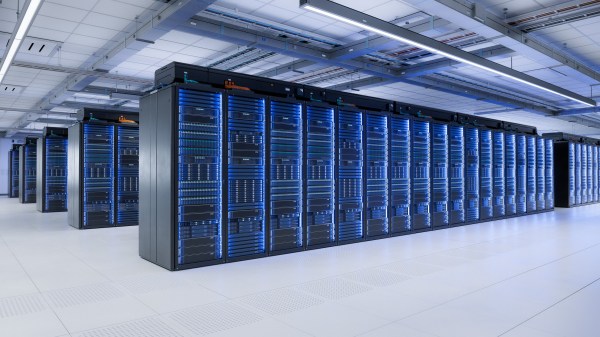
Artificial intelligence (AI) is a great example of a technology that has taken decades to become an overnight success. The concept has been around in fiction for centuries and in...

Discover the latest colocation trends, focusing on the expansion of edge computing. Learn about the growth in edge data centers and their Hybrid IT impact. Explore the five key benefits offered by edge data centers along with the three key challenges they present.
Discover the DataBank Difference today:
Hybrid infrastructure solutions with boundless edge reach and a human touch.
Tell us about your infrastructure requirements and how to reach you, and one of our team members will be in touch shortly.
Can’t see the form? Click here.
Let us know which data center you'd like to visit and how to reach you, and one of our team members will be in touch shortly.
Can’t see the form? Click here.
Enjoying our resource? Get the latest news and articles delivered straight to your inbox.
Can’t see the form? Click here.
Can’t see the form? Click here.