

Summarize with:
read in < 1 min


Many business practices that are now taken for granted are only possible due to cloud computing. By extension, that means they are only possible due to data centers. With that in mind, here is a straightforward guide to how data centers in Denver enable cloud computing in general and SaaS in particular.
Cloud computing is the term used to describe an approach to computing in which a pool of centralized computing resources is accessed over a network “as a service”. Clouds come in two main forms. These are public and private.
Public clouds: These are owned and run by third-party vendors and accessed over the internet. They provide resources to anyone who can afford to purchase them.
Private clouds: These are owned by the organization that uses them. They may be run in-house or by an external service provider such as a managed IT service provider. Private clouds may be accessed over the internet or through a private network (or both). Generally, if private clouds are accessible via the internet, it is only via a secure VPN.
Public and private clouds can be combined together as hybrid- and/or multiclouds.
Hybrid clouds combine at least one public cloud with at least one private cloud. In a hybrid cloud, the private cloud typically handles core tasks. It is also the default choice for any tasks that require the use of sensitive data, particularly if that data has regulatory protection. The public cloud is used to add extra capacity when needed without long-term commitment.
Multiclouds harness multiple clouds together to deliver one or both of two key benefits. Firstly, it minimizes the chances of an organization being left without access to the computing resources it needs. Secondly, it allows each cloud to be used in the way that best leverages its particular strengths.
Technically, multiclouds do not have to be hybrid clouds. They could be all public or all private clouds. In practice, however, it is common for multiclouds to be hybrid clouds. The hybrid cloud handles the core tasks and sensitive data. The public clouds provide extra resources and are deployed in the way that best leverages their individual strengths.
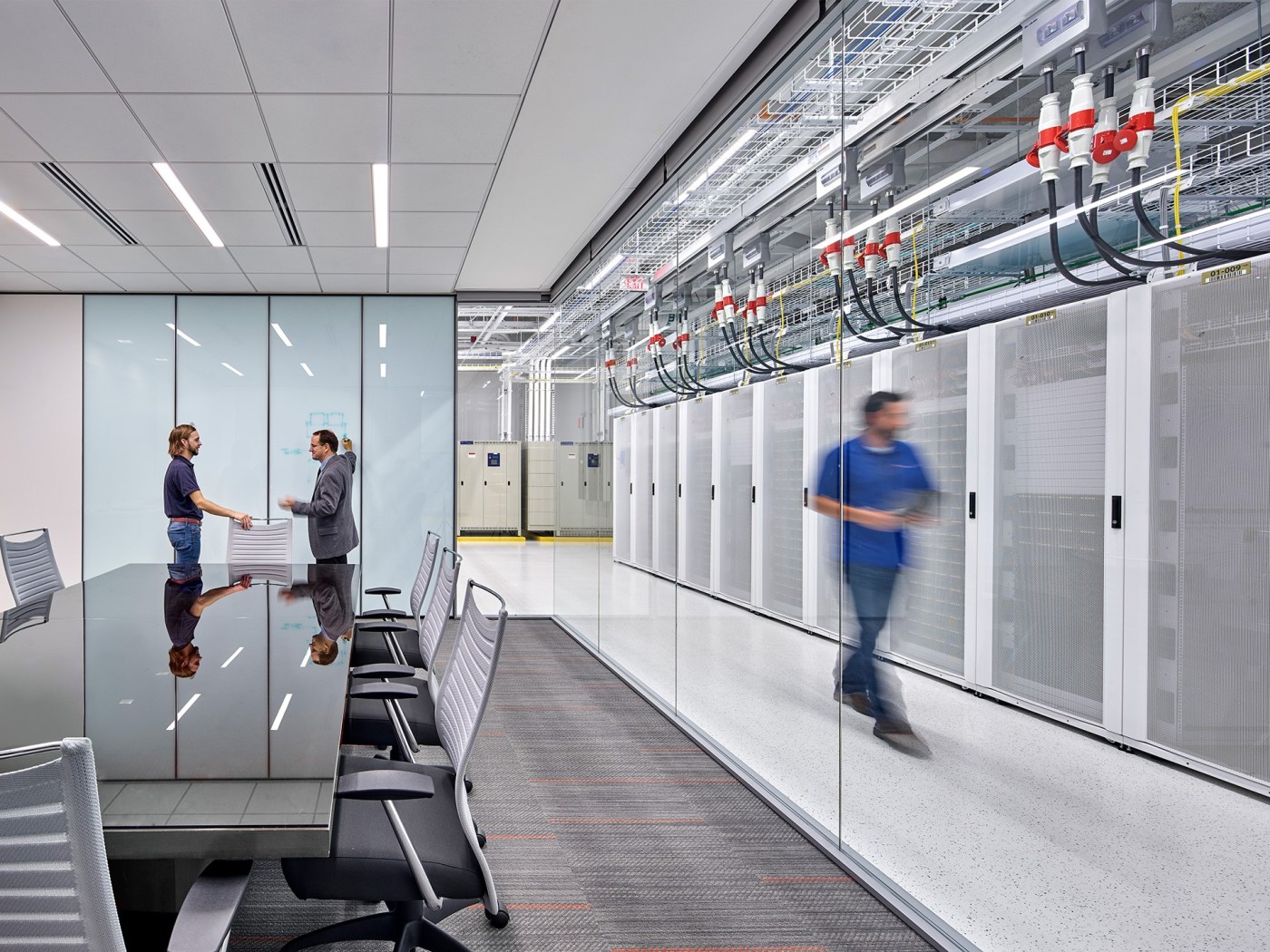
Denver data centers provide the core infrastructure needed to power cloud services. Here are just 7 examples of what that means in practice.
Denver data centers house powerful servers and networking equipment to process large-scale workloads efficiently, ensuring fast cloud service performance.
These facilities are strategically located with access to major fiber-optic networks, enabling low-latency connections between cloud providers, businesses, and end-users across the U.S.
Many Denver data centers use renewable energy sources, such as wind and solar power, to minimize environmental impact while providing reliable cloud computing infrastructure.
With backup power systems, multiple internet connections, and disaster recovery solutions, Denver data centers ensure cloud services remain available even during outages or cyber incidents.
These facilities implement advanced security measures, including biometric access controls, surveillance, and cybersecurity protections, to safeguard cloud data against breaches and unauthorized access.
Denver’s data centers facilitate hybrid and multi-cloud deployments, enabling businesses to integrate private, public, and on-premises environments for greater flexibility.
Edge computing is an approach to computing that emphasizes processing data as close as possible to where it is generated and/or used. Edge computing not only minimizes latency when it is used but also reduces overall network traffic, hence reducing latency for cloud-hosted applications.
Data centers are the backbone of Software as a Service (SaaS), providing the infrastructure necessary for hosting, managing, and delivering applications to users worldwide. Here are the 7 main ways they support SaaS delivery.
Computing power and storage: Data centers house high-performance servers that process and store vast amounts of SaaS application data, ensuring fast and efficient performance.
Network connectivity: With high-speed internet connections and redundant network infrastructure, data centers ensure seamless access to SaaS applications with minimal latency.
Scalability: SaaS providers can scale resources up or down based on demand, ensuring applications run smoothly even during peak usage.
Security and compliance: Data centers implement encryption, firewalls, intrusion detection, and compliance measures (e.g., GDPR, SOC 2) to protect SaaS applications and user data.
Redundancy and reliability: Backup power, failover systems, and geographically distributed facilities minimize downtime, ensuring SaaS applications remain accessible 24/7.
Disaster recovery and backup: Data centers provide automated backups and disaster recovery solutions, protecting SaaS businesses from data loss.
Edge computing support: Some data centers are able to process SaaS workloads close to end-users. This reduces latency and improves performance for real-time applications.

Sign Up For Our Resource Library
Enjoying our resource? Get the latest news and articles delivered straight to your inbox.
Can’t see the form? Click here.
Share Article
Popular Categories

Gain an understanding of how to assess the security of Denver data centers. Learn why effective data center security is crucial to your organization’s safety and success. Find out what five, core security features should be present in Denver data centers. Look at how DataBank protects your data from a diverse range of threats.

Your choice of Denver data center needs to align with your broader goals and objectives of the organization. The clearer you can be about your needs and wants, the easier it will be for you to judge if a data center is a good fit for them.

Learn more about DataBank’s four Denver metro data centers, including key mechanical information, interesting facts about the region, and colocation options and benefits.
Discover the DataBank Difference today:
Hybrid infrastructure solutions with boundless edge reach and a human touch.
Tell us about your infrastructure requirements and how to reach you, and one of our team members will be in touch shortly.
Can’t see the form? Click here.
Let us know which data center you'd like to visit and how to reach you, and one of our team members will be in touch shortly.
Please understand that we might not be able to accommodate every request for a physical data center tour.
Please allow a minimum of 24-48 hours for a response.
Can’t see the form? Click here.
Enjoying our resource? Get the latest news and articles delivered straight to your inbox.
Can’t see the form? Click here.
Can’t see the form? Click here.