

Summarize with:
read in < 1 min


Technical debt is no longer just an engineering concern, it has become a board-level financial and operational risk. For large enterprises, years of rapid cloud adoption have delivered agility, but at a growing cost: fragmented architectures, duplicated tooling, unpredictable spend, security gaps, and an ever-expanding backlog of refactoring work.
CIOs are discovering that cloud-first strategies often convert legacy debt into cloud-native debt. As cloud environments scale, so does complexity, eroding the very agility they promised.
This is why hybrid cloud architectures are emerging as the most effective way to reduce technical debt while preserving innovation velocity. By placing stable, predictable workloads in controlled colocation environments and reserving public cloud for elasticity and experimentation, enterprises regain architectural discipline, cost control, and long-term flexibility.
This analysis explains how hybrid cloud reduces technical debt structurally, why pure cloud strategies struggle at scale, and how DataBank enables large enterprises to modernize without accumulating the next generation of debt.
In theory, technical debt is “code shortcuts.”
In reality, for enterprises, it manifests as:
The hidden cost:
Technical debt increases operational friction, audit risk, security exposure, and long-term IT spend often without clear line-item visibility.
1. Service Proliferation
2. Proprietary Lock-In
3. Hidden Complexity
4. Operational Debt
CIO Reality:
Cloud environments rarely get simpler as they scale; they get noisier.
Hybrid cloud succeeds because it reintroduces architectural intent.
This separation prevents short-term decisions from becoming long-term liabilities.
Hybrid cloud allows enterprises to:
Debt Reduced:
Future migrations become optional, not existential.
In hybrid environments:
Outcome:
Fewer tools, fewer integrations, fewer dependencies.
Systems with:
…do not belong in consumption-based environments.
Colocation provides:
Debt Reduced:
No constant re-architecture to chase billing efficiency.
Hybrid architectures reduce:
With colocation:
Debt Reduced:
Fewer compensating controls, fewer exceptions, fewer remediation cycles.
Cloud-first environments require:
Hybrid environments:
CIO Benefit:
Lower attrition risk and faster onboarding.
CFO Insight:
Technical debt inflates cloud TCO by 30-60% over 3-5 years.
Hybrid architectures compress that curve.
Profile:
Problem:
Cloud-first strategy led to:
Hybrid Solution:
Results:
Hybrid cloud fails without a stable core.
Colocation provides:
Public cloud provides:
Together:
Innovation without entropy.
“Isn’t hybrid more complex?”
Only without discipline. Hybrid reduces complexity by containing it.
“Will this slow innovation?”
No. It prevents innovation from becoming chaos.
“Is this a step backward?”
Hybrid is not regression; it is maturity.
Pure cloud optimizes for speed.
Hybrid cloud optimizes for sustainability.
Enterprises that last decades choose architectures that:
That is how technical debt is reduced, not postponed.
Technical debt cannot be eliminated, but it can be engineered out of the system.
By combining the agility of cloud with the stability and control of colocation, hybrid cloud enables enterprises to modernize responsibly, operate predictably, and innovate without mortgaging the future.
DataBank’s Data Center Evolved™ platform gives enterprises the secure, compliant, and financially disciplined foundation required to make hybrid cloud a long-term advantage, not the next source of debt.
Ready to reduce technical debt instead of refinancing it?
Contact DataBank to evaluate your hybrid architecture and identify where colocation can restore control, reduce cost, and future-proof your infrastructure.

Sign Up For Our Resource Library
Enjoying our resource? Get the latest news and articles delivered straight to your inbox.
Can’t see the form? Click here.
Share Article
Popular Categories

For business leaders, the challenge isn’t understanding the need for transformation. It’s managing the process without disrupting existing services or exposing the company to unnecessary risk. This is where a strategic infrastructure partner such as DataBank becomes invaluable. It can provide the digital foundation that enables safe and efficient modernization.
Bare metal infrastructure with guaranteed performance and cloud-like agility—provisioned in minutes and delivered from secure DataBank data centers.

Successfully integrating public and private clouds in hybrid IT environments can enable businesses to reach new levels of operational flexibility and efficiency. Making this work does, however, require businesses to...
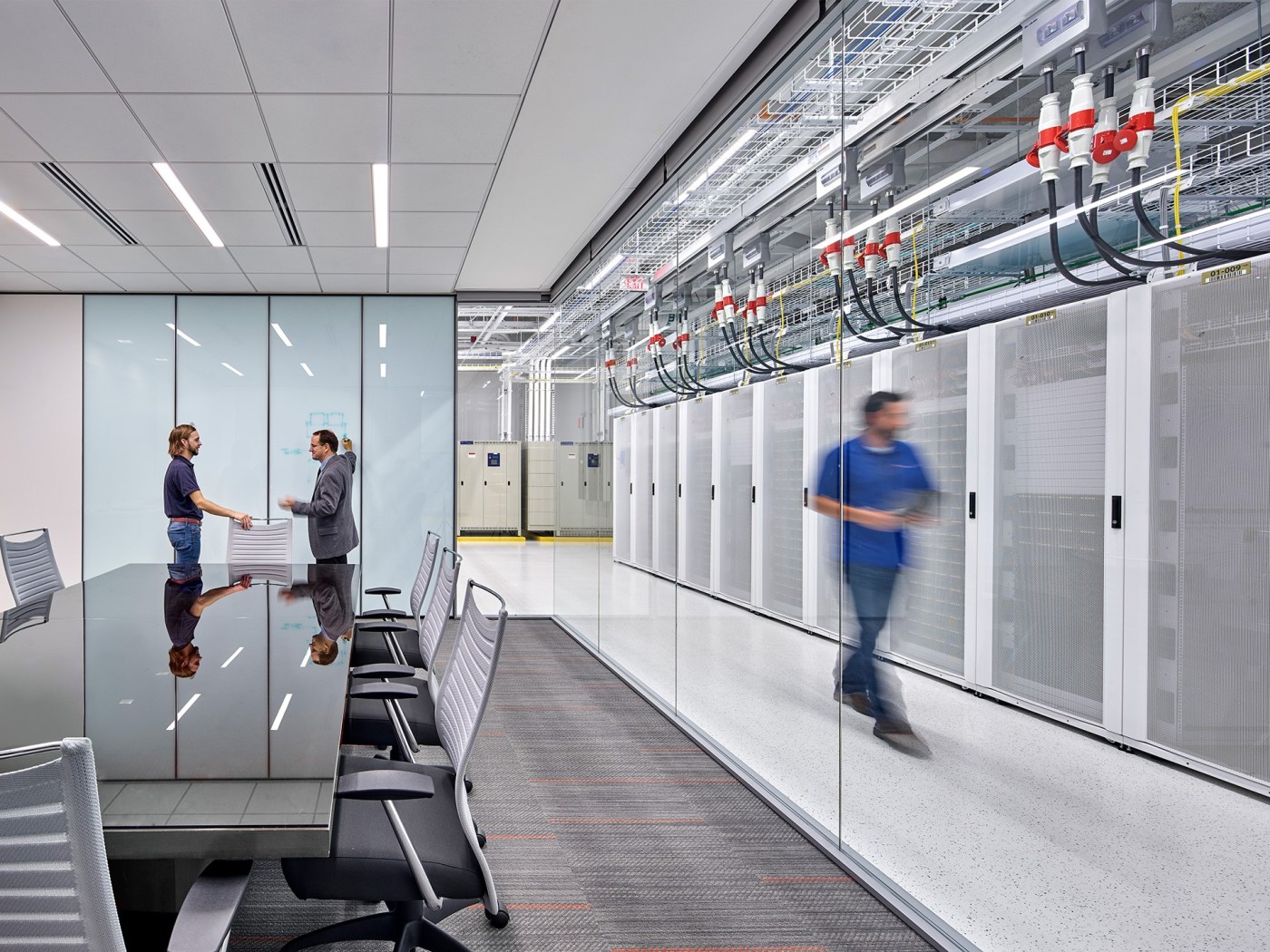
Discover the DataBank Difference today:
Hybrid infrastructure solutions with boundless edge reach and a human touch.
Tell us about your infrastructure requirements and how to reach you, and one of our team members will be in touch shortly.
Can’t see the form? Click here.
Let us know which data center you'd like to visit and how to reach you, and one of our team members will be in touch shortly.
Please understand that we might not be able to accommodate every request for a physical data center tour.
Please allow a minimum of 24-48 hours for a response.
Can’t see the form? Click here.
Enjoying our resource? Get the latest news and articles delivered straight to your inbox.
Can’t see the form? Click here.
Can’t see the form? Click here.