

Summarize with:
read in < 1 min


Once you’ve found the right location for your data center, you need to find the right data center provider. With that in mind, here is a straightforward guide on how to evaluate the best data center provider in Denver.
These are the 10 main factors all businesses should consider when evaluating data centers.
Location and accessibility: The data center should be in a geographically stable region with low risks of natural disasters. Accessibility for maintenance and upgrades is also essential.
Security: Physical security measures (such as surveillance, biometrics, and restricted access) and cybersecurity protocols (firewalls, encryption, and multi-factor authentication) protect data from breaches and unauthorized access.
Compliance certifications: Ensure the data center meets regulatory standards such as SOC 2, HIPAA, and PCI DSS, depending on industry requirements.
Reliability: Tier certifications from the Uptime institute are an easy and effective way to measure reliability and to evaluate the redundancy measures implemented by data center providers.
Network connectivity: The center should have multiple high-speed internet connections, low latency, and peering with major ISPs to ensure fast and reliable data access.
Energy efficiency and sustainability: Energy-efficient cooling, renewable power sources, and green initiatives can lower costs and reduce environmental impact.
Scalability: The facility should support future growth, offering space, power, and network capacity to meet evolving business needs.
Business continuity and disaster recovery: Backup infrastructure (especially power), failover systems, and disaster recovery solutions ensure uninterrupted operations during outages.
Support and managed services: At a minimum, a reputable data center provider should provide high-quality customer support. Ideally, it should also offer remote-hands services including ad-hoc technical support and ongoing managed services. These give you additional options for managing your IT assets.
Cost and service level agreements (SLAs): Evaluate pricing, contract terms, and SLAs that guarantee uptime, performance, and support responsiveness.
As Denver has become a major data center hub, data center operators in Denver have to work hard to differentiate themselves from each other. Here are 7 of the main ways they compete.
Geographic resilience: Denver’s low risk of natural disasters is a major draw for businesses that need high availability. Some data center providers emphasize the geographic stability of their data centers’ locations as a selling point for disaster recovery and business continuity.
Connectivity and peering: Many Denver data centers position themselves as key interconnection hubs, leveraging the city’s central U.S. location. Some emphasize access to multiple Tier 1 network providers, direct cloud on-ramps (such as AWS Direct Connect or Azure ExpressRoute), and strong peering ecosystems at local internet exchanges.
Altitude-driven cooling efficiency: The cooler climate allows certain data centers to utilize free air cooling for much of the year, reducing energy costs and improving sustainability. Some highlight their energy-efficient designs as a major advantage over facilities in hotter regions.
Industry-specific compliance: Some Denver data centers cater to industries with strict compliance requirements, such as healthcare (HIPAA compliance), finance (PCI DSS), or government contracts (FedRAMP, ITAR compliance).
Sustainable energy initiatives: Given Colorado’s push for sustainability, some facilities differentiate themselves by using renewable energy sources, such as wind or solar power, and achieving green certifications.
Security and physical fortifications: Some centers highlight reinforced structures, underground locations, or enhanced physical security to appeal to businesses requiring high levels of data protection.
Local support and solutions: Certain providers differentiate through personalized customer service, offering local expertise and solutions tailored to Denver-based businesses.
Even though Denver is a highly competitive market, DataBank manages to stand out. Here are 7 of DataBank’s key selling points.
DataBank operates five data centers and one campus strategically located throughout the Denver metropolitan area, ensuring comprehensive coverage and accessibility for clients.
Facilities like the Downtown Denver Data Center at 1500 Champa Street serve as premier carrier hotels, situated at the nexus of major fiber pathways. This location provides access to numerous ISPs and carriers, enhancing connectivity options.
The DEN5 data center, part of the Centennial Campus, offers 56,000 square feet of raised floor space and a 16MW critical IT load, catering to high-density computing and hyperscale workloads.
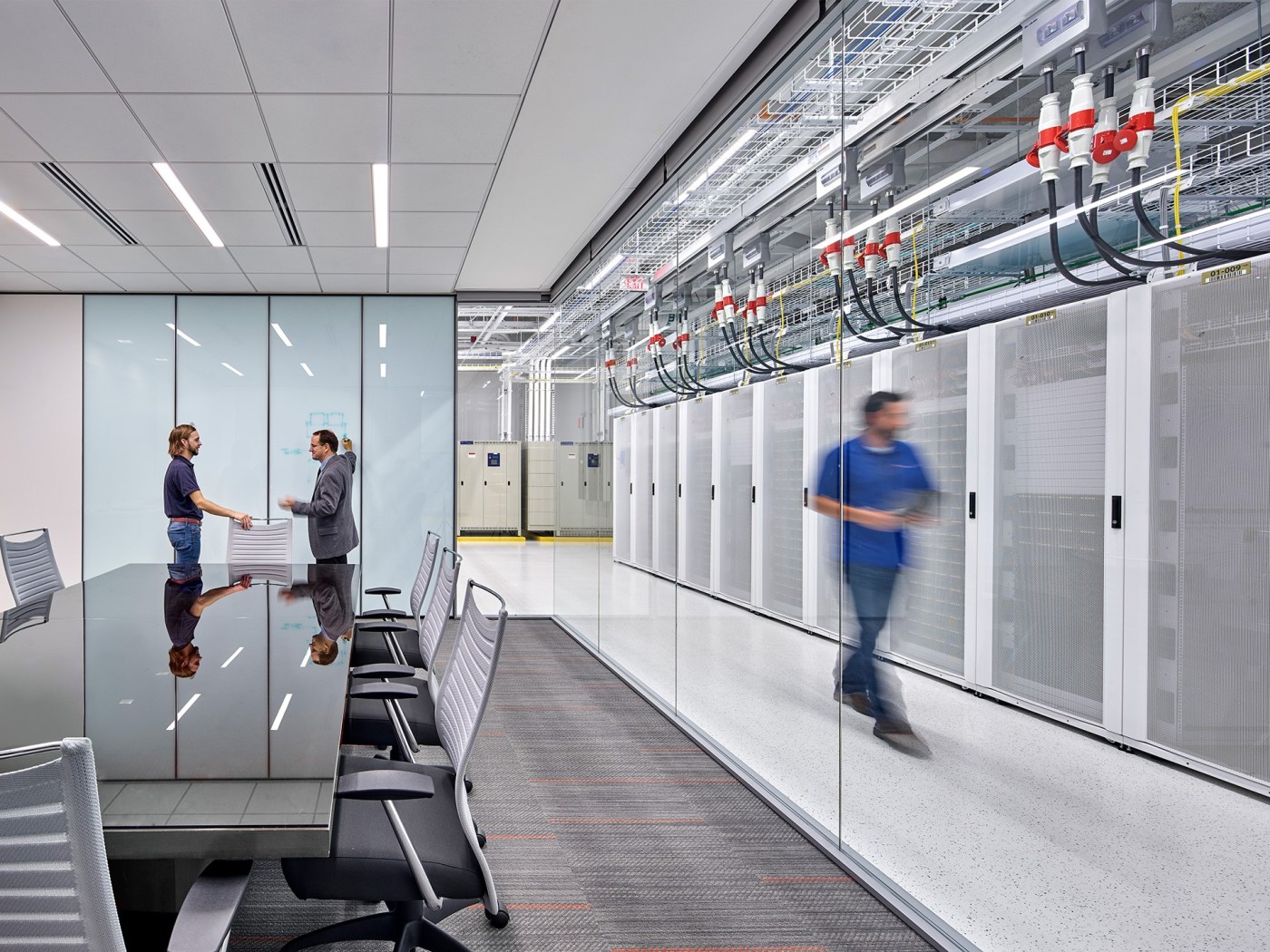
DataBank’s facilities are designed with robust security protocols, including 24/7/365 on-site technical support and remote hands services, ensuring the protection and integrity of client data.
DataBank’s Denver data centers adhere to stringent compliance standards, including HIPAA, HITECH, ISO 27001, PCI DSS, Privacy Shield, SOC 1, SOC 2, and SSAE 18, meeting diverse regulatory requirements.
DataBank integrates energy-efficient cooling systems and leverages Denver’s cooler climate to reduce power consumption. Some facilities also utilize renewable energy sources, aligning with Colorado’s sustainability initiatives.
Amenities such as package services, parking, conference rooms, office space, break rooms, workspace, and Wi-Fi are available, enhancing the client experience.

Sign Up For Our Resource Library
Enjoying our resource? Get the latest news and articles delivered straight to your inbox.
Can’t see the form? Click here.
Share Article
Popular Categories

Learn more about DataBank’s four Denver metro data centers, including key mechanical information, interesting facts about the region, and colocation options and benefits.

Discover how to compare data storage solutions in Denver data centers. Get an answer to the question “What are data storage solutions?”. Learn about evaluating data storage options in Denver. Find out how DataBank’s data storage solutions stand out as industry-leading options that businesses can trust.

Explore the rise of data centers in Denver and gain an understanding of what’s driving the growth. Learn the factors contributing to data center growth in general. Find out why Denver is emerging as a data center hub. Discover what’s next for Denver data centers. Get the information you need to make solid business decisions.
Discover the DataBank Difference today:
Hybrid infrastructure solutions with boundless edge reach and a human touch.
Tell us about your infrastructure requirements and how to reach you, and one of our team members will be in touch shortly.
Can’t see the form? Click here.
Let us know which data center you'd like to visit and how to reach you, and one of our team members will be in touch shortly.
Can’t see the form? Click here.
Enjoying our resource? Get the latest news and articles delivered straight to your inbox.
Can’t see the form? Click here.
Can’t see the form? Click here.