

Summarize with:
read in < 1 min


Every business decision is taken with overall value for money in mind. In order to assess overall value for money accurately, businesses need to understand the (potential) cost of each decision. That being so, here is an on-prem vs cloud cost comparison with 10 factors you must compare before deciding which option to choose.
Variable consumption pricing remains one of the most significant cost factors. Public cloud platforms charge for every unit of compute, storage, API request, log entry, and outbound packet. This model benefits workloads with erratic usage but becomes costly for stable 24/7 applications.
Cost visibility declines as more managed services are added because each service charges independently. Stable enterprise workloads usually achieve better cost efficiency on fixed-price on-prem or private-cloud infrastructure where usage does not alter the monthly bill.
Public cloud data egress fees create significant and persistent cost exposure. Every gigabyte that leaves the provider’s network incurs a fee, including traffic between regions, zones, and external systems.
Data-intensive organizations experience substantial ongoing cost as analytics, backups, and replication workflows generate heavy outbound flows. For such organizations, egress fees alone can reach tens of thousands of dollars during large migrations.
On-prem infrastructure eliminates these charges because internal network traffic does not incur per-gigabyte billing. Businesses with growing datasets need to evaluate whether long-term data-movement patterns make cloud usage uneconomical.
Cloud storage charges increase steadily as organizations retain more analytics data, logs, images, and application artifacts.
Object storage appears inexpensive at first, but retention growth introduces compounding cost. Monitoring systems and security tools generate logs at high volume, often without retention controls. Extended retention periods raise monthly costs because each tier adds incremental expense.
On-prem storage requires capital investment but offers predictable long-term cost because additional retention does not create recurring consumption charges.
Business leaders must assess growth rate, compliance retention windows, and I/O requirements when comparing cloud storage to local storage arrays.
Public cloud managed services reduce development time but add recurring operational charges that increase with usage.
Serverless functions bill per execution, managed databases bill per vCPU and storage unit, and event systems bill per message. These services often lock teams into proprietary frameworks and increase long-term operating cost because workloads scale continuously.
On-prem environments require more hands-on management but eliminate per-operation fees.
Organizations must evaluate whether managed-service convenience outweighs recurring cost increases and whether long-term vendor lock-in could affect strategy.
Cloud support models introduce tiered pricing that affects incident response. Premium support provides faster access to technical staff but increases annual spend significantly. Many mid-market customers cannot justify these fees, yet they face extended delays during incidents without them.
On-prem infrastructure support costs remain more predictable because organizations negotiate fixed-price maintenance contracts with vendors or colocation partners.
The relatively slow pace of cloud support can lead to unnecessary downtime with all that entails. Businesses must, therefore, compare support-tier spend to operational risk when selecting an environment.
Public cloud adoption or repatriation often requires running duplicate environments for weeks or months.
Parallel operations introduce additional cost for compute, storage, licenses, monitoring, and security controls. This means that repatriation efforts can end up exceeding initial cost estimates because teams must maintain dual systems while cutover steps proceed.
On-prem expansion usually avoids prolonged duplication because capacity is added directly into existing clusters.
Business leaders must account for temporary duplication when forecasting project budgets and comparing long-term infrastructure strategies.
Steady workloads produce consistent demand that does not benefit from the cloud’s elasticity. Continuous compute usage translates into high monthly bills because per-hour instances never scale down.
The ability to match predictable demand with fixed (or somewhat scalable) capacity means that organizations often realize lower TCO on private hardware. On-prem TCO improves further when hardware is amortized over multiple years.
Businesses must determine whether their workload patterns justify elastic pricing or whether fixed infrastructure produces better long-term economics.
Regulated industries often incur significant compliance expenses in the cloud. Public cloud environments require customers to implement additional tools for logging, encryption validation, identity management, and audit evidence collection.
These tools add licensing and operational overhead. The more third-party systems are required, the higher this overhead grows.
On-prem environments provide centralized control that reduces fragmentation and lowers compliance tooling cost.
Business leaders must compare compliance overhead in both environments to determine long-term cost.
Public cloud performance varies because of resource contention in multi-tenant environments.
Businesses often compensate for inconsistent performance by scaling infrastructure, increasing instance sizes, or moving to higher-performance storage tiers. These adjustments increase recurring cost.
On-prem systems allow precise tuning of storage, network, and compute performance using dedicated hardware. Performance tuning on dedicated systems helps prevent recurring cost increases caused by underperforming cloud resources.
Public cloud automation reduces the need for staff to manage underlying infrastructure. This reduction can erode internal expertise in capacity planning, networking, and storage management.
Skill gaps create cost risk because organizations must hire specialists or engage managed-service partners.
Businesses choosing on-prem infrastructure must consider training cost, hiring cost, and long-term operational maturity. Public cloud may reduce training needs but increases dependency on provider-specific platforms.

Sign Up For Our Resource Library
Enjoying our resource? Get the latest news and articles delivered straight to your inbox.
Can’t see the form? Click here.
Share Article
Popular Categories

Technology expands at the speed of light. Keeping up with what’s going online in a digital world is hard enough but also having the resources on site can be a...
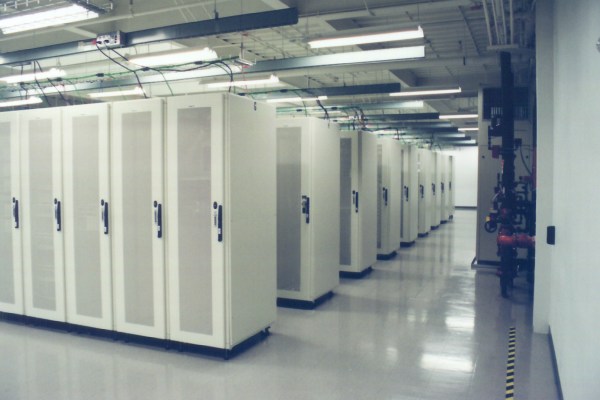
Explore the key considerations in choosing between colocation and on-premises data center strategies. Compare cost implications, upfront and operational costs, scalability benefits, and security measures to make an informed decision for your organization's IT infrastructure.

For some businesses, either the cloud or an on-premises data center is clearly the right choice. For many, both have their uses. With that in mind, here is a quick overview of on-premises data centers vs cloud computing and the factors you should consider when choosing a solution.

Discover the DataBank Difference today:
Hybrid infrastructure solutions with boundless edge reach and a human touch.
Tell us about your infrastructure requirements and how to reach you, and one of our team members will be in touch shortly.
Can’t see the form? Click here.
Let us know which data center you'd like to visit and how to reach you, and one of our team members will be in touch shortly.
Can’t see the form? Click here.
Enjoying our resource? Get the latest news and articles delivered straight to your inbox.
Can’t see the form? Click here.
Can’t see the form? Click here.