

Summarize with:
read in < 1 min


The public cloud is a very convenient solution for businesses. This means it’s likely to have a place in most IT ecosystems. Increasingly, however, businesses are starting to repatriate some of their apps onto on-prem infrastructure. Here is an overview of the 10 types of apps that are being moved and why.
Organizations often repatriate workloads that run continuously with stable and predictable resource requirements. These applications do not benefit from cloud elasticity because they consume compute, memory, and storage at fixed levels.
Cloud platforms charge for every hour of consumption, which makes steady workloads expensive over time. Fixed-capacity environments such as colocation and private cloud deliver lower and more predictable costs because resources are purchased or contracted at stable rates.
Data-heavy workloads generate substantial traffic between storage, compute, and external systems. Public cloud platforms charge significant fees for moving data across zones, regions, or into external environments. Backup processes and compliance-driven retention workflows also create continuous outbound data flows.
These patterns lead to high egress charges that increase as datasets grow. Many organizations are therefore repatriating these workloads to on-prem environments to control data movement and avoid unpredictable transfer costs.
Workloads that handle regulated data often move out of public cloud environments because compliance requires additional tools, controls, and monitoring systems. Healthcare, finance, and government applications must meet standards such as HIPAA, PCI DSS, FedRAMP, and GDPR.
Public cloud environments offer baseline certifications, but customers must configure most controls themselves. This requirement leads to complex implementations that depend on third-party security tools for logging, auditing, encryption enforcement, and access monitoring.
In the cloud, compliance teams must interpret shared responsibility boundaries, which vary across cloud services. By contrast, on-prem environments provide more direct control over network segmentation, access policies, and audit logging.
Multi-tenant infrastructure introduces noisy-neighbor effects that can reduce performance consistency. Furthermore, cloud services sometimes allocate shared resources dynamically, which can lead to inconsistent throughput or sudden throttling. Distributed architectures add further latency because storage and compute services may reside in separate availability zones.
Organizations move these workloads on-prem to gain full control over hardware configuration, network paths, and storage performance. Dedicated infrastructure provides predictable latency, which supports applications that rely on precise response times.
Legacy applications often struggle in public cloud environments because they depend on traditional architectures that were not designed for distributed or virtualized systems. Monolithic systems, proprietary middleware, and older database technologies perform better on dedicated hardware with stable I/O characteristics.
Modern cloud environments expect applications to scale horizontally and tolerate distributed designs, which many legacy systems cannot support without extensive refactoring. Rewriting these applications can require significant engineering effort.
Businesses often choose to repatriate legacy workloads to avoid expensive modernization projects. On-prem environments offer hardware and network models that align with the original architecture. This reduces migration effort and operational risk.
Many cloud-native applications rely on proprietary services such as serverless platforms, managed databases, integrated machine learning pipelines, or vendor-specific automation tools. These services allow rapid deployment but create dependencies that limit portability.
Businesses often consider repatriation when these dependencies begin to increase operating costs or development constraints. Rewriting applications to remove proprietary components requires significant engineering investment.
Teams move such workloads on-prem when long-term cost savings outweigh refactoring effort or when business requirements demand greater architectural control. Repatriated workloads often use vendor-agnostic tools such as Kubernetes, open-source databases, and portable automation frameworks.
Mission-critical systems such as payment platforms, clinical systems, and revenue-generating applications need fast access to engineers during incidents. Limited visibility and indirect communication channels increase operational risk.
Many businesses move these workloads to on-prem environments or colocation facilities to gain direct access to skilled technicians. These environments provide hands-on support, predictable escalation paths, and direct communication during outages. This support model reduces downtime and ensures quick remediation when issues arise.
Organizations repatriate workloads that require stable long-term pricing without exposure to variable consumption charges. Large enterprises operate applications that run continuously across global operations.
Cloud pricing models penalize constant usage because fees accumulate every hour. By contrast, private cloud or colocation environments offer predictable pricing and long-term contracts that support stable budgeting.
Some organizations repatriate workloads that are difficult to move between cloud platforms due to vendor-specific APIs, deployment models, or management tools. Lock-in increases operational risk because pricing changes or service limitations can affect long-term strategy.
Businesses migrate these workloads to environments that support open standards and portable architectures. On-prem solutions allow teams to control dependencies and avoid unexpected constraints from cloud providers. This approach prevents future disruptions and improves multi-cloud flexibility.
Many businesses operate hybrid architectures that combine cloud services with local systems. Some applications require consistent performance across both environments, which cloud platforms cannot always support due to network latency or architectural differences.
Data processing engines, integration hubs, and middleware platforms often run more effectively on-prem because they sit close to internal systems. Repatriation strengthens performance for workflows that require tight coupling with on-prem databases, legacy systems, or high-speed networks. This placement also improves integration reliability and reduces operational complexity.

Sign Up For Our Resource Library
Enjoying our resource? Get the latest news and articles delivered straight to your inbox.
Can’t see the form? Click here.
Share Article
Popular Categories

Cloud sprawl drives IT teams crazy. This article examines the reason why cloud sprawl occurs and provides advice on how to control the costs.

Discover the top 5 characteristics of the best colocation providers to ensure your business's success. From reliability and security to scalability and customer support, we excel in every aspect. Learn why our top-notch infrastructure and exceptional support make us a leading colocation service provider in the USA.
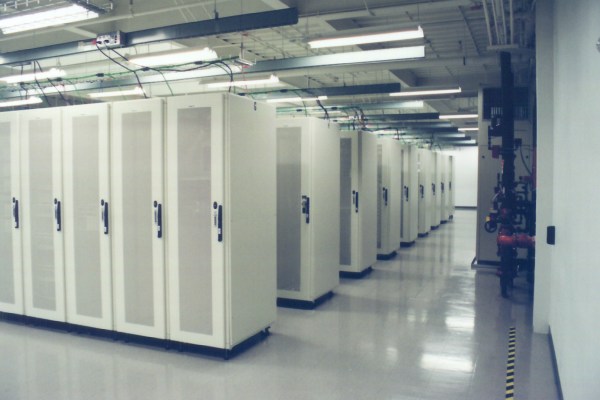
Explore the key considerations in choosing between colocation and on-premises data center strategies. Compare cost implications, upfront and operational costs, scalability benefits, and security measures to make an informed decision for your organization's IT infrastructure.

Discover the DataBank Difference today:
Hybrid infrastructure solutions with boundless edge reach and a human touch.
Tell us about your infrastructure requirements and how to reach you, and one of team members will be in touch shortly.
Can’t see the form? Click here.
Let us know which data center you'd like to visit and how to reach you, and one of team members will be in touch shortly.
Can’t see the form? Click here.
Enjoying our resource? Get the latest news and articles delivered straight to your inbox.
Can’t see the form? Click here.
Can’t see the form? Click here.