

Summarize with:
read in < 1 min


The changes made by Broadcom have prompted businesses to reassess their use of VMware and potentially move away. That being so, here is a straightforward guide to replacing VMware after Broadcom. It explains what enterprises are doing and what’s actually working.
For many infrastructure teams, the decision to replace VMware was not originally part of the roadmap. Virtualization platforms are typically long-term investments, chosen for stability and continuity rather than frequent change.
Broadcom’s acquisition of VMware changed the equation for many organizations. Changes to licensing models, product packaging, and support structures have prompted infrastructure architects and engineers to reassess their virtualization strategy.
According to industry surveys conducted since the acquisition, a significant percentage of VMware customers have either evaluated alternatives or begun migration planning. What was once considered a highly disruptive project is now becoming a strategic priority for organizations seeking greater cost predictability and operational flexibility.
The common triggers include:
For many enterprises, the question is no longer whether to evaluate alternatives, but how to execute the transition successfully.
While every environment is different, several migration patterns are emerging across the market.
Many organizations have discovered that their current VMware environments were designed years ago around assumptions that no longer apply.
Before selecting a replacement platform, infrastructure teams are conducting comprehensive assessments of:
In many cases, organizations find opportunities to:
This assessment phase often delivers value before migration even begins.
One of the strongest themes emerging from post-Broadcom migration projects is the desire for predictable operating costs.
Infrastructure leaders are increasingly being asked to justify platform spending and demonstrate long-term budget stability.
When evaluating replacement options, teams commonly focus on:
Rather than simply comparing feature lists, enterprises are evaluating the complete financial impact of their virtualization platform over a three-to-five-year horizon.
A common misconception is that replacing VMware automatically means moving workloads to public cloud environments.
In reality, many organizations are finding that private cloud infrastructure remains the best fit for critical workloads.
Reasons include:
As a result, many enterprises are choosing managed private cloud solutions that provide virtualization flexibility while reducing operational burden.
Organizations that complete migrations successfully tend to follow similar patterns.
The most effective projects begin by defining desired business outcomes rather than focusing solely on technology.
Common objectives include:
These goals help teams evaluate options based on measurable outcomes rather than feature comparisons alone.
Large-scale “big bang” migrations are relatively uncommon.
Instead, successful teams typically migrate workloads in stages.
A phased approach allows organizations to:
Critical applications are often migrated later in the process after lower-risk workloads have been successfully transitioned.
Many infrastructure teams are already managing multiple modernization initiatives simultaneously.
Working with an experienced infrastructure partner can help accelerate planning, reduce migration risk, and avoid costly mistakes.
Organizations often benefit from assistance with:
This becomes especially valuable for large environments with complex dependencies.
Although many organizations are actively pursuing VMware replacement strategies, several common obstacles can delay progress.
One of the most frequent challenges is limited visibility into application dependencies.
Questions such as the following must be answered before migration planning can begin:
Without this information, project timelines often expand significantly.
Infrastructure teams are frequently asked to manage migrations alongside their day-to-day responsibilities.
Common constraints include:
As a result, projects can stall even when leadership has approved the initiative.
Not every workload behaves identically after migration.
Organizations should carefully evaluate:
Comprehensive testing remains critical to ensuring a smooth transition.
Many enterprises delay planning until contract renewal deadlines approach.
This often creates unnecessary pressure and limits available options.
Starting evaluation and assessment activities early provides greater flexibility and reduces the likelihood of rushed decisions.
Infrastructure architects evaluating life after VMware should focus on creating a structured roadmap rather than pursuing rapid change.
A practical strategy typically includes:
1. Assessing the current environment
2. Identifying business and technical requirements
3. Evaluating replacement options
4. Performing workload analysis
5. Testing migration scenarios
6. Creating a phased migration plan
7. Establishing operational support processes
Organizations that follow this approach are generally better positioned to reduce risk while achieving long-term infrastructure goals.
For many enterprises, the ideal outcome is not simply replacing VMware but improving the overall infrastructure model.
Managed private cloud environments can help organizations:
This approach enables teams to modernize infrastructure while avoiding the complexity of managing every aspect of the underlying platform themselves.
The post-Broadcom VMware landscape has accelerated infrastructure evaluations across nearly every industry. While licensing changes may be the initial catalyst, most organizations are using this moment to rethink broader infrastructure strategy.
The enterprises achieving the best outcomes are not rushing into replacement decisions. Instead, they are assessing requirements carefully, prioritizing business objectives, and adopting phased migration strategies that minimize risk.
DataBank helps organizations assess virtualization environments, develop migration strategies, and deploy managed private cloud solutions designed for performance, security, and long-term cost control.
Contact DataBank to discuss your VMware replacement roadmap and discover how a managed private cloud approach can support your modernization goals.

Sign Up For Our Resource Library
Enjoying our resource? Get the latest news and articles delivered straight to your inbox.
Can’t see the form? Click here.
Share Article
Popular Categories
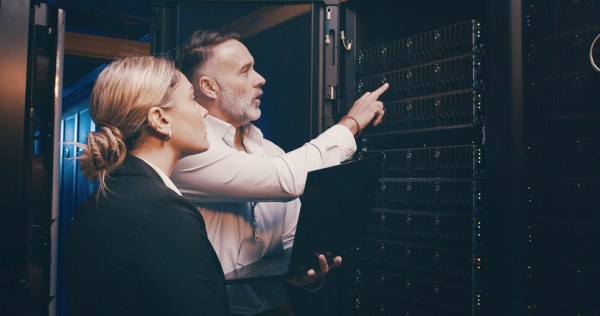
The acquisition of VMware by Broadcom caused significant upheaval in the enterprise virtualization sector. Now many enterprises are either moving to Nutanix or seriously considering doing so. With that in mind, here is a comprehensive look at Nutanix vs. VMware in 2026. It explains what's changed and what still makes the decision hard.

For business leaders, the challenge isn’t understanding the need for transformation. It’s managing the process without disrupting existing services or exposing the company to unnecessary risk. This is where a strategic infrastructure partner such as DataBank becomes invaluable. It can provide the digital foundation that enables safe and efficient modernization.

VMware remains a major player in the enterprise virtualization market but many of its current users are open to change. With that in mind, here is a straightforward explanation of why Nutanix lands on every VMware alternative shortlist. It also explains what to check before committing.
Discover the DataBank Difference today:
Hybrid infrastructure solutions with boundless edge reach and a human touch.
Tell us about your infrastructure requirements and how to reach you, and one of our team members will be in touch shortly.
Can’t see the form? Click here.
Let us know which data center you'd like to visit and how to reach you, and one of our team members will be in touch shortly.
Please understand that we might not be able to accommodate every request for a physical data center tour.
Please allow a minimum of 24-48 hours for a response.
Can’t see the form? Click here.
Enjoying our resource? Get the latest news and articles delivered straight to your inbox.
Can’t see the form? Click here.
Can’t see the form? Click here.