
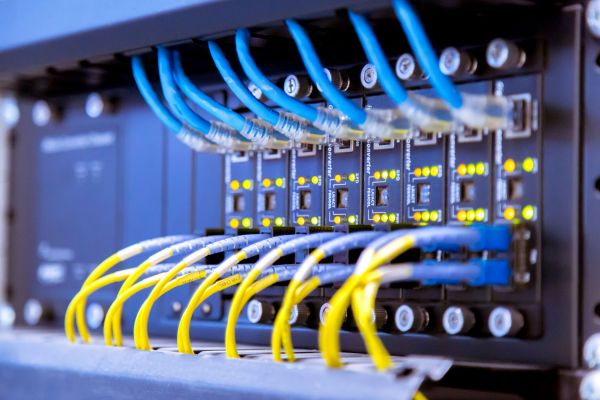
Interconnection encompasses the various physical and virtual connections that companies use to exchange data, ensure business continuity, and achieve specific operational objectives. In colocation data centers, these connections are vital for fast data exchange, reduced latency, and improved network performance. Yet the real value lies in how they’re delivered and supported.
While interconnection technologies themselves are well-established, the approach to implementing and managing them varies significantly across providers. The difference between adequate connectivity and exceptional connectivity often comes down to the customer experience. More specifically, how well a provider understands your specific requirements, eliminates operational friction, and delivers service excellence throughout your relationship.
Interconnection includes several core options:
The question isn’t which technologies you need. It’s how your colocation provider approaches delivering them. This article will examine three key pillars of effective interconnection strategy and provide specific examples of the measurable benefits each approach delivers to IT organizations.
Most colocation providers approach interconnection with a checklist mentality: deliver the connection, meet the SLA, move on to the next ticket. But the most successful IT deployments happen when providers go deeper, establishing genuine partnerships that address the unique challenges each organization faces.
True engagement means understanding that every company’s interconnection needs are shaped by their specific industry, compliance requirements, and risk tolerance. A healthcare organization’s approach to data security differs fundamentally from a fintech company’s, even when both need the same basic cross-connect. The difference lies in how the provider addresses those site-specific requirements.
This partnership approach delivers measurable advantages:
Interconnection solutions create dedicated, isolated connections that minimize exposure to external threats. Unlike public internet connections vulnerable to interception and unauthorized access, these private channels enhance data security through multiple layers of protection. Organizations can implement robust security measures including encryption, firewalls, and intrusion detection systems to safeguard data as it travels between interconnected entities.
For regulated industries, this becomes even more critical. Finance, healthcare, and government sectors face stringent regulations governing sensitive data transmission. The right interconnection approach provides the infrastructure needed to establish secure connections that meet compliance standards, helping organizations demonstrate their commitment to data privacy while protecting against legal and reputational risks.
This customer-focused approach translates into tangible operational benefits. Rather than treating interconnection as a commodity service, providers who prioritize engagement work closely with customers to understand their specific security posture, compliance obligations, and growth trajectory. The result is interconnection architecture designed not just for today’s requirements, but for tomorrow’s challenges.
Partnership-focused interconnection transforms connectivity from a commodity purchase into a strategic advantage that scales with your business. However, even the best partnerships fall short if operational inefficiencies create friction in day-to-day management.
The most expensive interconnection problems aren’t the obvious ones. They’re the hidden inefficiencies that compound over time: network bottlenecks that slow critical applications, capacity constraints that force reactive scaling decisions, and operational complexity that consumes IT resources better spent on strategic initiatives.
Smart colocation providers focus on minimizing these non-core activities that impact the customer experience. Instead of simply delivering connectivity, they work to eliminate the operational friction that makes interconnection management a burden rather than an enabler.
The following are specific examples of how these friction-elimination strategies work in practice:
By utilizing direct connections that bypass the public internet, data transmits with minimal delay, delivering faster transfer speeds and reduced latency. This becomes particularly crucial for bandwidth-intensive applications and real-time data processing where milliseconds of delay impact user experience and operational efficiency.
Traditional internet connections remain susceptible to congestion and bottlenecks, creating potential downtime and data packet loss. Interconnection solutions provide dedicated, private links that ensure stable, reliable connections, reducing disruption risk and enhancing overall network resilience.
As data volumes continue growing exponentially across applications, services, and devices, organizations face the ongoing challenge of managing and processing vast amounts of information. The right interconnection approach provides the bandwidth and capacity needed to accommodate these demands, allowing organizations to scale operations without compromising network performance.
This means businesses can conveniently add or remove network connections and allocate bandwidth in real-time, aligning with their changing demands. Rather than forcing IT teams into reactive mode when traffic spikes or new applications come online, proactive interconnection planning ensures the network remains capable of managing heightened data traffic without sacrificing performance.
The best interconnection strategies reduce complexity rather than add to it. When providers focus on eliminating operational friction, IT teams spend less time managing connectivity issues and more time driving business value. This operational efficiency becomes a competitive advantage, freeing resources for innovation rather than maintenance.
Friction-free operations transform interconnection from a technical headache into a strategic enabler. Yet even streamlined connectivity falls short without service delivery that evolves alongside your business needs.
Modern IT organizations don’t just need interconnection services—they need interconnection partners who understand the pace of digital transformation. Traditional service delivery models, built around reactive support and manual processes, can’t keep up with the agility demands of today’s enterprises.
Service excellence in interconnection means anticipating needs, providing flexible solutions, and delivering support that matches the speed of modern business. It’s the difference between a provider who responds to tickets and one who helps architect your connectivity strategy.
This modern service delivery approach is capable of delivering positive, tangible results:
Scalability and flexibility define modern interconnection service delivery. Organizations need the ability to adapt quickly as they adopt cloud services, implement IoT devices, or incorporate new applications. Interconnection provides the framework for integrating these elements smoothly, allowing efficient data transfer and communication between different systems and networks so they work together seamlessly.
This adaptability becomes essential as businesses respond to market shifts and evolving customer expectations. Whether venturing into new markets, introducing fresh products and services, or scaling operations to meet growing demands, interconnection delivers the flexibility needed to accommodate dynamic business transformations without lengthy implementation cycles or service disruptions.
The most forward-thinking interconnection approaches provide the foundation for building robust, distributed architectures like edge computing and hybrid cloud environments. By connecting edge locations with centralized data centers or cloud environments, organizations achieve low-latency data processing and real-time analysis at the edge.
This enables faster, more responsive services to end-users while offloading computational loads from core infrastructure. The seamless connectivity offered by modern interconnection solutions paves the way for innovative technologies and architectures that drive efficiency, performance, and competitive advantage.
Service excellence means more than meeting expectations. It means exceeding them consistently. This translates into proactive communication, streamlined processes, and support that anticipates challenges before they impact operations.
Modern service delivery transforms interconnection from reactive support into strategic partnership. When providers combine genuine engagement, operational excellence, and forward-thinking service delivery, interconnection becomes the foundation for competitive advantage rather than just another IT expense.
The interconnection landscape will continue evolving, but the basic question remains the same: Will you choose a provider who treats connectivity as a commodity, or one who approaches it as a strategic partnership?
The technologies are largely the same across providers, but the customer experience varies dramatically. When evaluating colocation partners, look beyond the technical specifications and SLAs to understand how they’ll support your business objectives, eliminate operational friction, and deliver service excellence that scales with your growth.

Sign Up For Our Resource Library
Enjoying our resource? Get the latest news and articles delivered straight to your inbox.
Can’t see the form? Click here.
Share Article
Popular Categories

Just what are interconnections? Improve your understanding of interconnection in colocation data centers. Discover the five key interconnection approaches, how they work, and real-world examples to help you choose the best strategy for your business.

Data center interconnections deliver better performance, security, and cost savings. Discover how DataBank's Interconnection Marketplace makes finding connectivity providers much easier.

DataBank’s new Interconnection Marketplace simplifies how enterprises connect with 214+ network, cloud, and SaaS providers across 67 data centers—empowering smarter, faster connectivity decisions through a transparent, self-service platform.

Discover the DataBank Difference today:
Hybrid infrastructure solutions with boundless edge reach and a human touch.
Tell us about your infrastructure requirements and how to reach you, and one of our team members will be in touch shortly.
Can’t see the form? Click here.
Let us know which data center you'd like to visit and how to reach you, and one of our team members will be in touch shortly.
Please understand that we might not be able to accommodate every request for a physical data center tour.
Please allow a minimum of 24-48 hours for a response.
Can’t see the form? Click here.
Enjoying our resource? Get the latest news and articles delivered straight to your inbox.
Can’t see the form? Click here.
Can’t see the form? Click here.