

Summarize with:
read in < 1 min


Moving into a new data center is likely to be the start of a very long and, hopefully, productive journey. Ideally, that journey will get off to a smooth and effective start. With that in mind, here is a straightforward guide to starting your journey with DataBank’s Chicago data centers.
DataBank understands that businesses need to grow and develop. Here are just five of the main ways DataBank facilitates that process.
DataBank’s Chicago data centers, including facilities at 601 South Ashland and 725 South Wells, are positioned in the heart of one of the nation’s largest business and tech hubs.
These locations offer direct access to multiple Tier 1 carriers, cloud on-ramps, and internet exchanges, enabling ultra-low-latency connectivity essential for serving customers in the Midwest and beyond.
With high-density power configurations and modular space options, businesses can start with a single rack and scale up to full cages or suites as needed. This flexibility is ideal for growing companies, especially those expanding into edge computing or needing regional failover capabilities.
DataBank’s facilities are already certified in major compliance programs including SOC 1 & 2, HIPAA, PCI-DSS, and FedRAMP (in some cases). Moreover, the security standards at DataBank’s data centers make it relatively straightforward for clients to meet other standards and/or local laws.
DataBank supports business growth through hybrid IT architecture, enabling seamless integration between on-premise colocation and public or private clouds. With services like cloud connectivity, inter-site network transport, GigaCore Cloud, and direct cloud on-ramps, businesses can deploy flexible workloads while optimizing cost and performance.
DataBank offers both managed IT services and on-demand remote hands support. This means businesses can maintain and scale infrastructure without needing dedicated staff in Chicago.
Here is a brief overview of the five key steps in the process of getting started with DataBank’s data centers.
Prospective customers typically begin by contacting DataBank through its website or sales team to discuss requirements. DataBank offers a free consultation, during which clients outline needs like colocation, connectivity, cloud, or managed services. This is often tailored by industry (e.g., healthcare, finance, or government).
Based on the consultation, DataBank engineers design a custom solution. This includes determining space (e.g., full cabinets, cages), power requirements, network bandwidth, and compliance needs (like HIPAA, FedRAMP, or PCI-DSS). The team provides a detailed proposal with pricing, service levels, and timelines.
Once the proposal is accepted, the customer signs a Master Services Agreement (MSA) and any necessary Service Orders. These documents specify responsibilities, terms of service, SLAs, and compliance obligations. DataBank supports both short- and long-term contracts.
After contracts are finalized, DataBank initiates the onboarding process. A dedicated Customer Success Manager coordinates delivery of racks, power, cross-connects, and network services. The provisioning team ensures that all hardware, software, and connectivity are ready for use according to schedule.
Customers either ship or physically bring equipment to the selected data center. DataBank provides Remote Hands services to assist with racking, cabling, and setup. For cloud or managed services, users gain secure access through the DataBank portal or VPN.
Using the following 7-step process will help you to achieve a smooth migration into DataBank’s data center.
Begin by identifying why you’re migrating. For example, is your main goal cost savings, better performance, compliance, or scalability? Clearly define the scope: what systems, applications, and data will move, and what will stay.
Create a detailed inventory of all hardware, software, applications, and dependencies. Understanding interconnections between systems ensures nothing critical is overlooked or disrupted during migration.
Identify potential risks (e.g., service interruptions, data loss) and develop mitigation strategies. Plan for maintenance windows, and communicate potential downtime to stakeholders and customers in advance.
Create a step-by-step plan with timelines, resource assignments, and contingency plans. Include pre-migration testing, backup strategies, post-migration validation, and a rollback plan in case of failure.
Pre-migration testing helps validate assumptions. During migration, monitor systems in real-time. Post-migration, perform thorough validation to confirm functionality, performance, and data integrity.
Keep IT staff, vendors, end-users, and executives informed throughout the process. Transparency ensures smoother coordination and builds confidence in the transition.
Document configurations, procedures, and outcomes to support troubleshooting and future audits. This is critical for knowledge transfer and ongoing operations.

Sign Up For Our Resource Library
Enjoying our resource? Get the latest news and articles delivered straight to your inbox.
Can’t see the form? Click here.
Share Article
Popular Categories

DataBank announces its expanded relationship with Megaport to offer cloud service provider access to customers in select Denver and Chicago data center markets.

Discover ORD4, our advanced 77,000 sq ft data center with 8.75 MW critical power and N+1 design. We meet the most rigorous compliance standards of SSAE18 SOC1/2, FISMA, PCI-DSS, HIPAA, and ISO 27001.
Strategic, Technical, and Future alignment gives you the best possible data center experience today and tomorrow.
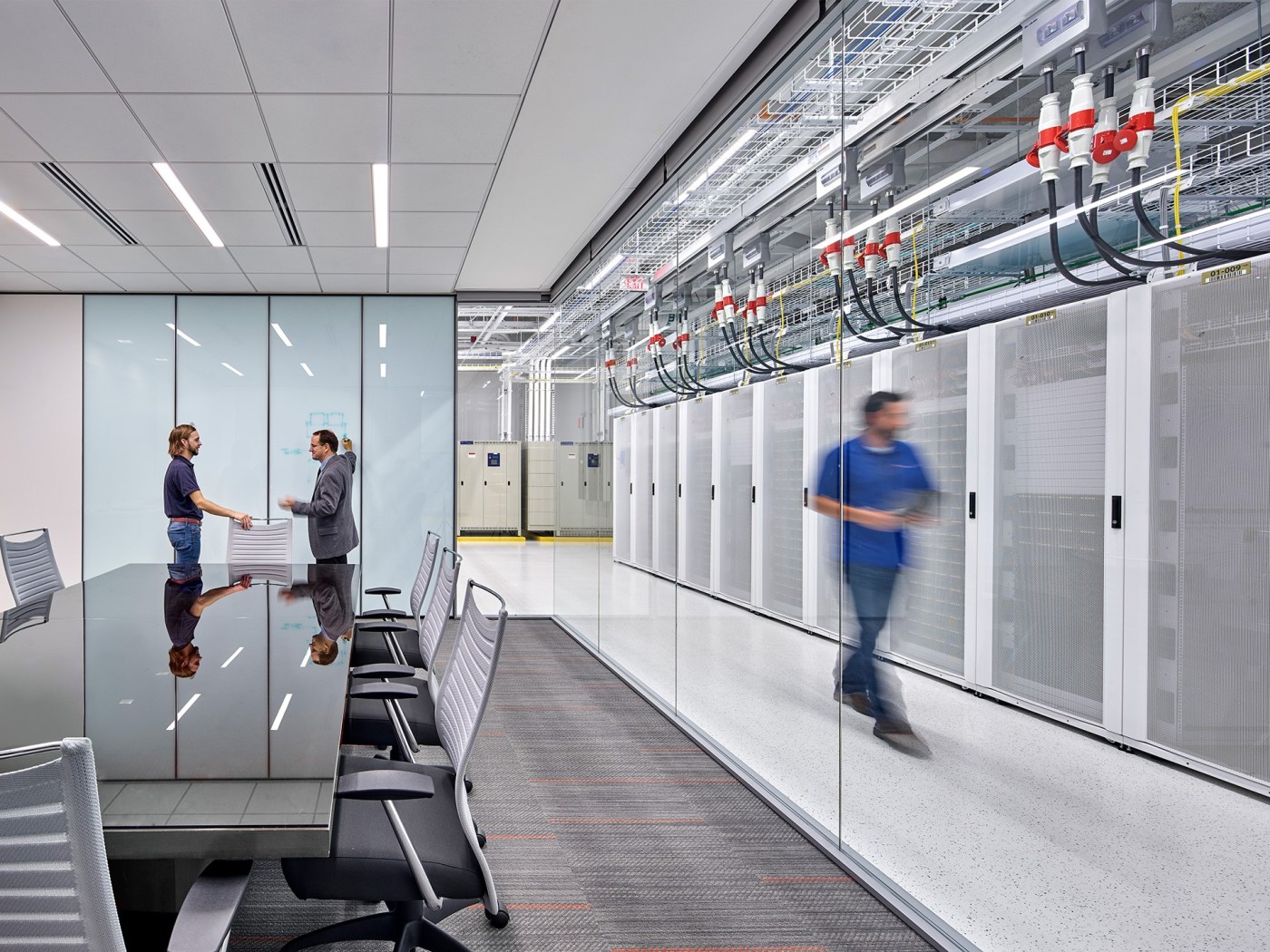
Discover the DataBank Difference today:
Hybrid infrastructure solutions with boundless edge reach and a human touch.
Tell us about your infrastructure requirements and how to reach you, and one of our team members will be in touch shortly.
Can’t see the form? Click here.
Let us know which data center you'd like to visit and how to reach you, and one of our team members will be in touch shortly.
Please understand that we might not be able to accommodate every request for a physical data center tour.
Please allow a minimum of 24-48 hours for a response.
Can’t see the form? Click here.
Enjoying our resource? Get the latest news and articles delivered straight to your inbox.
Can’t see the form? Click here.
Can’t see the form? Click here.