By Branden Stanley, Senior Product Manager, Managed Services, DataBank
Computing infrastructure wasn’t always about the virtualization and cloud services we know today. In the early days of business computing, every server was what we now call “bare metal”—dedicated physical machines serving single organizations.
Through the 1980s and 1990s, if you wanted to run business applications, you bought or leased entire computers. As the internet expanded in the early 2000s, dedicated hosting providers recognized an opportunity. Many businesses needed server power but lacked the capital for hardware purchases and data center space.
The solution was simple: instead of the traditional model where businesses owned their own hardware, providers would own the physical infrastructure and rent dedicated servers to customers on a monthly basis. This shift from buying hardware outright to operational expense models made enterprise-grade computing accessible to smaller organizations, yet it also led to new challenges.
However, the economics of dedicated hosting led to resource-sharing experiments. Shared hosting emerged as a cost-effective option where multiple websites or applications coexisted on single servers. While affordable, this approach introduced the “noisy neighbor” problem—when one tenant’s resource demands affected everyone else’s performance.
As businesses grew and their applications became more critical, they found themselves caught between two imperfect options: expensive dedicated servers with long provisioning times and complex management requirements, or shared hosting with unpredictable performance issues.
Enter cloud computing. Amazon Web Services and other public cloud providers revolutionized the industry by introducing virtualization technology that could provision servers in minutes rather than days or weeks. The cloud promised unprecedented automation, elastic scaling, and built-in redundancy that solved many reliability and uptime challenges that plagued traditional hosting. Suddenly, IT teams could spin up infrastructure with code, automate deployments, and scale resources dynamically based on demand.
However, this convenience came with trade-offs that became apparent as workloads matured. Virtualization introduced performance overhead, essentially a “tax” of roughly 10% on processing power due to the hypervisor layer managing multiple virtual machines. The very abstraction that enabled cloud flexibility also meant losing direct access to hardware-level controls, BIOS settings, and specialized configurations that some applications required.
Perhaps most ironically, the cloud reintroduced the noisy neighbor problems that shared hosting had created, as virtual machines competed for shared physical resources on the same underlying hardware.
As these cloud limitations became clear, a new generation of offerings emerged—bare metal—that combined dedicated hardware performance with cloud-like convenience. Modern providers recognized that businesses didn’t want to choose between performance and ease of use. They wanted both.
Remote management technology became standard on new servers, and the capabilities it brought allowed complete server control without anyone physically touching the hardware. IT teams could now restart servers, change system settings, and even reinstall operating systems from their desks. Combined with automation tools, bare metal servers became as easy to manage as virtual machines, but without the performance trade-offs.
This evolution solved critical business problems beyond just performance. Instead of buying millions in hardware upfront, organizations could pay monthly like a subscription service. They could eliminate costly hardware replacement cycles while keeping dedicated resources. For many applications, a single optimized bare metal server could replace 10 or more virtual machines.
Most importantly, modern bare metal eliminated the performance penalty entirely. Applications get direct access to all hardware resources, everything from processing power to memory to specialized chips like GPUs. IT teams can fine-tune system settings and achieve the predictable performance that shared environments simply can’t deliver.
The control extends to networking capabilities as well. Companies can create and manage their own network segments within bare metal environments, then use managed internet connections to establish direct links to their existing colocation infrastructure. This approach allows businesses to seamlessly bridge their bare metal instances with traditional data center deployments, creating flexible architectures that span multiple infrastructure models.
Modern bare metal servers have found their niche in applications where performance, control, and predictability are non-negotiable. Key use cases have emerged where the benefits clearly outweigh virtualized alternatives:
As these demanding use cases multiplied across industries, data center operators and cloud providers began recognizing a significant gap in their service portfolios that traditional virtualized offerings simply couldn’t fill.
In summary, it comes down to these differences:
Virtualized Machines
Bare Metal
These fundamental differences explain why organizations increasingly view bare metal as a strategic complement to, rather than replacement for, their existing cloud infrastructure.
As these demanding use cases multiplied across industries, data center operators recognized a new opportunity in their service portfolios. They saw potential between their existing offerings: colocation services where customers housed their own hardware, and cloud services that layered virtualization on top of physical servers. There was room for a better way to deliver dedicated performance without operational complexity.
Rather than treating bare metal as a separate product category, data center operators are now positioning it as part of a comprehensive portfolio designed to help customers “shift left”—changing how they think about infrastructure ownership. Bare metal combines dedicated hardware performance with cloud-like operational simplicity, eliminating the burden of hardware selection, deployment, and maintenance. It also offers predictable monthly costs instead of large capital investments.
This evolution reflects market pressures toward performance, efficiency, and cost reduction. Bare metal fills the crucial middle ground between colocation and fully virtualized cloud, offering dedicated speed with managed convenience.
Modern bare metal delivers significant value in hybrid infrastructures, where different models handle different workloads optimally. Organizations can run lightweight applications as virtual machines, deploy performance-critical databases on bare metal, and use public cloud for archival storage—each component optimized for its specific role.
One innovative approach involves using bare metal environments to process compute-intensive workloads, then moving results to public cloud for cost-effective long-term storage. This leverages bare metal’s processing efficiency while avoiding expensive cloud compute and egress fees. In this example, raw data ingestion and analysis happen on bare metal, while processed results archive to Amazon S3 at unbeatable storage rates.
This approach highlights bare metal’s core advantage: natural efficiency that other models can’t match, making it the ideal foundation for performance-critical components in modern hybrid architectures.
Think of bare metal’s evolution like choosing between owning a car and taking the bus. Public transit (cloud services) offers convenience and lower costs by sharing transportation resources among many passengers. Yet when you need to reach a specific destination on your exact timeline without delays from other stops, you need your own vehicle (bare metal). It gives you dedicated control over the route, speed, and schedule that gets you precisely where you need to go.
The infrastructure landscape has come full circle with important improvements. Today’s bare metal combines dedicated performance with cloud-like operational simplicity. As workloads become more demanding, bare metal represents not a step backward, but a maturation of infrastructure options, giving organizations dedicated resources without sacrificing the convenience that enables innovation.

Sign Up For Our Resource Library
Enjoying our resource? Get the latest news and articles delivered straight to your inbox.
Can’t see the form? Click here.
About the Author

Share Article
Popular Categories
If you’ve been reading about IT, you may have come across the term “bare metal”. If so, you may have asked yourself “what is bare metal”? Here is a quick guide to what you need to know.
As a hosting option in between traditional colocation and public cloud hosting, bare metal in colocation data center delivers a “just right” infrastructure solution for companies looking to strike the balance between flexibility, performance, and cost.
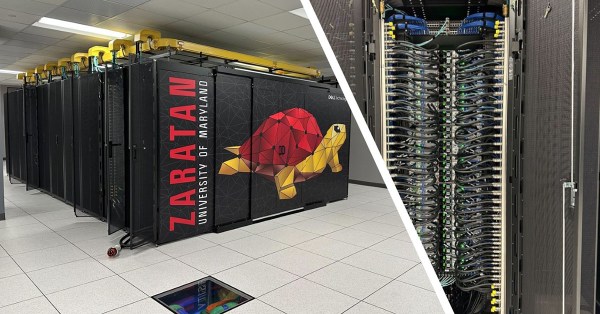
The University of Maryland, a world-class research institution with a strong commitment to solving global challenges, faced a critical issue in maintaining 24x7 power and cooling for its on-campus data centers supporting High-Performance Computing (HPC). They found a reliable partner in DataBank.
Discover the DataBank Difference today:
Hybrid infrastructure solutions with boundless edge reach and a human touch.
Tell us about your infrastructure requirements and how to reach you, and one of our team members will be in touch shortly.
Can’t see the form? Click here.
Let us know which data center you'd like to visit and how to reach you, and one of our team members will be in touch shortly.
Please understand that we might not be able to accommodate every request for a physical data center tour.
Please allow a minimum of 24-48 hours for a response.
Can’t see the form? Click here.
Enjoying our resource? Get the latest news and articles delivered straight to your inbox.
Can’t see the form? Click here.
Can’t see the form? Click here.