

Summarize with:
read in < 1 min


Disaster recovery (DR) has to be a top priority for businesses of all sizes and across all sectors. DRaaS (Disaster Recovery as a Service) provides a convenient and cost-effective way for businesses to meet their DR needs.
The rollout of 5G technology and its offer of ultrafast mobile broadband have the potential to transform the DRaaS (Disaster Recovery as a Service) sector and deliver massive benefits to DRaaS users. Here is a guide to what you need to know about 5G and how it is redefining the landscape of disaster recovery.
5G, the fifth generation of wireless technology, is designed to enhance mobile networks significantly, offering faster speeds, lower latency, and greater connectivity. It supports data transfer rates up to 10 Gbps, making it 10-100 times faster than 4G.
This allows seamless streaming, rapid downloads, and enhanced communication. With ultra-low latency (as low as 1 millisecond), 5G enables real-time applications like augmented reality (AR), virtual reality (VR), and autonomous vehicles.
Key features of 5G include:
High speed: Faster data rates for streaming, gaming, and downloads.
Low latency: Near-instantaneous responses, crucial for IoT and automation.
Massive device connectivity: Supports millions of devices per square kilometer.
Energy efficiency: Optimized for longer device battery life and sustainable infrastructure.
Network slicing: Customizable network segments tailored for specific industries or applications.
Here are just five of the ways that the development of 5G enhances Disaster Recovery as a Service.
With 5G’s ultra-high speeds (up to 10 Gbps) and low latency, data can be replicated to remote disaster recovery sites almost instantaneously. This ensures minimal data loss during outages and enables faster recovery times, meeting even the most demanding recovery time objectives (RTOs) and recovery point objectives (RPOs).
5G’s widespread coverage and reliable connectivity allow users to access DRaaS solutions remotely from virtually any location. This facilitates rapid response during a disaster, enabling IT teams to manage recovery operations from mobile devices or remote offices, ensuring seamless business continuity.
5G’s ability to connect massive numbers of devices simultaneously supports the growing demands of cloud-native DRaaS solutions. Organizations can scale their disaster recovery infrastructure effortlessly, accommodating dynamic workloads and complex environments without compromising performance.
5G’s robust network architecture ensures higher reliability and resilience. By providing redundant pathways and ensuring consistent performance, 5G supports uninterrupted connectivity for DRaaS even during large-scale disasters, improving the reliability of recovery efforts.
The high-speed, low-latency nature of 5G empowers AI-driven DRaaS systems to process vast amounts of data in real time. AI can analyze risks, predict outages, and automate disaster recovery processes, making DRaaS more intelligent and responsive.
Here are the 7 main challenges and considerations of implementing 5G with DRaaS.
Deploying 5G and integrating it with DRaaS requires significant investments in infrastructure, such as upgrading to 5G-compatible devices and networks. Smaller businesses may find these costs prohibitive.
While 5G enables faster connectivity, it also introduces new vulnerabilities, such as increased attack surfaces for cyber threats. Securing sensitive data during replication and recovery is critical.
Integrating 5G with existing DRaaS solutions may be complex, requiring thorough planning to ensure compatibility with legacy systems and applications.
Despite 5G’s reliability, network outages or coverage limitations in rural or underdeveloped areas could hinder its effectiveness during disaster recovery operations.
Although 5G is designed for ultra-low latency, real-world conditions, such as network congestion or interference, can affect performance, impacting data replication and recovery speeds.
Organizations using 5G-enabled DRaaS must ensure they remain compliant with data protection regulations, such as GDPR or HIPAA.
While 5G supports massive device connectivity, managing and monitoring these connections for DRaaS requires specialist tools and expertise.
The development of 5G opens up exciting possibilities for DRaaS. Here are just five of them.
Real-time disaster recovery: With 5G’s ultra-low latency, organizations can expect near-instantaneous data replication and recovery, minimizing downtime and data loss.
AI-driven automation: 5G will enable real-time AI analytics to predict, detect, and automate responses to disasters, creating smarter and more proactive DRaaS solutions.
Edge computing integration: The combination of 5G and edge computing will allow decentralized disaster recovery. This will reduce the current reliance on central data centers and improve response times.
Scalable IoT support: As IoT adoption grows, 5G will enable DRaaS to protect vast networks of connected devices, ensuring comprehensive disaster coverage.
Global accessibility: 5G’s widespread connectivity will enhance remote management of DRaaS solutions, facilitating seamless disaster recovery operations from any location.
Disaster Recovery as a Service (DRaaS) will be significantly enhanced by the advancements in 5G technology. 5G will make DRaaS faster, more intelligent, and more scalable, improving business resilience across industries.

Sign Up For Our Resource Library
Enjoying our resource? Get the latest news and articles delivered straight to your inbox.
Can’t see the form? Click here.
Share Article
Popular Categories

Discover how Disaster Recovery as a Service (DRaaS) compares to traditional disaster recovery. Uncover DRaaS’s key advantages and learn when it’s the smarter choice for your organization. This guide equips senior leaders to make informed decisions on safeguarding critical systems and ensuring business continuity.
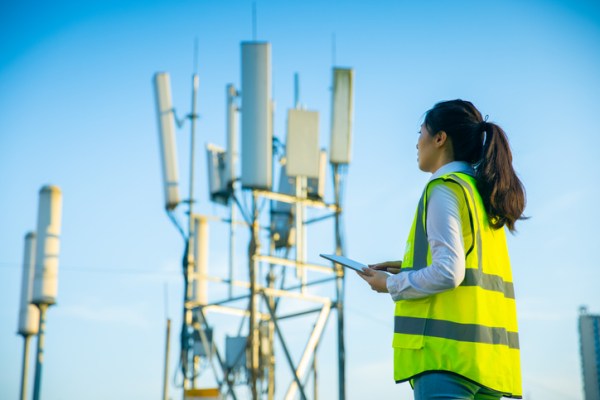
Explore the role of data centers in facilitating the deployment and functioning of 5G networks and services. Learn the basics of 5G and the benefits it offers. Find out the key features of 5G data center infrastructure. Gain insight into common challenges of implementing 5G and how to address them.

Explore how DRaaS can improve customer trust and satisfaction. Discover how Disaster Recovery as a Service (DRaaS) enhances reliability, minimizes disruptions, and keeps customers satisfied. Learn how DRaaS ensures uptime, meets expectations, and builds trust with real-world examples of DRaaS in action.
Discover the DataBank Difference today:
Hybrid infrastructure solutions with boundless edge reach and a human touch.
Tell us about your infrastructure requirements and how to reach you, and one of our team members will be in touch shortly.
Can’t see the form? Click here.
Let us know which data center you'd like to visit and how to reach you, and one of our team members will be in touch shortly.
Please understand that we might not be able to accommodate every request for a physical data center tour.
Please allow a minimum of 24-48 hours for a response.
Can’t see the form? Click here.
Enjoying our resource? Get the latest news and articles delivered straight to your inbox.
Can’t see the form? Click here.
Can’t see the form? Click here.