Summarize with:
read in < 1 min


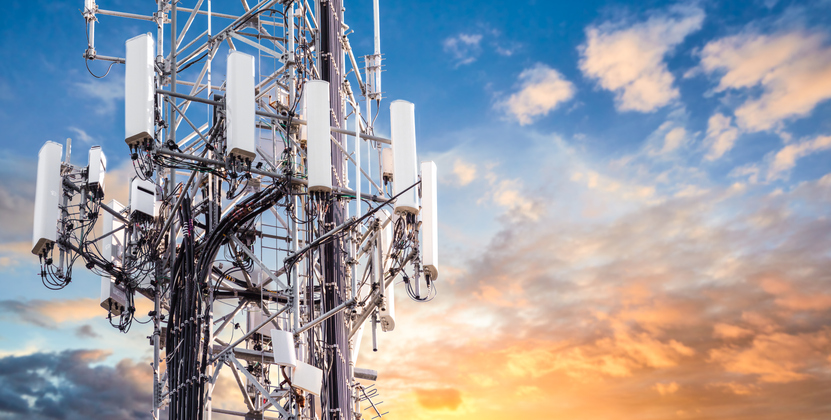
The rollout of 5G technology is one of the most exciting developments in IT for a very long time, arguably for decades. It is poised to change how businesses operate, especially data centers. With that in mind, here is a straightforward guide to the impact of 5G technology on Denver data centers.
5G (Fifth-Generation) technology is the latest advancement in wireless communication, designed to provide faster speeds, lower latency, and greater connectivity than previous generations.
Here are five key features of 5G.
Ultra-fast speeds: 5G can provide download speeds of up to 10 Gbps, which is up to 100 times faster than 4G. This enables seamless streaming, quicker downloads, and lag-free cloud computing.
Low latency: With latency as low as 1 millisecond, 5G significantly reduces delays in data transmission. This is critical for real-time applications like autonomous driving, remote surgery, and virtual reality.
Massive device connectivity: 5G supports a higher number of connected devices per square kilometer, making it ideal for IoT applications in smart homes, industrial automation, and smart cities.
Network slicing: This feature allows network operators to create virtual networks tailored to specific applications, ensuring optimized performance for different use cases such as emergency services or entertainment streaming.
Improved energy efficiency: 5G networks are designed to consume less power per bit of data transmitted, extending battery life for mobile devices and reducing operational costs for network providers.
These are the five main ways that 5G is having an impact on data centers.
5G’s ultra-fast speeds and ability to connect billions of devices generate an unprecedented surge in data volume. High-resolution video streaming, cloud gaming, and IoT applications continuously produce massive amounts of data. This places immense pressure on data centers to expand storage, processing, and bandwidth capacity. To manage this influx, data centers are integrating high-density storage solutions, AI-driven automation, and advanced data management systems to optimize efficiency and reduce bottlenecks.
Traditional centralized data centers struggle to meet the ultra-low latency demands of 5G. To counter this, edge computing moves data processing closer to the source, reducing response times and enhancing user experiences. This shift requires data centers to deploy smaller, decentralized facilities at the network edge, improving real-time analytics for applications like autonomous vehicles and smart city infrastructure. Edge data centers must be designed for scalability, reliability, and seamless integration with larger cloud ecosystems.
5G’s promise of near-instant connectivity relies on robust networking infrastructure. Data centers must adopt software-defined networking (SDN) and network function virtualization (NFV) to dynamically manage traffic, prioritize critical applications, and ensure uninterrupted service. These technologies help data centers handle massive data flows while maintaining low latency and high throughput, supporting applications such as telemedicine, industrial automation, and immersive augmented reality.
As data processing scales up, power consumption becomes a growing concern. Data centers are investing in energy-efficient cooling systems, AI-driven power management, and renewable energy sources to mitigate environmental impact. Innovations such as liquid cooling, waste heat reuse, and AI-optimized workloads help reduce operational costs while maintaining sustainability goals.
The expansion of IoT and edge networks introduces new cybersecurity challenges, increasing the risk of data breaches and cyberattacks. Data centers must deploy multi-layered security frameworks, including AI-driven threat detection, end-to-end encryption, and zero-trust architectures. Proactive monitoring, automated anomaly detection, and secure data isolation techniques ensure that sensitive information remains protected from evolving cyber threats.
Denver data centers are already using 5G as a foundation for future innovation. These are just five of the developments in progress that are powered by it.
Expanding edge computing infrastructure: With 5G’s low latency and high-speed connectivity, Denver data centers are deploying more edge computing facilities. These decentralized mini-data centers process data closer to end users, enhancing real-time applications like autonomous vehicles, smart city solutions, and industrial automation.
Enhancing AI and IoT integration: 5G enables Denver’s data centers to support large-scale IoT deployments and AI-driven applications. This includes smart grid technology, predictive maintenance for industries, and AI-powered analytics for businesses. The high-speed connectivity ensures seamless data transmission, improving operational efficiency.
Boosting cloud and hybrid solutions: The increased bandwidth and reliability of 5G allow Denver data centers to optimize cloud and hybrid computing models. Businesses benefit from faster access to cloud services, lower latency in remote work applications, and enhanced disaster recovery solutions.
Strengthening cybersecurity measures: As 5G expands connectivity, Denver data centers invest in AI-driven security protocols, real-time threat detection, and zero-trust architectures to protect against cyber threats. This is crucial for industries like finance, healthcare, and government agencies that require high data security.
Sustainability and energy efficiency: 5G-driven automation helps data centers optimize energy consumption by integrating smart cooling systems, AI-based workload management, and renewable energy sources, making operations more sustainable.

Sign Up For Our Resource Library
Enjoying our resource? Get the latest news and articles delivered straight to your inbox.
Can’t see the form? Click here.
Share Article
Popular Categories

Explore the future of data centers in Denver and the trends to watch. Discover the emerging trends in data centers. Learn about the future of Denver as a data center hub. Find out how DataBank is innovating for the future. Get the knowledge you need to make informed predictions about the future and what it means for your business.

Explore 5G and data center connectivity. Find out how the development of 5G is pushing the development of connection. Learn what makes 5G unique and what this means for data center connectivity. Discover the implications for businesses and three specific ways businesses could leverage the benefits of 5G.

Explore the rise of data centers in Denver and gain an understanding of what’s driving the growth. Learn the factors contributing to data center growth in general. Find out why Denver is emerging as a data center hub. Discover what’s next for Denver data centers. Get the information you need to make solid business decisions.
Discover the DataBank Difference today:
Hybrid infrastructure solutions with boundless edge reach and a human touch.
Tell us about your infrastructure requirements and how to reach you, and one of our team members will be in touch shortly.
Can’t see the form? Click here.
Let us know which data center you'd like to visit and how to reach you, and one of our team members will be in touch shortly.
Please understand that we might not be able to accommodate every request for a physical data center tour.
Please allow a minimum of 24-48 hours for a response.
Can’t see the form? Click here.
Enjoying our resource? Get the latest news and articles delivered straight to your inbox.
Can’t see the form? Click here.
Can’t see the form? Click here.