

Summarize with:
read in < 1 min


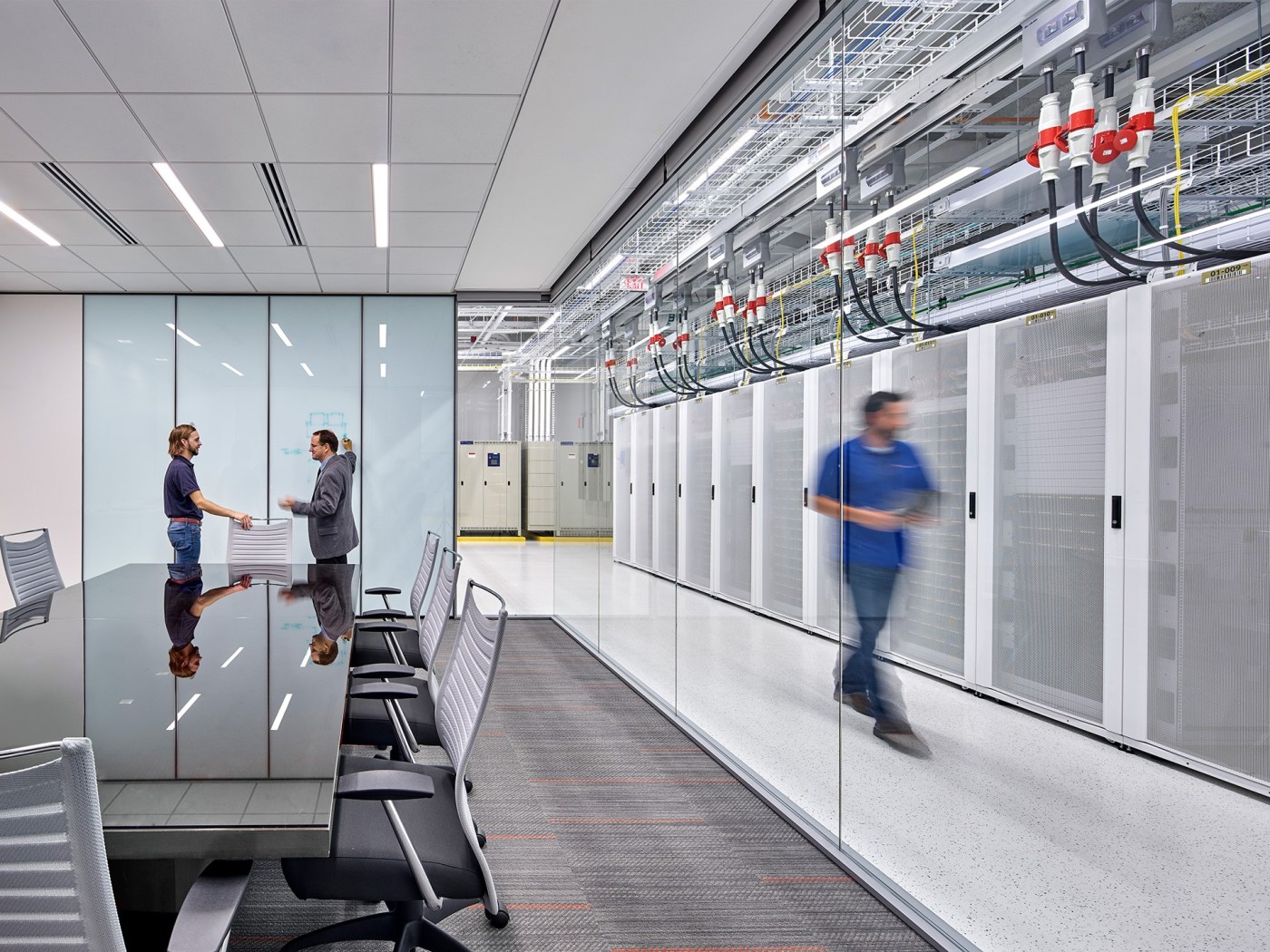
For modern businesses, developing and maintaining the right IT infrastructure is key to their ongoing success. With that in mind, here is a straightforward guide to Chicago data centers and why they are important for business.
Data centers provide the core IT infrastructure that supports digital activities. Here are just 7 of the main functions they fulfill.
Data storage and management: This is a data center’s most basic function. Data centers offer secure, reliable, and scalable storage solutions that ensure data availability and integrity. This makes them safe places to store vast amounts of business-critical information.
Application hosting: Businesses rely on software applications for daily operations. Data centers host these applications, enabling consistent performance, uptime, and accessibility. In addition to being used as standalone assets, data centers may be used to host cloud apps and/or in combination with edge infrastructure.
Data backup and recovery: Data centers provide backup services to protect against data loss due to hardware failure, cyberattacks, or human error. They also enable disaster recovery, ensuring business continuity.
Network connectivity: Data centers act as hubs that connect businesses to the internet, cloud services, and other networks. This ensures reliable communication and data transfer between users and systems.
Security and compliance: They implement robust physical and digital security measures, including firewalls, encryption, and biometric access controls. This helps businesses meet regulatory compliance and protect sensitive information.
Resource consolidation: By centralizing servers, storage, and networking equipment, data centers reduce infrastructure sprawl and improve IT efficiency. This allows businesses to manage resources more effectively. Managed data centers (e.g., colocation data centers) also offer scalability and flexibility.
Direct power and environmental control: Businesses that use data centers have direct control over the power supply and environmental conditions. This means they can optimize these resources for their specific use cases.
Chicago offers multiple strategic advantages that have helped it to become a hub for data centers. Here are just 7 of the main ones.
Central location: Chicago’s geographic location in the Midwest makes it an ideal central point for data transmission across North America. It reduces latency for users on both coasts and supports efficient nationwide data distribution.
Robust power infrastructure: The city offers reliable and affordable power, which is essential for operating energy-intensive data centers. Chicago also benefits from access to renewable energy sources, which appeals to sustainability-focused businesses.
Advantageous climate: Chicago’s cool climate helps reduce the cost of cooling data center equipment. For much of the year, natural air can supplement mechanical cooling systems, improving energy efficiency.
Disaster resilience: Chicago has limited exposure to natural disasters such as severe winds, flooding, and earthquakes. This makes it a physically safe location for critical infrastructure.
Strong network connectivity: As a major internet exchange point, Chicago provides excellent network connectivity, with access to multiple fiber optic networks and major telecom providers. This ensures fast and reliable data transfer.
Tax incentives: Illinois offers tax incentives for data center investments, including exemptions on sales taxes for equipment purchases. This makes it financially attractive for companies to establish or expand facilities in the region.
Skilled workforce: Chicago has a large pool of skilled IT professionals and a thriving tech community, which supports data center operations and innovation.
Here is an overview of what to expect from Chicago’s data centers.
High-density power capabilities: Chicago data centers often support high power densities per rack to meet the needs of enterprise and hyperscale customers. Access to affordable and reliable electricity from local utilities enables consistent power delivery.
Energy-efficient cooling systems: Leveraging the city’s cooler climate, many facilities use economizers and free-air cooling to reduce energy consumption. This helps lower operating costs and supports environmental sustainability.
Robust network infrastructure: Chicago is a major internet exchange point, so data centers are equipped with multiple fiber paths and connectivity to top-tier carriers. Low-latency access to both East and West Coasts and interconnection with global networks are standard.
Security measures: Expect multi-layered physical security, including biometric access controls, 24/7 monitoring, mantraps, and secure perimeters. Digital security often includes advanced firewalls, intrusion detection, and compliance with industry standards.
Strong disaster resilience: Facilities are built with reinforced structures, redundant power systems (UPS, backup generators), and flood-resistant measures to ensure uptime. Chicago’s low risk for natural disasters enhances these reliability features.
Modular design: Chicago’s data centers are built with scalability and flexibility in mind. This makes it easier for businesses to match their provisioning to their business needs. In particular, it means that businesses can quickly ramp up their data center infrastructure instead of having to rely on public clouds to meet their expansion needs.
Green building certifications: Many facilities pursue LEED or ENERGY STAR certifications, reflecting Chicago’s commitment to sustainable infrastructure.

Sign Up For Our Resource Library
Enjoying our resource? Get the latest news and articles delivered straight to your inbox.
Can’t see the form? Click here.
Share Article
Popular Categories

The main benefits of colocation in Chicago are cost-effectiveness, scalability, and flexibility. The main consideration is resilience. Here is a closer look at each of these points as they apply to colocation in Chicago.

Discover why businesses are turning to DataBank’s Chicago data centers for unmatched reliability, advanced infrastructure, and expert support. Explore key features, services, and real client success stories. Learn how DataBank delivers performance, security, and scalability in one of the Midwest’s most popular tech hubs.

Discover how Chicago data centers support e-commerce businesses. Gain an understanding of the 7 key considerations for e-commerce hosting. Learn about the ways that data centers support e-commerce. Find out why Chicago is a great location for e-commerce businesses.
Discover the DataBank Difference today:
Hybrid infrastructure solutions with boundless edge reach and a human touch.
Tell us about your infrastructure requirements and how to reach you, and one of team members will be in touch shortly.
Can’t see the form? Click here.
Let us know which data center you'd like to visit and how to reach you, and one of team members will be in touch shortly.
Can’t see the form? Click here.
Enjoying our resource? Get the latest news and articles delivered straight to your inbox.
Can’t see the form? Click here.
Can’t see the form? Click here.