

Summarize with:
read in < 1 min


As Denver has become one of the USA’s most important data center hubs, there are a lot of data centers for businesses to choose from. With that in mind, here is a straightforward guide to what features you should look for in a Denver data center.
To assess data center services fairly, you need a robust, objective process to evaluate them. Here are the 10 key steps to follow.
Define business requirements: Identify the organization’s needs, including uptime expectations, compliance requirements, and scalability demands.
Evaluate current infrastructure: Assess existing IT infrastructure to determine gaps, inefficiencies, and integration needs with potential data center services.
Conduct risk analysis: Identify potential risks, such as security vulnerabilities, downtime scenarios, and regulatory non-compliance, to ensure the service provider meets required standards.
Assess performance metrics: Review key performance indicators (KPIs), including latency, bandwidth capacity, and redundancy, to ensure the data center can handle workload demands.
Analyze security measures: Examine physical and cybersecurity protocols, such as access controls, encryption, firewalls, and incident response plans, to gauge data protection effectiveness.
Review compliance certifications: Verify the provider’s adherence to industry regulations (e.g., ISO 27001, SOC 2, HIPAA) to ensure compliance with legal and industry standards.
Examine disaster recovery and business continuity plans: Assess backup strategies, failover capabilities, and recovery point and time objectives (RPO/RTO) to minimize disruptions.
Evaluate cost structures and contracts: Analyze pricing models and service-level agreements (SLAs) closely to ensure they match your requirements both now and in the future.
Test and validate services: Conduct trials or pilot programs to validate performance, reliability, and compatibility with existing systems.
Obtain stakeholder feedback: Engage IT teams, security professionals, and decision-makers to ensure alignment with business goals before finalizing the selection.
Once you’re developed a fair evaluation process, you need to look at the features to evaluate. Here are 7 core features to look for in Denver data centers.
Geographic stability: Denver is a low-risk location for natural disasters such as earthquakes, hurricanes, and large-scale flooding. Look for data centers that capitalize on this advantage with additional structural reinforcements and emergency preparedness plans.
Network connectivity: Evaluate the availability of multiple Tier 1 and Tier 2 network providers to ensure strong connectivity. Denver is a key interconnection hub in the central U.S.. That means data centers with direct access to major fiber routes and internet exchanges can provide low-latency connections well beyond the city itself.
Power redundancy and efficiency: Due to Denver’s semi-arid climate and potential for power fluctuations, data centers should have N+1 or 2N power redundancy, on-site backup generators, and energy-efficient cooling systems that leverage free cooling during colder months.
Security and compliance: Ensure the facility meets industry certifications like SOC 2, ISO 27001, HIPAA, and PCI DSS. Physical security should include biometric access controls, 24/7 surveillance, and secure perimeters to prevent unauthorized access.
Scalability and space options: Denver has a growing tech market, so choosing a facility with flexible colocation, private suites, and high-density power capabilities ensures room for expansion.
Business continuity and disaster recovery: Many Denver data centers offer disaster recovery solutions due to the region’s central location. Look for facilities with geographically diverse backup options and robust failover capabilities.
Support services: Access to 24/7 remote hands, technical support, and on-site engineers can make a significant difference in operational efficiency.
DataBank always aims not just to meet expectations but to exceed them. Here are just five of the ways that DataBank exceeds expectations in Denver.
DataBank operates five data centers across the Denver metro area, including sites in downtown Denver, Englewood, Centennial, and Westminster. This strategic distribution allows clients to select locations that best meet their proximity, connectivity, and disaster recovery requirements.
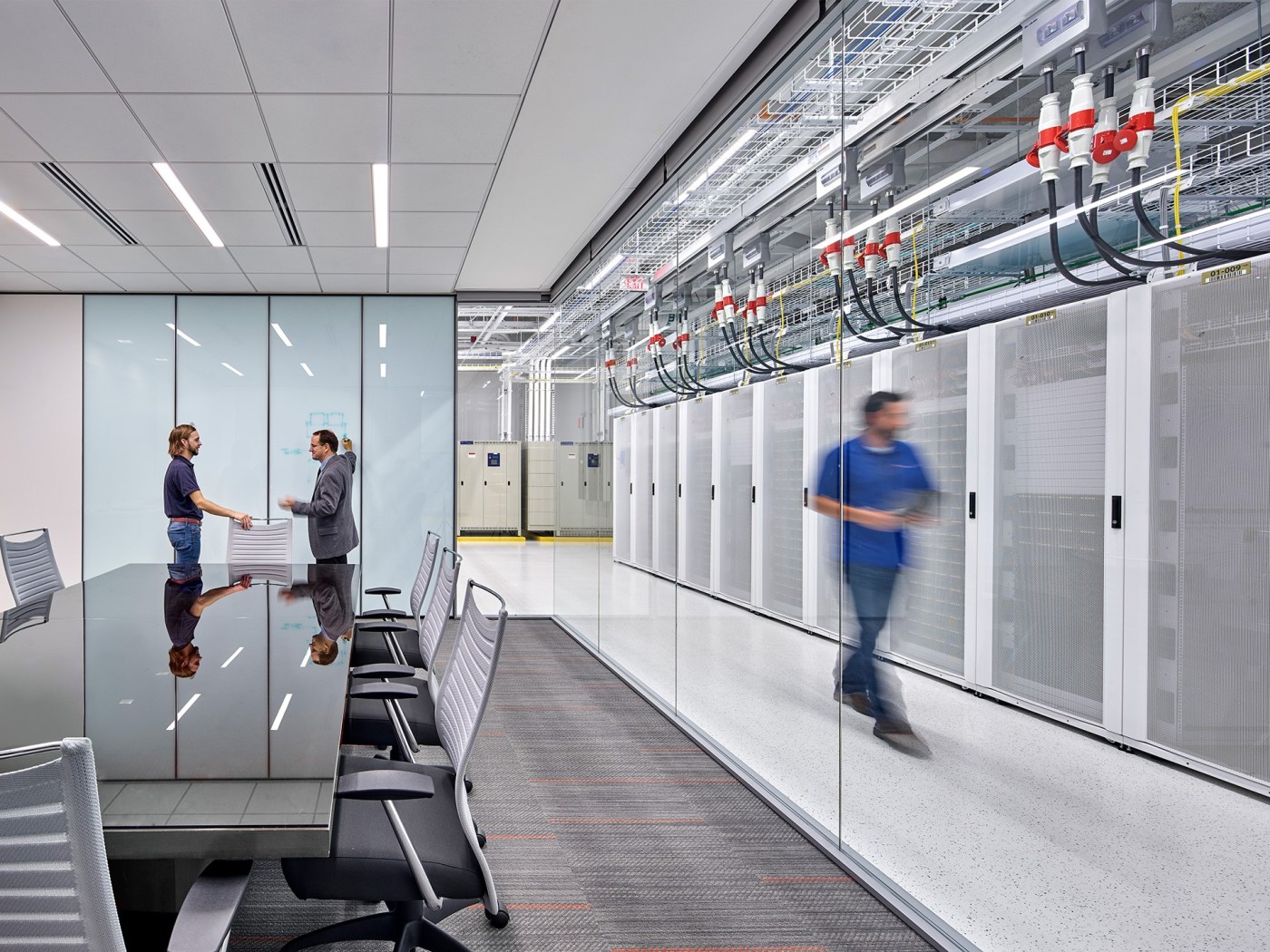
Each facility is designed with state-of-the-art infrastructure to ensure reliability and performance. For instance, the DEN5 data center at the Centennial Campus offers 56,000 square feet of raised floor space and supports a critical IT load of 16 megawatts, accommodating high-density computing needs. Facilities are equipped with N+1 power and cooling configurations, ensuring consistent uptime and optimal operating conditions.
DataBank’s Denver data centers provide access to a broad range of fiber, internet, and connectivity options. The DEN3 facility at 1500 Champa Street, for example, serves as a premier carrier hotel with access to numerous ISPs and carriers, enhancing network redundancy and performance.
DataBank ensures that its Denver facilities adhere to stringent compliance standards, including SSAE 18, SOC 1, SOC 2, HIPAA, PCI DSS, and ISO 27001. This commitment to compliance provides clients with confidence that their data is managed within industry-recognized frameworks for security and privacy.
Beyond technical specifications, DataBank’s Denver facilities offer customer-focused amenities such as package services, parking, conference rooms, office space, break rooms, workspace, and Wi-Fi. These features enhance the overall client experience by providing convenient and comfortable on-site resources.

Sign Up For Our Resource Library
Enjoying our resource? Get the latest news and articles delivered straight to your inbox.
Can’t see the form? Click here.
Share Article
Popular Categories

The factors affecting the cost of colocation in Denver are much the same as the factors affecting the cost of colocation in other cities. Here is a quick overview of them, along with Denver-specific considerations.

Get an overview of Disaster Recovery as a Service (DRaaS) in Denver data centers. Gain an understanding of DRaaS and its key features. Learn the key benefits of DRaaS for Denver-based businesses that have driven its rise in popularity. Find out how DataBank’s DRaaS solutions help ensure continuity and so protect businesses.

Your choice of Denver data center needs to align with your broader goals and objectives of the organization. The clearer you can be about your needs and wants, the easier it will be for you to judge if a data center is a good fit for them.
Discover the DataBank Difference today:
Hybrid infrastructure solutions with boundless edge reach and a human touch.
Tell us about your infrastructure requirements and how to reach you, and one of our team members will be in touch shortly.
Can’t see the form? Click here.
Let us know which data center you'd like to visit and how to reach you, and one of our team members will be in touch shortly.
Please understand that we might not be able to accommodate every request for a physical data center tour.
Please allow a minimum of 24-48 hours for a response.
Can’t see the form? Click here.
Enjoying our resource? Get the latest news and articles delivered straight to your inbox.
Can’t see the form? Click here.
Can’t see the form? Click here.