

Summarize with:
read in < 1 min


Digital infrastructure is no longer just the concern of IT departments. It has become the backbone of every modern enterprise. This article defines what digital infrastructure truly means, outlines its components, and explains why it’s now strategic to business success. It also explores how DataBank helps enterprises modernize and scale with confidence.
Digital infrastructure refers to the interconnected foundation of technologies and facilities that store, move, process, and secure data. It includes data centers, networks, cloud platforms, and edge computing locations.
Traditionally, infrastructure meant a company’s on-premises servers and internal network. Today, it’s distributed across:
Together, these layers form a hybrid, interconnected environment that must be managed strategically to deliver optimum business outcomes.
Digital infrastructure can be thought of as five interdependent pillars that work together to ensure agility, scalability, and resilience.
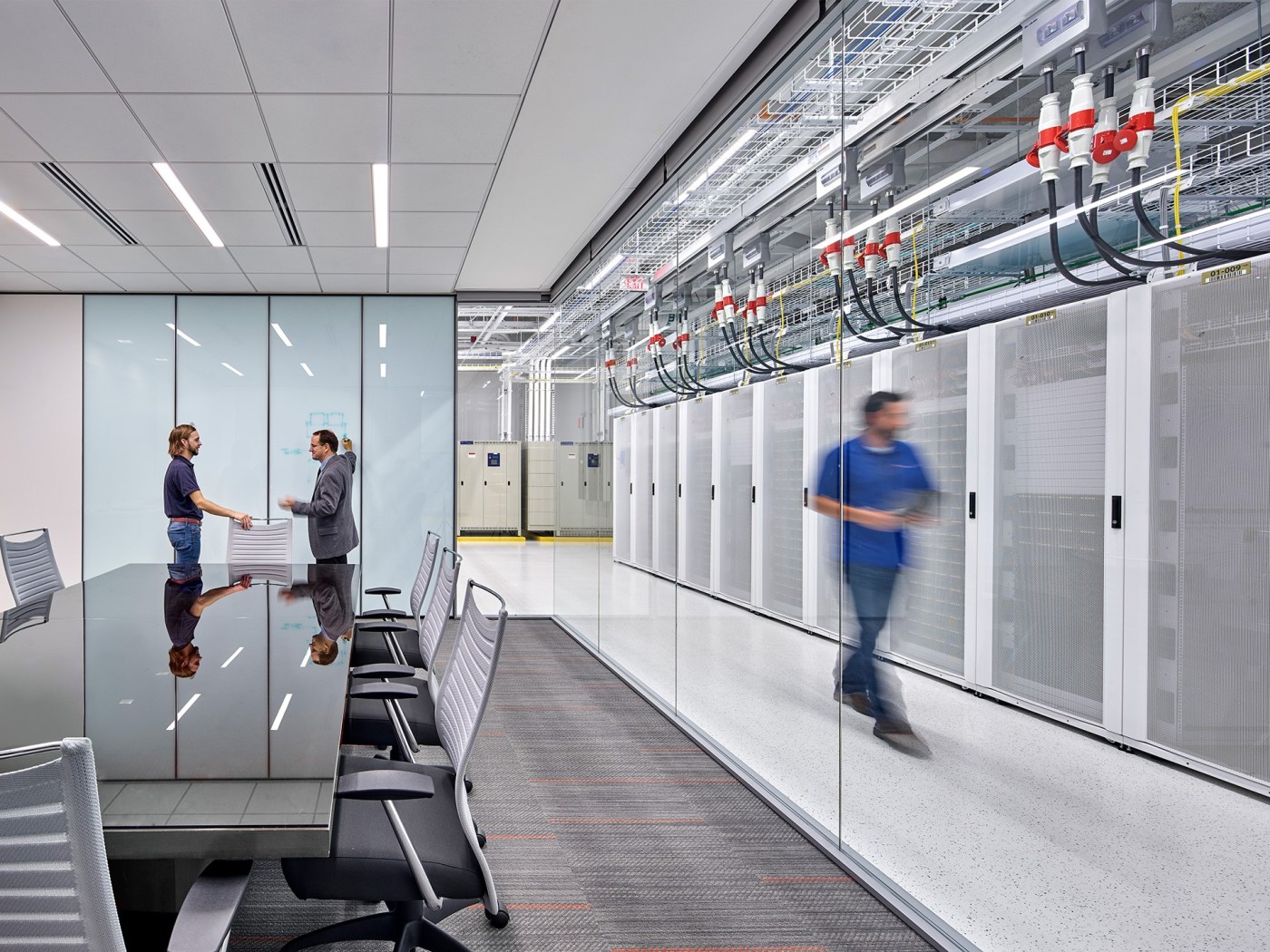
The foundation for secure, reliable data hosting. Colocation facilities provide the physical space, power, cooling, and security that enterprises need without the expense of building their own data centers. DataBank offers more than 70 data centers across the U.S., spanning over 4.9 million square feet and 1 gigawatt of critical IT load.
The network fabric that links systems, people, and clouds. Reliable fiber, carrier-neutral peering, and redundant routes are vital for uptime and performance.
The process of linking enterprises directly with partners, clouds, and carriers within a data center. DataBank provides cloud on-ramps and private network interconnects that reduce latency and eliminate reliance on the public internet.
By placing compute resources closer to end users, edge infrastructure supports applications like streaming, IoT, and autonomous systems that demand near-instant response.
Modern digital infrastructure connects seamlessly with cloud platforms through software-defined networking, enabling hybrid and multi-cloud strategies that balance performance, cost, and control.
For business leaders, digital infrastructure is not just a technical investment. It’s a strategic enabler. For example, digital infrastructure determines how fast a company can respond to market changes, how well it protects its data, and how effectively it scales new services.
Here are five of the main advantages of digital infrastructure.
Scalability: Easily add capacity for new applications, regions, or customers.
Agility: Deploy workloads across clouds, colocation, and edge sites as business needs shift.
Resilience: Maintain uptime and continuity even during power or network disruptions.
Security and compliance: Leverage direct, private connectivity and certified facilities to safeguard critical assets.
Cost optimization: Reduce capital expenditure and improve efficiency through hybrid infrastructure models.
Several global technology trends are redefining infrastructure priorities for the next decade. Here are five of the most important ones.
Artificial intelligence and machine learning (AI/ML): Training and deploying models require high-density compute. This is why they are often colocated near cloud and network hubs.
Internet of Things (IoT): Billions of connected devices are pushing compute power closer to the edge.
5G connectivity: Ultra-fast wireless networks enable real-time data processing across industries.
Multi-cloud strategies: Enterprises are diversifying across clouds for cost, performance, and risk management.
Sustainability: Data centers are investing in renewable energy and efficient cooling to meet environmental, social, and governance (ESG) goals.
DataBank’s infrastructure is designed to support these trends through high-density power options, hybrid-cloud connectivity, and edge-ready locations across major U.S. metros.
To achieve maximum performance and resilience, enterprises should design their infrastructure with the following five key priorities.
Redundancy: Ensure backup power, network paths, and cooling systems to eliminate single points of failure.
Security: Physical access controls, surveillance, and cybersecurity layers protect sensitive workloads.
Latency: Locate infrastructure close to users and data sources to improve speed.
Compliance: Choose facilities that work within recognized security frameworks such as ISO 27001 and/or have compliance certificates that are relevant to your industry.
Visibility: Centralized monitoring tools enable proactive management and capacity planning.
DataBank’s data centers are engineered with N+1 or 2N redundancy, biometric access controls, and 24×7 monitoring, helping clients maintain enterprise-grade performance and compliance.
Digital infrastructure is essential to many real-world applications. Here are just three examples of what it can do.
Financial services: Banks and trading firms colocate servers in low-latency facilities to process transactions in microseconds. This ensures faster trade execution and improved data security.
Healthcare: Hospitals use colocation to store and process electronic medical records securely under HIPAA compliance, while connecting directly to cloud analytics platforms.
Media and entertainment: Streaming companies distribute content from edge data centers to deliver consistent user experiences in major markets.
DataBank positions itself as more than a colocation provider. It is a digital infrastructure platform designed to power enterprise transformation.
Its approach combines the following five crucial factors.
Colocation: Secure, scalable environments for mission-critical workloads.
Connectivity: Carrier-neutral interconnection and cloud on-ramps for global reach.
Edge infrastructure: Facilities located within 100 miles of over 60% of the U.S. population.
Cloud integration: Partnerships with Megaport and other network providers to enable direct, private cloud connectivity.
Managed services: Support for monitoring, compliance, and performance optimization.
This comprehensive service stack allows enterprises to unify their infrastructure strategy across colocation, cloud, and connectivity. The result is a balance of control and flexibility.
A recent example of this is DataBank’s collaboration with Megaport to deliver on-demand global network connectivity. This facilitates seamless connectivity between enterprises, major cloud platforms, and data centers.
Business leaders should treat infrastructure planning as an ongoing strategic discipline rather than a one-time IT project. A practical framework for assessing digital infrastructure maturity might include the following four stages.
Basic colocation or on-prem hosting with limited automation and visibility.
Hybrid setup connecting colocation with one or more cloud providers; stronger monitoring and security posture.
Software-defined networking, automated scaling, and multi-cloud orchestration for agility.
Infrastructure integrated with AI-driven analytics, sustainability metrics, and real-time workload optimization.
Enterprises should evaluate their current stage and set measurable goals. For example, they might aim to reduce latency by 20%, expand regional presence, or consolidate data center footprints.
DataBank’s consultation team helps organizations assess readiness and create a roadmap for modernization.
In today’s digital economy, infrastructure is essential to effective strategy. The quality of your digital infrastructure defines how quickly, reliably, and efficiently your enterprise can operate.
As digital transformation accelerates, enterprises with the most adaptable and interconnected infrastructure will lead. DataBank’s platform offers that adaptability. It provides not just data centers, but the full spectrum of digital infrastructure your business needs to thrive in the modern era.

Sign Up For Our Resource Library
Enjoying our resource? Get the latest news and articles delivered straight to your inbox.
Can’t see the form? Click here.
Share Article
Popular Categories

Learn about the power of colocation for digital transformation. Discover cost-effective solutions, scalable infrastructure, robust networks, and heightened security. Explore agility through rapid scaling, hybrid cloud support, edge computing, and 5G.

Explore data center trends in the post-pandemic. Learn about the role of data centers and how it has developed since the early days of IT. Find out why data center trends are so important in the modern world. Discover the 10 key data center trends in the post-pandemic USA.

Explore the power of biometric access controls, efficient threat detection technologies, and crucial compliance measures in ensuring robust data center security. Learn how to navigate challenges and safeguard valuable information in the digital age.
Discover the DataBank Difference today:
Hybrid infrastructure solutions with boundless edge reach and a human touch.
Tell us about your infrastructure requirements and how to reach you, and one of our team members will be in touch shortly.
Can’t see the form? Click here.
Let us know which data center you'd like to visit and how to reach you, and one of our team members will be in touch shortly.
Please understand that we might not be able to accommodate every request for a physical data center tour.
Please allow a minimum of 24-48 hours for a response.
Can’t see the form? Click here.
Enjoying our resource? Get the latest news and articles delivered straight to your inbox.
Can’t see the form? Click here.
Can’t see the form? Click here.