Summarize with:
read in < 1 min


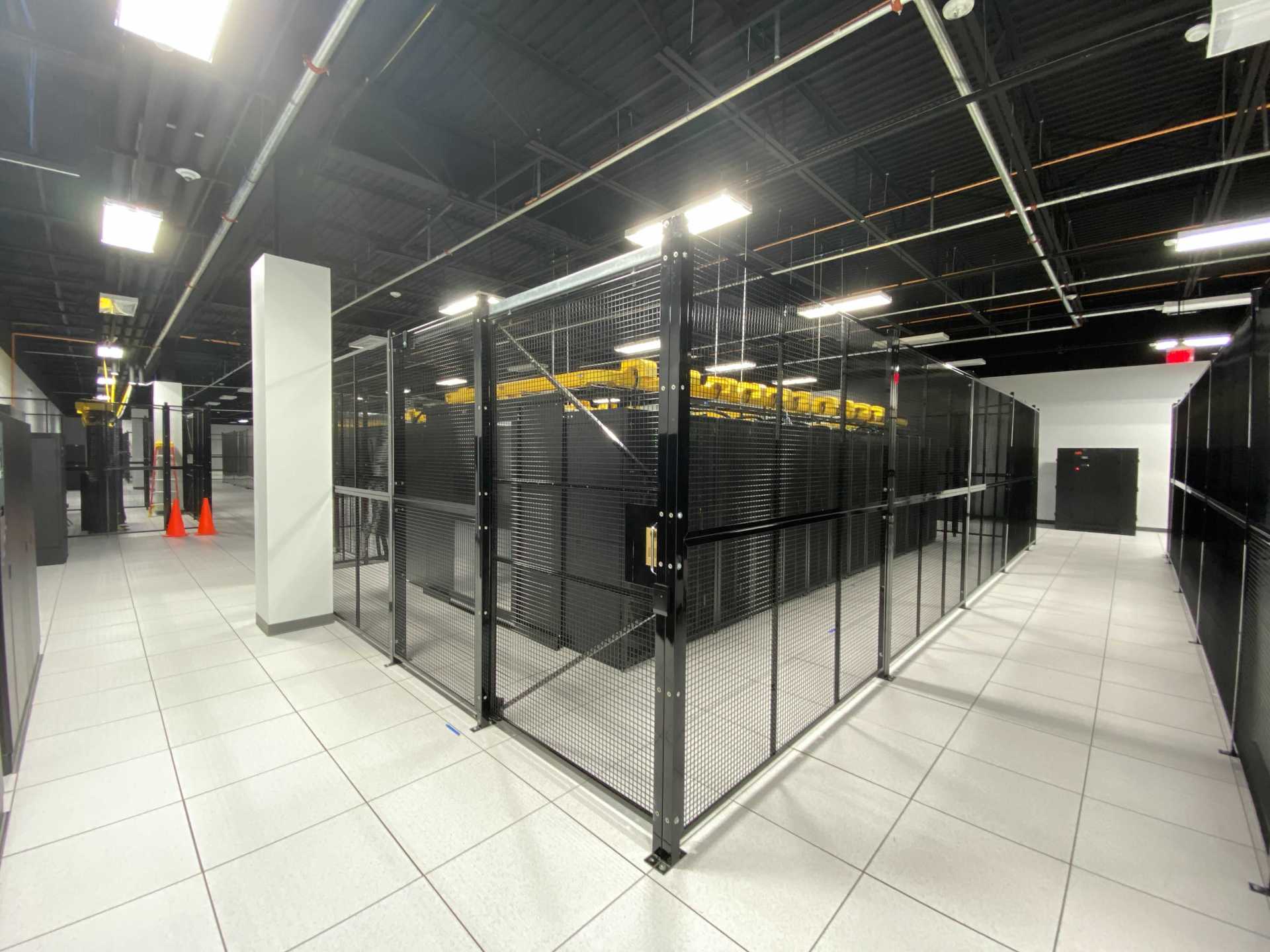
A data center cage is essentially what its name suggests. It’s a self-contained, secure environment for data center hardware. Data center cages are available in many different sizes and layouts. They also offer a wide range of benefits. Here is a quick guide to what you need to know about them.
The name “data center cage” may conjure up images of a construction with bars. In actual fact, a data center cage is more likely to be made of robust mesh. With that said, there are some data center cages that actually are constructed with metal rods that look like bars.
Unlike data center racks (which are highly standardized), data center cages are often highly customized. This means that they literally come in all shapes and sizes. Some data center cages are so small they can only hold a few, key hardware items. Other data center cages are big enough to hold multiple data center cabinets.
For most organizations, the headline benefit of using a data center cage is the extra security it offers. All the other benefits of data center cages are just useful bonuses. This is why data center cages tend to be mainly used by organizations that hold highly sensitive data.
Using a data center cage not only means that access can be restricted to specific personnel. It also means that access can be monitored. In other words, businesses can see (and prove irrefutably) who was (and wasn’t) where, and when. This greatly reduces the possibility for malicious actors to engage in either tampering or theft.
Modern data center cages do not rely on just robust locks. They typically also have cameras and alarms. It’s becoming increasingly common for them to use biometric authentication as well. This is all in addition to the standard security precautions implemented in the data center as a whole.
Data center cages will evolve for higher-security use cases, think private edge zones, physical isolation, guaranteed low latency, and embedded compliance controls in regulated environments.
For some data security compliance programs, using a data center cage may be an explicit requirement. If it’s not, it’s probably implicit. Even if it isn’t, it’s still likely to be worth a business’ while to invest in data center cages.
In short, if you have sensitive data, you should generally aim to apply as many layers of physical security as you possibly can. The more layers of security you implement, the easier you will find it to demonstrate compliance with any data security compliance program. You will also give yourself stronger protection against lawsuits in general.
Although improved security is the stand-out benefit of using a data center cage, there are other useful benefits as well. Here is a quick guide to the main ones.
Protection against physical damage
The obvious way using a data center cage protects against physical damage is that it restricts access to the hardware inside it. The fewer people who have access to the hardware, the fewer people there are who can do it any damage. For completeness, this includes accidental damage as well as deliberate damage.
The less obvious way using a data center cage protects against physical damage is that it essentially creates a controlled environment. Businesses can then optimize this space for the conditions their specific hardware needs. By keeping their hardware in its preferred conditions, businesses can reduce the likelihood that it will be degraded and/or damaged.
Using a data center cage may also provide at least some extra protection against environmental threats affecting the data center as a whole. For example, businesses may choose to implement extra precautions against issues such as fire and flood.
Another benefit of using data center cages is that they can significantly improve operational efficiency. The operational benefits of data center cages are very similar to the operational benefits of data center racks.
Using data center cages allows clients (or the data centers themselves) to create mini-environments. Each of these can be optimized for the work that needs to be done in them. Making work easier also makes it quicker. This means that businesses get more value from their staff. It also often means that staff members get more satisfaction from their jobs.
Data center cages physically divide a space. This means that they can be used to create functional divisions. Probably the most common examples of this are segregating data followed by segregating different types of equipment. Another possible use for data center cages is to segregate different work groups.
This can be required for entirely practical reasons. For example, if a lot of work needs to be done on hardware, separating out technicians can create more room for everyone. It can also be beneficial for security. Essentially, businesses can place more granular restrictions on staff accesses.
Read More:

Sign Up For Our Resource Library
Enjoying our resource? Get the latest news and articles delivered straight to your inbox.
Can’t see the form? Click here.
Share Article
Popular Categories
Discover the DataBank Difference today:
Hybrid infrastructure solutions with boundless edge reach and a human touch.
Tell us about your infrastructure requirements and how to reach you, and one of our team members will be in touch shortly.
Can’t see the form? Click here.
Let us know which data center you'd like to visit and how to reach you, and one of our team members will be in touch shortly.
Please understand that we might not be able to accommodate every request for a physical data center tour.
Please allow a minimum of 24-48 hours for a response.
Can’t see the form? Click here.
Enjoying our resource? Get the latest news and articles delivered straight to your inbox.
Can’t see the form? Click here.
Can’t see the form? Click here.