

By Tim Glatz, Head of Interconnection, DataBank
Most infrastructure decisions begin with the same question: What hardware do we need?
It’s a logical starting point. Organizations carefully evaluate server specifications, storage capacity, and processing power. They compare vendors, negotiate pricing, and plan for future upgrades. Yet, hardware selection represents only part of the infrastructure equation.
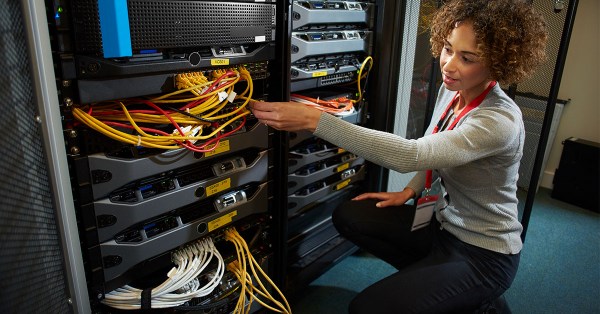
The other part–equally if not even more important–is connectivity. Without the right connectivity options, even the most powerful hardware would be left isolated, unable to deliver on its full potential. For example:
In the era of AI, real-time data processing, and distributed applications, connectivity architecture has evolved from a supporting consideration to a primary driver of business outcomes.
To put it another way, the question isn’t whether your hardware is powerful enough. It’s whether your connectivity design allows that hardware to perform at the level your infrastructure demands.
When evaluating connectivity, most organizations default to a single question: How much bandwidth do we get? Yet, focusing on bandwidth alone leaves out other important parts of the story.
Latency, jitter, and packet loss often matter more than raw throughput, especially for applications requiring real-time responsiveness. A 10Gbps connection with inconsistent latency performs worse than a 1Gbps connection with predictable, low-latency characteristics.
Path diversity and redundancy architecture determine what happens when primary connections fail. A single high-capacity link creates a single point of failure. Multiple diverse paths, even with lower individual capacity, provide resilience that keeps applications running during network disruptions.
The quality of peering relationships and direct access to cloud on-ramps can have a real impact on performance and cost. Direct connections to AWS, Microsoft Azure, or Google Cloud bypass the public internet entirely, reducing latency and improving security while often lowering data transfer costs at scale.
For AI inference, financial transactions, and real-time collaboration, these connectivity characteristics directly determine whether applications can meet business requirements.
“Good enough” connectivity rarely reveals its costs through obvious outages. Instead, it degrades performance in ways that are difficult to measure and easy to overlook.
Application timeouts trigger retry attempts, which consume resources and cascade across dependent services. For example, pages load slightly slower, API calls take longer, interactive features feel less responsive. These incremental degradations often go unmeasured until customers complain or switch to competitors.
The compound effects become more severe in modern architectures. An additional 50ms of latency multiplies across microservices chains, turning acceptable response times into frustrating delays.
Perhaps, most significantly, inadequate connectivity creates opportunity costs.
These limitations don’t just affect current operations; they constrain strategic growth and competitive positioning.
AI workloads have fundamentally changed connectivity requirements in ways that catch many organizations off guard. Training and inference represent opposite challenges: training demands massive bandwidth for moving datasets and syncing model parameters across distributed systems, while inference prioritizes ultra-low latency for real-time decision-making.
As AI models grow larger and more complex, the “data gravity” problem intensifies. Moving massive datasets to centralized training locations becomes increasingly impractical, yet moving trained models to distributed data sources introduces latency challenges for inference workloads.
These requirements force architectural decisions about when to use private direct connections versus internet transit, where to position edge locations for inference workloads, and how connectivity design impacts total cost of ownership.
Organizations planning AI deployments must recognize that connectivity infrastructure becomes the constraint faster than compute capacity. Today’s “sufficient” connectivity will bottleneck tomorrow’s AI capabilities.
Connectivity quality depends not just on specifications but on ecosystem. Carrier-neutral data centers with a wide array of interconnection options create exponentially more value than facilities offering limited connectivity choices.
Direct connections to cloud providers deliver measurable advantages over internet transit: lower latency, improved security, and often reduced costs at scale. For organizations running hybrid or multi-cloud architectures, these direct on-ramps become essential rather than optional.
The physical proximity to partners, customers, and data sources matters more than many realize. API integrations, B2B data exchanges, and real-time partner connections all perform better with direct interconnection. Organizations choosing data center locations based solely on cost or convenience often discover later that they’ve positioned themselves far from the ecosystems they need to access.
Strategic infrastructure positioning means locating where connectivity options are abundant.
Technology evolution happens faster than infrastructure refresh cycles. Organizations making connectivity decisions today must anticipate requirements three to five years out, not just current needs.
Certain design principles transcend specific technologies: build for path diversity rather than single high-capacity links, prioritize low-latency options even when current applications don’t demand them, and choose locations based on ecosystem richness rather than just immediate connectivity requirements.
Vendor-neutral connectivity architecture preserves flexibility as business needs evolve. The ability to add new connections, switch providers, or pivot strategies without physical relocation provides business value that’s difficult to quantify but easy to recognize when needed.
Infrastructure decisions should begin with connectivity architecture, not hardware specifications. The right connectivity environment makes powerful hardware more valuable. Poor connectivity makes even the best hardware underperform.
Before your next deployment, ask: To whom and to what do we need to connect? What latency do our applications require? How will our needs evolve? What happens when primary paths fail?
Organizations that position themselves in connectivity-rich environments gain advantages that competitors struggle to replicate: faster application performance, more deployment options, and the flexibility to adopt emerging technologies as business demands change.
Without connectivity, your equipment is just hardware. With the right connectivity architecture, your infrastructure can become a new–and sustainable–competitive advantage.

Sign Up For Our Resource Library
Enjoying our resource? Get the latest news and articles delivered straight to your inbox.
Can’t see the form? Click here.
About the Author

Share Article
Popular Categories

Data center interconnections deliver better performance, security, and cost savings. Discover how DataBank's Interconnection Marketplace makes finding connectivity providers much easier.

Explore the top carriers working with DataBank to provide essential telecommunications, fiber, and network services to businesses and enterprises nationwide. If you don’t see your carrier listed, please check back....
Just what are interconnections? Improve your understanding of interconnection in colocation data centers. Discover the five key interconnection approaches, how they work, and real-world examples to help you choose the best strategy for your business.

Discover the DataBank Difference today:
Hybrid infrastructure solutions with boundless edge reach and a human touch.
Tell us about your infrastructure requirements and how to reach you, and one of our team members will be in touch shortly.
Can’t see the form? Click here.
Let us know which data center you'd like to visit and how to reach you, and one of our team members will be in touch shortly.
Please understand that we might not be able to accommodate every request for a physical data center tour.
Please allow a minimum of 24-48 hours for a response.
Can’t see the form? Click here.
Enjoying our resource? Get the latest news and articles delivered straight to your inbox.
Can’t see the form? Click here.
Can’t see the form? Click here.