Loading audio...
The Truth About Data Centers: What’s Really Behind the Water Numbers
This is the fourth article in a series exploring the facts behind the data center debate. You can read parts one, two, and three, or download our full eBook, The Truth About Data Centers, for a closer look at the issues covered in this series.
Water consumption is one of the most emotionally charged concerns raised about data centers today, and it’s one of the most misunderstood. A single statistic can circulate for months before anyone checks where it came from, and by then it may have already shaped local debates and headlines.
The picture looks very different once you look at how these figures actually get built.
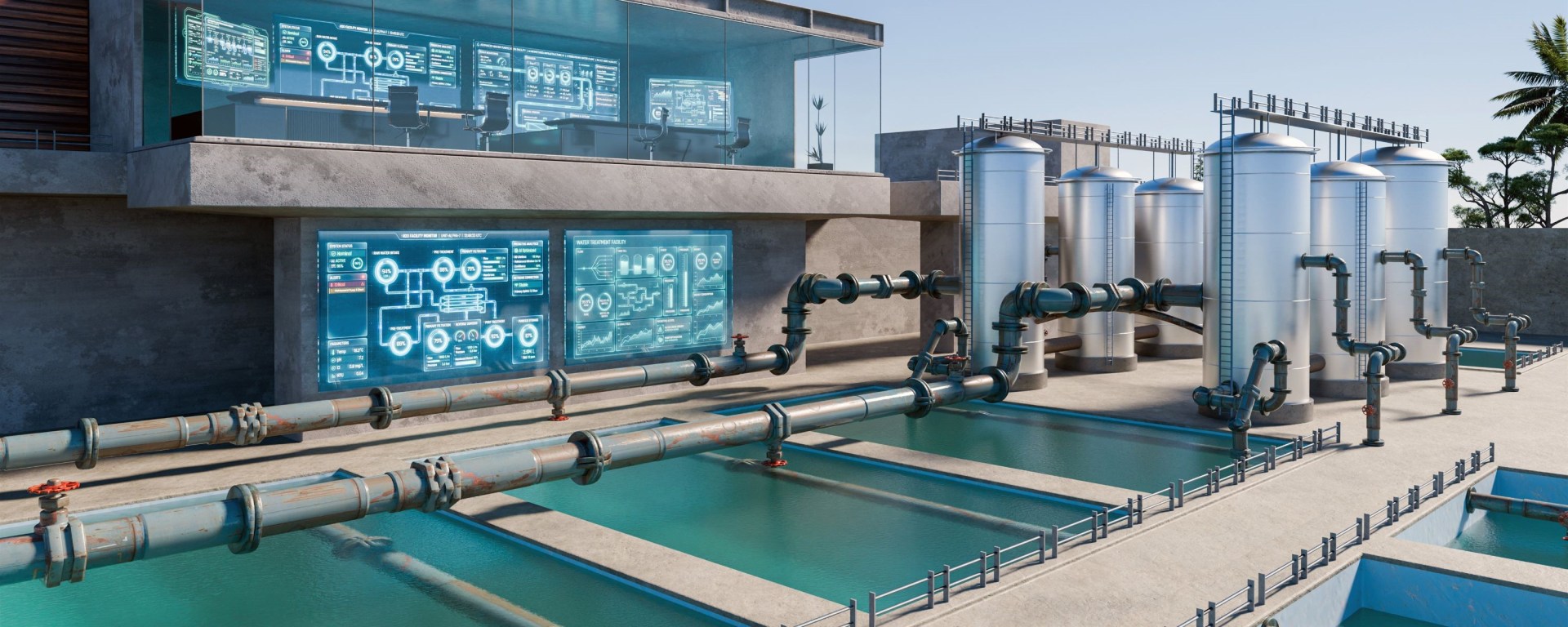
Lumping every data center into the same water conversation is where most confusion starts. There are three completely different approaches to cooling, and each comes with its own tradeoffs.
That distinction is measured through Water Usage Effectiveness, or WUE, the industry’s standard for tracking how much water a facility uses relative to its size and output. DataBank’s standard facility design runs on closed-loop cooling, so new builds start service with a near-zero water footprint from day one, not something the facility works toward over time.
A claim that keeps resurfacing is that a single ChatGPT prompt costs about a bottle of water. It traces back to a 2024 Washington Post estimate, and independent researcher Andy Masley later found the number was likely 50 to 250 times too high.
The inflated version counted water lost to evaporation at hydroelectric reservoirs as part of a data center’s footprint, water that evaporates off dammed rivers regardless of who’s drawing power from the dam. It’s a bit like arguing that a retail store uses water every time its cash register rings up a sale, since generating the electricity behind that transaction required water somewhere upstream.
Strip that out and the numbers change dramatically: Masley’s corrected estimate for onsite water use lands around 2.2 milliliters per prompt across the U.S. grid, or about 1/227th of a standard bottle. It’s the same underlying data, but just with a different definition of what actually counts as data center water use.
Compare data center water use against everyday consumption and even the larger figures shrink fast.
Every comparison points the same direction: Data centers are a small, and shrinking, line item in the country’s water use.
Cooling technology is shifting fast, and the water story is shifting with it. About 22% of data centers worldwide currently use liquid cooling technologies, a figure expected to approach 50% of new hyperscale builds within two to three years, driven largely by the thermal demands of AI workloads. Major operators have made firm commitments in this direction, including Microsoft’s announcement of zero-water closed-loop cooling for all future builds.
A less-discussed piece of this story is the power behind the water. Fossil fuel generation is water-intensive; yet, wind and solar are not. As the grid shifts toward renewables, a data center’s indirect water footprint shrinks along with its carbon footprint, even before accounting for cooling design. That’s a benefit that rarely makes it into the figures critics cite, even though it compounds every year renewable capacity grows.
Drought-prone communities are right to ask hard questions here, and those concerns reasonably extend beyond onsite cooling to the water used generating the electricity in the first place. The honest answer is that the industry isn’t moving at a uniform pace, which is exactly why specifics matter more than pledges.
Water figures that sound alarming often turn out to be measuring the wrong thing, not the wrong facility. Once the boundaries get examined, a modern, closed-loop data center tends to look a lot more like an office building than an industrial plant.
Data centers are essential infrastructure, and concerns about their footprint deserve real answers, not headlines that never checked their own math.
Want to stay ahead of the trends shaping digital infrastructure? DataBank Digest delivers analysis, insights, and the latest news from the world of colocation and digital infrastructure.

Sign Up For Our Resource Library
Enjoying our resource? Get the latest news and articles delivered straight to your inbox.
Can’t see the form? Click here.
Share Article
Popular Categories

The Truth About Data Centers: a factual response to legitimate concerns: tech demand, power, water, batteries, generators, community impact, and more.

Data centers are under fire across the country. Before policy gets made on the basis of incomplete information, some facts deserve a closer look.

Data centers have powered modern life for decades. Before debating whether to build more, it helps to understand what's actually driving the demand and who’s responsible for it.
Discover the DataBank Difference today:
Hybrid infrastructure solutions with boundless edge reach and a human touch.
Tell us about your infrastructure requirements and how to reach you, and one of our team members will be in touch shortly.
Can’t see the form? Click here.
Let us know which data center you'd like to visit and how to reach you, and one of our team members will be in touch shortly.
Please understand that we might not be able to accommodate every request for a physical data center tour.
Please allow a minimum of 24-48 hours for a response.
Can’t see the form? Click here.
Enjoying our resource? Get the latest news and articles delivered straight to your inbox.
Can’t see the form? Click here.
Can’t see the form? Click here.