
Analysis of the latest trends and developments from DataBank’s own thought-leaders and experts.

Having a cloud governance model is essential for organizations that want to realize the benefits of cloud computing while managing the associated risks. It enables organizations to establish clear policies and procedures for cloud usage, define roles and responsibilities for different stakeholders, and implement effective security and compliance controls.

As cloud computing becomes more widely adopted, organizations are facing new challenges in ensuring that their cloud environments are secure, compliant, and cost-effective. To address these challenges, a cloud governance framework can provide a structured and consistent approach to managing cloud resources.

Cloud governance refers to the set of policies, procedures, and processes that organizations establish to manage their cloud computing environment. It encompasses everything from cloud vendor selection, deployment, monitoring, and management to cost optimization, security, and compliance.

In recent years, there has been an increase in the adoption of cloud services by organizations of all sizes. This has brought many benefits. At the same time, it has also led to an increase in cloud governance and compliance issues. It is therefore vital that all businesses have processes in place to manage them effectively.

As more organizations move to the cloud, it has become increasingly important to understand the differences between the main cloud migration strategies. Choosing the right cloud migration strategy is critical to ensuring a successful migration. That means one that not only meets an organization’s goals but also stays on time and within budget.

As more businesses adopt cloud-based solutions, the need for cloud security best practices becomes increasingly important. With the potential risks of data breaches, cyber attacks, and other threats, it is essential to implement effective security measures to protect sensitive data and applications.

If you asked an IT security professional “Why are cybercrimes on the rise?”, their answer would probably focus on security weaknesses and their impact. This is true in the sense that cybersecurity weaknesses definitely benefit cybercriminals. It is, however, by no means a complete answer to the question.

In IT, DDoS server (meaning) refers to a server that is used to launch distributed denial-of-service (DDoS) attacks on a target. These servers are often part of a botnet, a network of compromised computers that can be controlled remotely by an attacker.

In IT, a Denial of Service attack (meaning) is a type of cyber attack that aims to make a service or website unavailable by overwhelming it with traffic or resource requests. The goal is to disrupt normal operation, causing inconvenience or financial losses
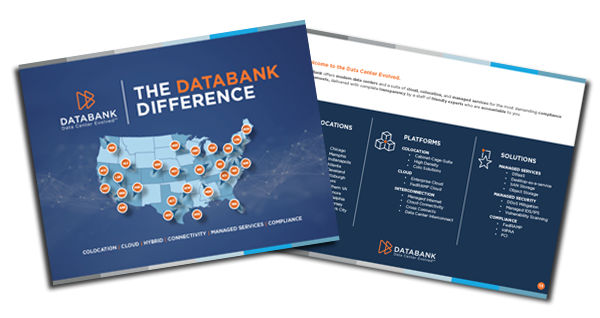

Discover the DataBank Difference today:
Hybrid infrastructure solutions with boundless edge reach and a human touch.
Tell us about your infrastructure requirements and how to reach you, and one of team members will be in touch shortly.
Can’t see the form? Click here.
Let us know which data center you'd like to visit and how to reach you, and one of team members will be in touch shortly.
Can’t see the form? Click here.
Enjoying our resource? Get the latest news and articles delivered straight to your inbox.
Can’t see the form? Click here.
Can’t see the form? Click here.