
Analysis of the latest trends and developments from DataBank’s own thought-leaders and experts.

Virtual desktops are a technology that allows users to access a complete desktop environment from any device, anywhere. By creating a virtualized version of a desktop, users can enjoy a consistent experience regardless of the underlying hardware, and businesses can manage their software and security more effectively.
Remote desktop is a technology that allows users to access a computer or a network from a remote location, using software that creates a virtual connection between the two devices. This enables users to work on their office or personal computers from home or any other location with an internet connection.

From a user perspective, Desktop as a Service (DaaS) is simply a means to access other computing resources through the cloud. Depending on the implementation, DaaS can replicate the functionality of traditional desktops or simply provide use-once desktops for each session. For businesses, however, DaaS has many advantages over traditional desktops.

A carrier hotel data center is a large-scale facility that provides colocation services to multiple telecommunications carriers and other businesses requiring high-bandwidth connectivity. It serves as a hub for internet traffic exchange and provides a centralized location for network interconnections between different service providers.

A carrier hotel is a building that houses telecommunications equipment and serves as an interconnection point for multiple network service providers. Carrier hotels enable efficient and cost-effective interconnectivity between different networks.

A Cross Connect Access Point (CCAP) is a network device that serves as a hub for connecting multiple cable modems and other customer premises equipment (CPE) to a cable network. CCAPs are a critical component of modern cable networks, enabling cable operators to deliver high-speed internet, voice, and video services to customers.

Cloud cross connect works by establishing a secure and dedicated connection between an organization’s data center and the cloud service provider’s infrastructure. This connection is established using interconnection points, such as network access points (NAPs), carrier hotels, or data centers.

A cross connect network is a type of communication network that enables the interconnection of different devices, networks, and services. Cross connect networks enable organizations to improve network performance, increase flexibility, and enhance network security.

Using fiber cross connect provides scalability, reliability, flexibility, high-speed data transfer, and cost-efficiency in a telecommunications network. It allows for interconnecting fiber optic networks, enhancing network reliability and reducing downtime risk.
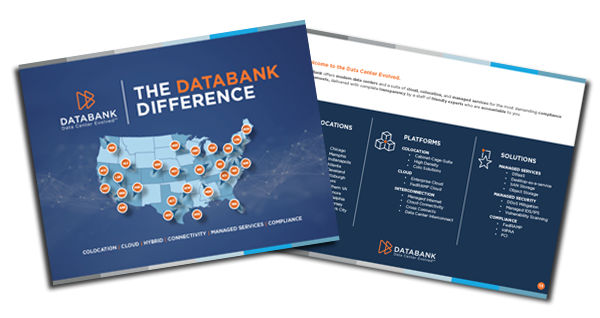
Discover the DataBank Difference today:
Hybrid infrastructure solutions with boundless edge reach and a human touch.
Tell us about your infrastructure requirements and how to reach you, and one of team members will be in touch shortly.
Can’t see the form? Click here.
Let us know which data center you'd like to visit and how to reach you, and one of team members will be in touch shortly.
Can’t see the form? Click here.
Enjoying our resource? Get the latest news and articles delivered straight to your inbox.
Can’t see the form? Click here.
Can’t see the form? Click here.