
Summarize with:
read in < 1 min


Using colocation solutions can be an effective way for businesses to balance control with cost-effectiveness. This means that it has particular relevance for businesses that handle sensitive data but operate under strong financial pressure. With that in mind, here is a straightforward guide to colocation solutions for financial services startups.
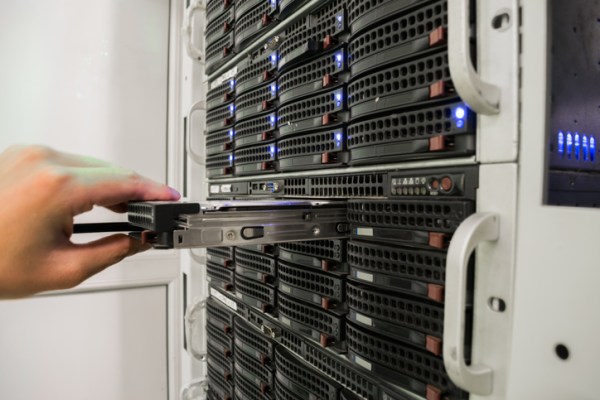
Colocation solutions are solutions in which a client deploys their own IT equipment in a data center that is owned and run by a third party. Unlike using bare metal servers, the client fully owns and manages their own IT equipment. They may choose to use vendor-provided services to take care of hands-on tasks, but they are not required to do so.
Here are the five main challenges commonly faced by financial services startups.
Financial services startups must navigate complex regulations like GDPR and PSD2. Compliance requires implementing stringent data handling, storage, and reporting processes, often with advanced IT solutions that adapt to evolving legal requirements. Non-compliance can lead to severe fines and reputational damage, making it a critical ongoing challenge.
Startups in the financial sector are prime targets for cyberattacks due to the sensitive data they handle, such as customer financial information. Implementing robust encryption, multi-factor authentication, and continuous monitoring is crucial to protect against breaches. Startups must also balance security with user experience, ensuring that security measures do not create friction for customers.
As financial services startups grow, their IT infrastructure must scale rapidly to handle increased transaction volumes and user activity. This requires a flexible, robust infrastructure that can expand without significant downtime. Startups often rely on cloud computing and colocation solutions to achieve scalability, but integrating these with existing systems can be technically complex and costly.
In financial services, real-time data processing is critical, and even milliseconds of latency can impact transactions. Startups need low-latency network solutions, such as proximity to financial exchanges and optimized server architectures. This requires careful selection of data center locations, advanced networking equipment, and continual software optimization.
Building and maintaining a secure, compliant, and scalable IT infrastructure is expensive, especially for startups with limited budgets. Startups must strategically manage costs while investing in technology that supports growth, often opting for cloud services or colocation to balance cost, performance, security, and compliance.
Here is an overview of the five key benefits of colocation solutions for financial services startups.
Colocation facilities offer high levels of physical and network security, including biometric access controls, 24/7 monitoring, and advanced firewalls. These facilities are designed to meet strict regulatory requirements specific to financial services, such as SOC 2, PCI-DSS, and ISO 27001 certifications.
By using colocation, financial services startups can ensure their infrastructure complies with industry standards, reducing the risk of data breaches and regulatory fines.
Colocation providers guarantee high uptime, often with Service Level Agreements (SLAs) that ensure 99.99% availability. They achieve this through redundant power supplies, cooling systems, and network connections.
For financial services startups, this level of reliability is crucial, as any downtime could disrupt transactions, damage customer trust, and result in financial loss. Colocation solutions provide the infrastructure stability needed to support the continuous operation of critical financial applications.
Colocation solutions allow financial services startups to scale their IT infrastructure quickly and efficiently as they grow. Startups can add servers, storage, and network capacity without the delays associated with building new facilities or upgrading on-premises data centers.
This flexibility is particularly important for startups experiencing rapid growth or fluctuating demand, as it allows them to adjust their IT resources in real-time, ensuring they can handle increased workloads without compromising performance.
Building and maintaining an in-house data center is capital-intensive and requires ongoing operational expenses. Colocation offers a cost-efficient alternative by providing state-of-the-art infrastructure at a fraction of the cost.
Startups can avoid large upfront investments in hardware, cooling, and power systems, instead paying a predictable monthly fee for the space and services they need. This allows financial services startups to allocate more resources to innovation and growth rather than infrastructure management.
Colocation facilities are often strategically located near major financial hubs and exchanges, providing low-latency connections essential for real-time trading, data processing, and transactions. Financial services startups benefit from direct access to high-speed networks and peering opportunities, which reduce latency and improve overall performance.
This connectivity is vital for applications where milliseconds can make a significant difference, such as algorithmic trading or fraud detection, ensuring that startups can compete effectively in the fast-paced financial sector.

Sign Up For Our Resource Library
Enjoying our resource? Get the latest news and articles delivered straight to your inbox.
Can’t see the form? Click here.
Share Article
Popular Categories

Explore the top reasons why businesses choose colocation. Discover benefits for startups, SMBs, medium-sized businesses, and enterprises.

Key Takeaways: Choosing the right provider depends on uptime guarantees, certifications, and network ecosystem Location impacts latency, compliance, and disaster recovery readiness Scalability options should align with long-term business growth...

Colocation vs cloud hosting: what’s the difference? This article explains what colocation and cloud hosting are and gives a point-by-point comparison of their core features. Find out 7 pointers that colocation is the right choice for your business and 7 pointers that cloud hosting is the right option for you.

Discover the DataBank Difference today:
Hybrid infrastructure solutions with boundless edge reach and a human touch.
Tell us about your infrastructure requirements and how to reach you, and one of our team members will be in touch shortly.
Can’t see the form? Click here.
Let us know which data center you'd like to visit and how to reach you, and one of our team members will be in touch shortly.
Please understand that we might not be able to accommodate every request for a physical data center tour.
Please allow a minimum of 24-48 hours for a response.
Can’t see the form? Click here.
Enjoying our resource? Get the latest news and articles delivered straight to your inbox.
Can’t see the form? Click here.
Can’t see the form? Click here.