

Summarize with:
read in < 1 min


A neocloud is a cloud provider built specifically to deliver AI infrastructure, most commonly GPU-as-a-Service (GPUaaS), instead of the broad, general-purpose compute that hyperscale clouds offer.
The term emerged in late 2024 and gained rapid traction through 2025, as demand for GPU compute began outpacing what traditional hyperscalers could supply on their own. For enterprises trying to run AI workloads without committing to massive upfront infrastructure spend, neoclouds have become a fast, often more affordable, way to get access to the latest AI hardware.
At its core, a neocloud rents out GPU compute capacity by the hour, letting companies train and run AI models without buying and operating the hardware themselves. That’s the GPUaaS model, and it’s the foundation most neoclouds are built on.
Beyond raw GPU access, most neoclouds also provide the supporting infrastructure AI workloads need end-to-end:
As AI infrastructure has expanded beyond GPUs into other specialized chips, the broader term “AI as a Service” (AIaaS) has started to describe this full category of AI-specific infrastructure providers, of which neoclouds are the largest and fastest-growing segment.
Hyperscalers like the major public cloud providers are built to do everything: compute, storage, databases, networking, and dozens of managed services for nearly any workload. That breadth is a strength for general IT, but it also means AI workloads compete for the same infrastructure, pricing structures, and provisioning queues as everything else on the platform.
Neoclouds take the opposite approach. By specializing narrowly in AI infrastructure, they can typically provision GPU capacity faster, price it more simply, and scale it more aggressively for AI-specific demand than a general-purpose cloud built for a much wider range of workloads.
Two forces are driving neocloud growth at the same time: unprecedented demand for AI compute, and constrained supply of the GPUs that power it.
Manufacturing bottlenecks, global supply chain disruption, and geopolitical trade restrictions have all limited how quickly new GPU hardware reaches the market, even as enterprise AI adoption keeps accelerating. That combination has created exactly the kind of gap neoclouds were built to fill: fast, flexible access to scarce compute, without the years-long capital commitment of building it in-house.
The market reflects that growth. The GPU-as-a-Service market was valued at approximately $4.37 billion in 2025 and is projected to reach $14.46 billion by 2033, a compound annual growth rate of roughly 16.0% (Source: Grand View Research, GPU as a Service Market Report).
Neoclouds aren’t meant to replace hyperscale cloud or private infrastructure. They’re best understood as a third, specialized option that fits alongside them, and most enterprises will end up running some version of a three-tier AI infrastructure strategy.
How that mix breaks down will vary by company, but regulated industries and organizations handling sensitive data should generally weight more heavily toward private infrastructure than toward public neocloud capacity.
Neoclouds face the same physical infrastructure constraints as everyone else: GPU-dense compute needs power density and cooling capacity for which standard data halls were never designed. Rather than spend years constructing purpose-built facilities from scratch, most neoclouds combine new builds with colocation to scale fast.
Colocation gives neocloud providers several advantages they can’t easily replicate by building alone:
DataBank’s HPC-ready colocation is built for exactly the power density and cooling requirements that neocloud and AI workloads demand. Modern AI and HPC clusters can require 50 to 100 kW per cabinet, compared to roughly 10 to 15 kW for basic requirements just a year or two earlier. (Source: DataBank, citing COO Joe Minarik via Data Center Knowledge).
DataBank’s Universal Data Hall Design supports multiple cooling approaches, including rear-door heat exchangers, direct-to-chip cooling, and immersion cooling, so GPU-dense deployments don’t need a custom-built facility to go live. Combined with DataBank’s interconnection marketplace and geographically distributed footprint, this gives neocloud providers and the enterprises using them a faster path to production-ready AI capacity than a new construction project would allow.
Neoclouds exist because AI infrastructure demand has outgrown what general-purpose cloud platforms were built to deliver quickly and affordably. That gap isn’t closing anytime soon.
For most enterprises, the practical question isn’t whether to use a neocloud, but how to fit one into a broader infrastructure strategy that also includes hyperscale cloud and private, compliant colocation for the workloads that need it most.
Talk to a DataBank solutions engineer about HPC-ready colocation for AI and neocloud workloads, or explore DataBank’s High Density Colocation capabilities.

Sign Up For Our Resource Library
Enjoying our resource? Get the latest news and articles delivered straight to your inbox.
Can’t see the form? Click here.
Share Article
Popular Categories
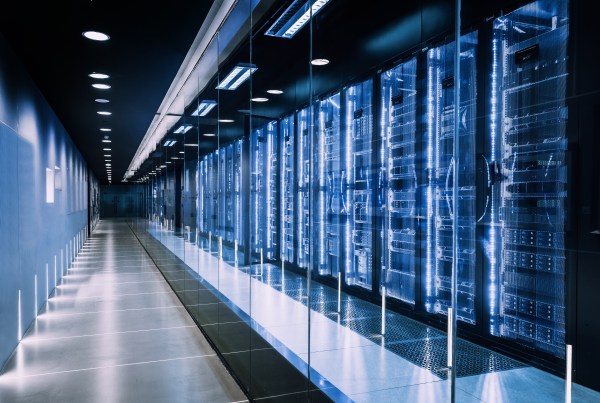
High performance computing refers to the use of advanced computing technologies, such as powerful processors, large memory systems, and high-speed interconnects, to perform complex calculations and process large amounts of data quickly and efficiently.

High Performance Computing (HPC) is the use of parallel processing techniques and advanced computer architectures to perform complex computations at high speeds. It is used in scientific research, engineering, weather forecasting, and many other applications that require large amounts of computing power.

Despite the popularity of the cloud, it’s clear that data centers are on an upward trajectory. With that in mind, here is a data center market forecast for 2026. It lists 12 key growth drivers to watch.
Discover the DataBank Difference today:
Hybrid infrastructure solutions with boundless edge reach and a human touch.
Tell us about your infrastructure requirements and how to reach you, and one of team members will be in touch shortly.
Can’t see the form? Click here.
Let us know which data center you'd like to visit and how to reach you, and one of team members will be in touch shortly.
Can’t see the form? Click here.
Enjoying our resource? Get the latest news and articles delivered straight to your inbox.
Can’t see the form? Click here.
Can’t see the form? Click here.