Summarize with:
read in < 1 min


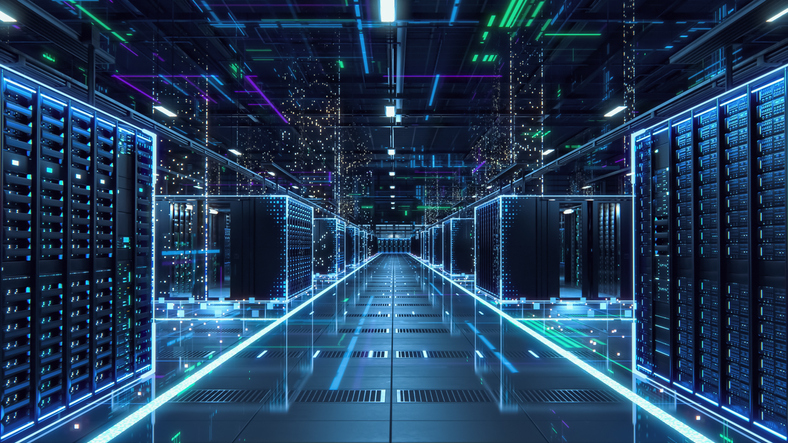
IT is one of the fastest-moving sectors in business, and data centers have to be at the forefront of developments. With that in mind, here is a look at the future of data centers in Chicago and the trends to watch.
Data centers have to evolve to survive. That means they need to commit to continual innovation. Here are just five of the main reasons why innovation matters to data centers.
Innovation drives the development of advanced hardware, including energy-efficient processors, high-speed networking equipment, and optimized storage systems. These advancements reduce power consumption while boosting computational capabilities. This enhances data centers’ ability to manage large, complex workloads in a cost-effective manner.
Innovative data center infrastructure is critical to supporting technologies such as AI, IoT, and edge computing. These technologies require low-latency processing and real-time data handling, which traditional infrastructures cannot efficiently support without significant innovation.
Innovative technologies like virtualization, containerization, and software-defined infrastructure enable data centers to scale resources dynamically. This allows organizations to rapidly deploy services and adjust capacity in response to changing demands, without requiring massive physical expansion.
As cyber threats become more sophisticated, data centers must evolve to protect critical data. Innovation in encryption, access control, and AI-powered threat detection strengthens security frameworks and helps prevent breaches, ensuring data integrity and compliance with regulations.
With rising concerns about environmental impact, innovation in cooling technologies, renewable energy integration, and carbon footprint tracking is essential. These developments help data centers operate more sustainably while meeting energy efficiency standards.
Here is a quick overview of the 7 most important emerging trends in data centers.
Edge computing involves processing data closer to the source, such as IoT devices or local applications, rather than relying solely on centralized cloud data centers. This reduces latency and bandwidth usage, making it ideal for real-time applications like autonomous vehicles and smart cities.
Data centers are increasingly using AI and machine learning for predictive analytics, energy optimization, workload management, and security threat detection. These technologies help automate decision-making and enhance operational efficiency.
Organizations are embracing hybrid and multi-cloud environments to gain flexibility, avoid vendor lock-in, and improve disaster recovery. This requires data centers to evolve and support seamless integration across platforms.
With a strong focus on reducing carbon footprints, data centers are adopting renewable energy sources, advanced cooling techniques, and energy-efficient hardware. This trend not only aligns with environmental goals but also helps meet regulatory requirements and reduce long-term costs.
Modular data centers (prefabricated units that can be rapidly deployed) offer flexibility and scalability. Hyperscale data centers, built to support massive workloads for tech giants, are expanding rapidly to meet the rising demand for cloud and digital services.
With increasing cyber threats, data centers are implementing zero-trust architectures, AI-driven threat detection, and advanced encryption methods to secure sensitive data and infrastructure.
Data centers are beginning to prepare for the future integration of quantum computing. This includes exploring hybrid infrastructures that can support both classical and quantum systems, ensuring long-term security and computational capabilities as quantum technology matures.
To maintain their competitiveness and popularity, Chicago’s data centers need to move with the times. Here are five predictions for the near future of the city’s facilities.
Due to limited land availability and rising costs within the city, data center development is increasingly shifting to suburbs like Elk Grove Village, Hoffman Estates, and Aurora. These areas offer more space and access to power resources, making them attractive for large-scale facilities.
As urban space becomes scarce, there’s a trend towards constructing multi-story data centers within the city. These vertical facilities aim to maximize space utilization while incorporating innovative designs to address challenges like cooling and equipment distribution.
With growing concerns about environmental impact, Chicago’s data centers are expected to adopt greener practices. This includes integrating renewable energy sources, implementing advanced cooling technologies, and pursuing energy-efficient designs to reduce carbon footprints.
Chicago’s data centers are still evolving to support the rise of edge computing, artificial intelligence (AI), and big data analytics. The next major challenges are the rollout of 5G and the growth of quantum computing.
Chicago is expected to enhance its role as a major interconnection hub due to its central location and strong fiber infrastructure. Future developments will likely focus on expanding low-latency connections to international markets, supporting global cloud services, and enabling faster data exchange between continents and U.S. coasts.

Sign Up For Our Resource Library
Enjoying our resource? Get the latest news and articles delivered straight to your inbox.
Can’t see the form? Click here.
Share Article
Popular Categories

Change is hard—it’s a fact of life, and datacenter migrations are one example. If your business has a move on the horizon, be sure to do your due diligence when it comes to planning, whether you operate a physical or cloud environment. Learn the critical considerations for migration, as well as how DataBank helps businesses make big moves.

Explore the transformative role of 5G connectivity in reshaping hybrid IT infrastructures. Find out how it delivers significantly better network speed and a capacity revolution. Learn about the security risks it brings and how they can be managed. Discover what 5G could do for your hybrid IT system and its applications.
Explore the transformative impact of cloud technology on business innovation. Dive into how advancements in AI, edge computing, and quantum computing are reshaping cloud infrastructure, offering unprecedented opportunities for efficiency, sustainability, and security.
Discover the DataBank Difference today:
Hybrid infrastructure solutions with boundless edge reach and a human touch.
Tell us about your infrastructure requirements and how to reach you, and one of team members will be in touch shortly.
Can’t see the form? Click here.
Let us know which data center you'd like to visit and how to reach you, and one of team members will be in touch shortly.
Can’t see the form? Click here.
Enjoying our resource? Get the latest news and articles delivered straight to your inbox.
Can’t see the form? Click here.
Can’t see the form? Click here.