

Summarize with:
read in < 1 min


Big data and analytics are enabling modern organizations to leverage their data in ways that simply could not have been imagined in the early days of IT. With that in mind, here is a straightforward guide to the role of Chicago data centers in supporting big data and analytics.
The term “big data” refers to large data sets that often contain diverse and complex data types. These data sets are generally too challenging for traditional data management and data analytics tools. As a result, new tools have been developed to cope with the challenges big data presents.
These include tools for analytics that are capable of handling the sort of throughput big data requires without compromising on quality. This means that organizations can quickly derive key insights from their data assets.
Here are 7 key features of modern big data analytics tools.
Security and compliance: Big data analytics tools implement role-based access control, encryption, and compliance with regulations like GDPR to protect sensitive data.
Data integration: Big data tools support the ingestion and processing of structured, semi-structured, and unstructured data from diverse sources like databases, sensors, social media, and logs.
Real-time processing: Tools like Apache Kafka and Apache Storm offer real-time data streaming and analysis, enabling organizations to make timely decisions based on the latest data.
Advanced analytics: Many tools include machine learning, predictive modeling, and statistical analysis capabilities. This enables users to go beyond descriptive analytics to forecast trends and detect anomalies.
Visualization: Tools often come with dashboards and data visualization features (e.g., Tableau, Power BI) to help non-technical users understand complex data through charts, graphs, and interactive reports.
Automation and scheduling: Workflow automation and job scheduling are integral, allowing tasks to run automatically at defined intervals or in response to triggers.
Fault tolerance and reliability: These tools are designed to handle node failures without data loss or interruption in processing, ensuring continuous operation.
Chicago data centers are typically well-equipped to support big data. Here is an overview of 7 of the key features they offer.
Security and compliance: Physical security includes 24/7 surveillance, biometric access, and mantraps. Data centers are often compliant with standards like SSAE 18, HIPAA, and PCI/DSS, ensuring data protection and regulatory compliance.
High connectivity: Chicago is a major network hub with access to multiple Tier 1 internet service providers and fiber optic routes. This high-speed connectivity ensures fast data transfer, crucial for big data workloads and real-time analytics.
Power redundancy and efficiency: These centers feature multiple power feeds, backup generators, and uninterruptible power supplies (UPS). Efficient cooling systems and energy management tools ensure high performance without overheating, supporting the heavy demands of big data servers.
Scalability: Data centers in Chicago are built with modular infrastructure that can scale to accommodate growing storage and processing demands. This scalability supports the dynamic nature of big data environments.
Cloud and hybrid integration: Many Chicago data centers offer seamless integration with public cloud platforms like AWS, Azure, and Google Cloud. This hybrid capability is essential for managing large, distributed big data applications.
Edge computing capabilities: Many Chicago data centers support edge computing, allowing data processing to occur closer to the source. This reduces latency and enhances real-time analytics. It therefore improves performance while easing the load on central systems and networks.
Business continuity and disaster recovery: Located in a geostrategically stable region, Chicago data centers provide robust disaster recovery solutions to ensure continuous operations and data availability.
Chicago offers numerous benefits for big data solutions. Here are 7 of the main ones.
Central geographic location: Providers in Chicago benefit from the city’s central position in the U.S., offering reduced latency for clients across the country. This makes it easier to deliver responsive big data services, especially for time-sensitive applications.
Robust technical infrastructure: Chicago-based providers have access to advanced data centers, cloud hubs, and high-speed connectivity. This supports high availability, rapid data processing, and seamless scalability in their analytics solutions.
Stable and cost-effective operations: Compared to providers in coastal cities, Chicago firms often operate at lower costs. These savings can be passed on to clients through competitive pricing for big data services without compromising quality.
Experienced talent pool: Chicago hosts a mature ecosystem of data scientists, engineers, and statisticians. Providers can staff projects with skilled professionals, ensuring high-quality analytics, model development, and technical support.
Cross-industry expertise: Due to the city’s economic diversity, Chicago-based providers have experience across multiple sectors, including finance, logistics, healthcare, and manufacturing, making their solutions adaptable to various business contexts.
Emphasis on compliance and security: Providers in Chicago are well-versed in national and international data regulations. Their solutions often include built-in support for GDPR, HIPAA, and SOC 2 compliance, helping clients manage sensitive data responsibly.
Strong focus on innovation: Proximity to top research universities and a collaborative tech community fosters innovation, enabling providers to offer cutting-edge big data tools, including AI-driven analytics and predictive modeling.

Sign Up For Our Resource Library
Enjoying our resource? Get the latest news and articles delivered straight to your inbox.
Can’t see the form? Click here.
Share Article
Popular Categories

Discover why DataBank’s Chicago data centers are the ideal solution for enterprises seeking secure, scalable, and high-performance infrastructure. From advanced security and compliance to unbeatable connectivity and expert support, explore how these facilities can power your business growth and facilitate digital transformation.
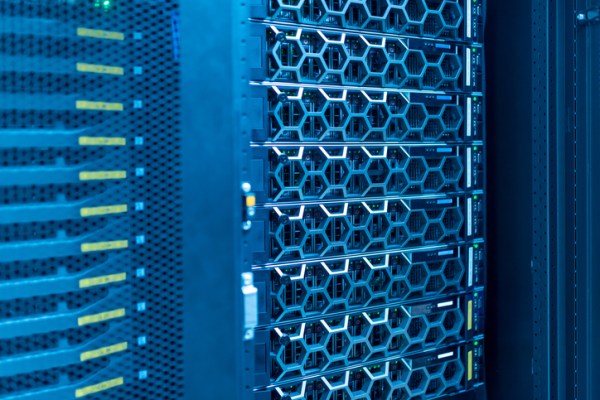
Discover how Chicago data centers are embracing edge computing. Get an answer to the question “What is edge computing and how is it implemented?”. Learn about how edge computing enhances data centers. Find out the five main reasons why edge computing is essential for businesses in Chicago.

Explore how Chicago data centers are revolutionizing data storage. Gain an understanding of the evolution of data storage. Learn about the 7 key features of secure and scalable data storage solutions. Find out how Chicago data centers are leading the way in enabling businesses to meet their data storage challenges.
Discover the DataBank Difference today:
Hybrid infrastructure solutions with boundless edge reach and a human touch.
Tell us about your infrastructure requirements and how to reach you, and one of team members will be in touch shortly.
Can’t see the form? Click here.
Let us know which data center you'd like to visit and how to reach you, and one of team members will be in touch shortly.
Can’t see the form? Click here.
Enjoying our resource? Get the latest news and articles delivered straight to your inbox.
Can’t see the form? Click here.
Can’t see the form? Click here.