

Summarize with:
read in < 1 min


As enterprises modernize their digital infrastructure, colocation is emerging as a strategic alternative to on-premises data centers.
This article explains what colocation is, its advantages, how it compares to building your own facility, what to look for in a provider, and why DataBank stands out as a trusted partner.
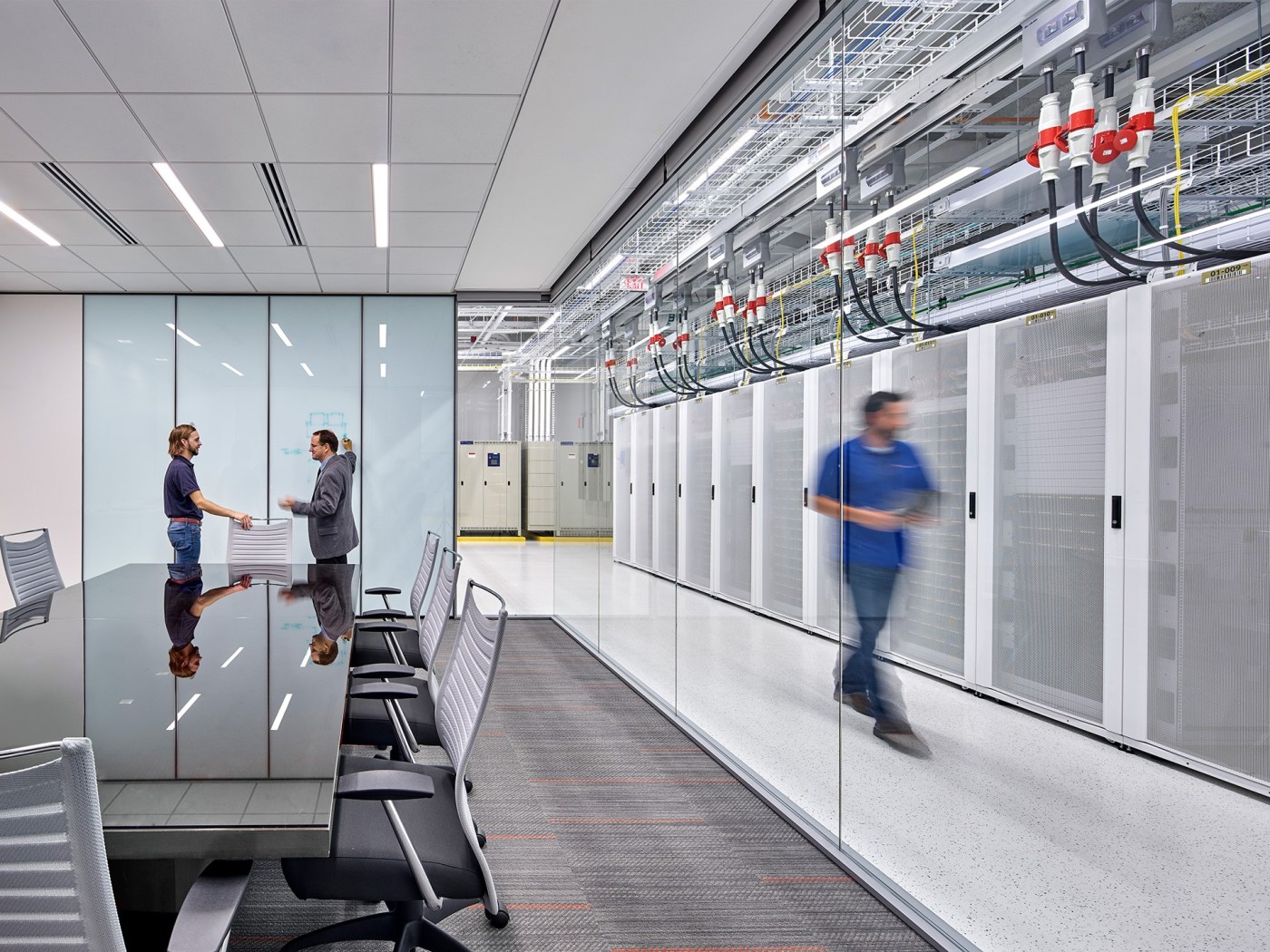
Colocation is the practice of placing your company’s owned IT equipment in a third-party data center. The provider supplies the space, power, cooling, physical security, and network connectivity, while you retain control of your hardware.
According to Grand View Research, the global data center colocation market was worth $69.4 billion in 2024 and is projected to grow at a 16% Compound Annual Growth Rate (CAGR) through 2030. This sustained growth highlights colocation’s growing role in enterprise IT.
For enterprise leaders, the choice of colocation brings multiple business-level advantages. Here are five of the main ones.
Cost efficiency: One of the most important benefits of colocation is its cost-efficiency. With colocation, businesses can minimize upfront expenses and replace them with predictable operating expenses. Moreover, these expenses tend to be lower than equivalent public-cloud processing costs.
Reliability: Colocation vendors guarantee a certain level of uptime. Typically, this is “five nines” (99.999%) or better. To make sure they meet these guarantees, they invest heavily in redundancy: UPS (uninterruptible power supply), backup generators, dual power feeds, cooling redundancy, etc.
Security: Colocation vendors manage physical security. They often hold relevant compliance certifications. As a result, using a colocation facility can make it easier for clients to meet their own compliance requirements.
Flexibility: Although colocation is not as flexible as the public cloud, it is vastly more scalable than on-premises infrastructure. In particular, scaling is simply a matter of leasing more space.
Connectivity: Modern colocation facilities are “interconnection hubs”. That means they host multiple carriers, cloud-on-ramps, and direct network paths. For example, DataBank’s offering includes “cross-connects, cloud on-ramps, and networks to extend the reach of your workloads and data.”
There are five main differences between colocation vs building your own.
Capital expenditure: Building your own facility requires major investment in land, construction, and infrastructure. Colocation converts that to a service model with predictable costs.
Deployment speed: An in-house data center can take years to build; colocation can be operational in weeks or months.
Operational responsibility: With an on-prem setup, managing facilities falls entirely on you. In colocation, the provider handles these while you manage only your equipment. Moreover, owning your own site concentrates risk in one location. Colocation spreads that risk across professionally managed, redundant facilities.
Scalability: Expanding an on-prem facility often means construction. With colocation, you simply lease more space or power capacity.
Connectivity: On-premises setups typically rely on a limited number of carriers. Colocation providers host multiple carriers and cloud on-ramps for faster, more resilient connections.
Even non-technical executives should understand the basics of what makes a quality colocation facility. Here are five key factors to consider.
Power: Dual power feeds, UPS systems, backup generators, and scalable power density.
Cooling: Precision cooling systems, hot-aisle/cold-aisle containment, and environmental monitoring.
Redundancy: Tier III or Tier IV designs, N+1 or 2N redundancy, fire suppression, and SLA-backed uptime guarantees.
Connectivity: Diverse carrier paths, multiple cloud on-ramps, and low-latency fiber connections between sites.
Sustainability: Efficient designs with renewable power sourcing and favorable PUE ratings.
When choosing a provider, consider these seven key factors.
Service level agreements (SLAs): Review uptime guarantees and remedies for non-performance.
Compliance certifications: Confirm relevant standards (e.g., FedRAMP, SOC 2, HIPAA, PCI-DSS, GDPR).
Location and footprint: Choose providers with data centers near your users or core operations.
Network options: More carriers and diverse routes mean greater flexibility and redundancy.
Support and remote hands: 24×7 monitoring and skilled staff are critical. DataBank provides “7x24x365 expert support.”
Scalability: Start small with racks and grow into private cages or suites as needed.
Customer experience: Ask for references and client success stories.
Here are three common use cases for colocation.
Hybrid IT deployments: Colocation allows enterprises to place their physical servers in a data center with strong connectivity to both cloud and network backbone. For example, DataBank’s partnership with Megaport enables hybrid colocation with cloud integration.
Regulated industries: Healthcare, finance, and government sectors often require physical control of data and hardware. Colocation facilities with strong compliance credentials simplify audits and reduce regulatory risk.
Edge deployments: Colocation makes it more cost-effective for businesses to place small quantities of equipment close to data sources.
DataBank currently has 75 data centers with over 4.9 million sq ft, 1 GW critical IT load. Thanks to DataBank, businesses can put their workloads within 100 miles of more than 60% of the U.S. population.
The Megaport-enabled on-demand global network connectivity gives enterprises hybrid-cloud and multi-cloud integration out of the box. There is also Metro/Hyperscale Edge (with the largest footprint of data centers and metros in the U.S.), and Interconnect Edge (major interconnect hubs and carrier hotels).
Just as importantly, DataBank has flexible service offerings and a total focus on customer satisfaction. In particular, DataBank provides a single pane of glass portal where clients can manage their entire colocation space.
For many enterprises, the colocation model offers a compelling alternative to building and managing on-premises data centers: improved cost efficiency, higher reliability, better connectivity, scalability, and global reach.
To get the most from colocation, however, it’s vital to choose the right colocation partner. DataBank offers a true enterprise-grade option with an extensive footprint, strong network capabilities, interconnection, flexible deployment models, and top-quality support.

Sign Up For Our Resource Library
Enjoying our resource? Get the latest news and articles delivered straight to your inbox.
Can’t see the form? Click here.
Share Article
Popular Categories

Discover the 7 key steps for an effective colocation agreement setup. From defining business needs to finalizing legal terms, this guide ensures a strategic approach. Maximize the benefits of colocation with this comprehensive roadmap.
![Best Practices of Colocation Data Center Security [Tips of 2023]](https://www.databank.com/wp-content/uploads/2022/12/Colo-Chilled-Door-2019_09_09_GenDat18_A.jpg?w=600)
Choosing the right colocation facility to host your servers and equipment can be difficult. A major factor you want to thoroughly investigate is the facility’s security. Implementing layered security controls...

Discover the ideal colocation for your business with our guide. Compare rack vs. cage vs. suite options. Dive into technical details on scalability, cost, security, power, and customization.
Discover the DataBank Difference today:
Hybrid infrastructure solutions with boundless edge reach and a human touch.
Tell us about your infrastructure requirements and how to reach you, and one of team members will be in touch shortly.
Can’t see the form? Click here.
Let us know which data center you'd like to visit and how to reach you, and one of team members will be in touch shortly.
Can’t see the form? Click here.
Enjoying our resource? Get the latest news and articles delivered straight to your inbox.
Can’t see the form? Click here.
Can’t see the form? Click here.