

Loading audio...
How AI Is Changing the Landscape for Energy Efficient Networking
AI is reshaping nearly every corner of the technology industry, and its relationship with energy is one of the most consequential examples. The same technology driving unprecedented growth in power demand is also one of the most powerful tools available for managing that demand more intelligently.
According to the International Energy Agency, global data center electricity consumption is projected to nearly double by 2030, reaching close to 945 terawatt-hours, which is roughly equivalent to Japan’s entire annual electricity use. AI is the primary driver of that growth. It’s also one of the best tools we have for managing it.
For IT leaders and infrastructure decision-makers, the opportunity may outweigh the challenge. AI is already helping operators run leaner, smarter networks, and the organizations that get ahead of that curve will have a real advantage as energy costs and infrastructure demands continue to rise.
The scale of AI’s energy demand is difficult to overstate. Training and running large AI models requires massive amounts of compute, and that compute lives in data centers that run around the clock. AI is accelerating electricity consumption at a pace the industry has not seen before. For networking infrastructure specifically, higher-density AI workloads mean more data moving faster between more devices.
What makes this particularly challenging is the pace of change. According to research from Deloitte, GPU power requirements have grown from around 400 watts per chip in 2022 to over 1,200 watts for today’s most advanced processors. That kind of density increase puts real pressure on power delivery, cooling systems, and the network fabric connecting it all. Infrastructure built even five years ago was simply not designed for these demands, and the upgrade cycle is compressing fast.
The same capabilities that make AI so compute-intensive also make it remarkably effective at finding inefficiencies that humans would never catch. For example, operators are now using AI-driven monitoring tools to analyze network traffic patterns in real time, dynamically rerouting workloads to reduce congestion, lower latency, and cut unnecessary power draw. The result is a network that adjusts itself continuously rather than running at static capacity.
The following examples illustrate where AI-driven efficiency gains are showing up most clearly across networking, cooling, and interconnection infrastructure.
Software-Defined Networking, intent-based routing, and AI-assisted telemetry are increasingly central to this approach, giving operators the ability to automate routing and bandwidth allocation across both on-premises and cloud infrastructure.
SD-WAN is one area where efficiency gains are becoming particularly tangible. Traditional wide-area networks were built for predictable, centralized traffic patterns that no longer reflect how enterprises actually operate. AI-enhanced SD-WAN platforms prioritize traffic dynamically, routing performance-sensitive workloads through the lowest-latency paths while deprioritizing less time-sensitive traffic.
As enterprises lean into multi-cloud and hybrid cloud environments, AI-based traffic optimization is emerging as one of the defining trends driving SD-WAN adoption, with the market projected to reach $35 billion by 2030. The practical result is not just better performance — it is less wasted bandwidth and lower energy consumption across the network fabric.
AI is also transforming how data centers manage cooling, historically one of the largest energy drains in any facility. Machine learning models can predict thermal loads before they occur and adjust cooling systems proactively rather than reactively. That approach works by training neural networks on thousands of sensor data points to predict temperature and pressure conditions up to an hour in advance.
As operators adopt direct liquid cooling for high-density AI compute racks, the physical network topology shifts alongside it — denser rack configurations, shorter interconnect distances, and a re-evaluation of optical versus copper trade-offs at the rack and row level. These topology changes carry their own energy implications, which means cooling infrastructure decisions and network architecture decisions can no longer be made in isolation.
On the interconnection side, AI-driven network slicing allows operators to dynamically allocate and reconfigure resources on demand rather than provisioning for peak capacity that sits idle most of the time. Predictive maintenance is adding another dimension to this efficiency story. AI models continuously monitor telemetry from network switches, routers, and optical transceivers to detect performance degradation before failure occurs.
By flagging at-risk hardware early, operators can schedule replacements during planned maintenance windows rather than responding to emergencies — avoiding the unplanned load spikes and inefficient power draw that reactive fixes typically cause. Together, these approaches are reframing network efficiency as an ongoing operational discipline rather than a one-time design decision, and one that improves continuously as AI systems learn.
These efficiency gains do not exist in isolation. Where enterprises choose to run their workloads plays an equally important role in determining how well their infrastructure strategy holds up as AI demands continue to grow.
The next few years will likely bring a sharper divide between organizations that treat energy efficiency as an afterthought and those that build it into their infrastructure strategy from the start. A significant part of that strategy is deciding where workloads run. Legacy enterprise data centers are often not designed for today’s power densities, and retrofitting them is rarely practical or cost-effective.
Modern colocation facilities offer a purpose-built alternative, combining high-density power capacity, advanced cooling infrastructure, and the network connectivity AI workloads require, without the capital burden of building and operating it yourself. For IT and sustainability leaders balancing growing compute needs with ESG commitments, that environment is increasingly difficult to replicate independently.
Hardware improvements will help, as newer GPU architectures are delivering more compute per watt than their predecessors, but they will not be enough to offset the volume of AI workloads coming online. Software-level approaches like model distillation are gaining traction as a practical way to reduce inference energy costs at scale. Organizations that get ahead of these approaches now will be better positioned as energy costs and sustainability scrutiny continue to rise.
AI’s relationship with energy efficiency is genuinely complicated, and anyone claiming it is purely a problem or purely a solution is not seeing the full picture. The demand side is real and growing. So is the opportunity to use AI as a tool for smarter, leaner infrastructure operations.
The organizations best positioned to navigate this are those that take both sides seriously, investing in the right infrastructure partnerships, staying current on efficiency innovations, and treating energy strategy as part of their broader technology roadmap rather than a facilities problem to address later.

Sign Up For Our Resource Library
Enjoying our resource? Get the latest news and articles delivered straight to your inbox.
Can’t see the form? Click here.
About the Author

Share Article
Popular Categories

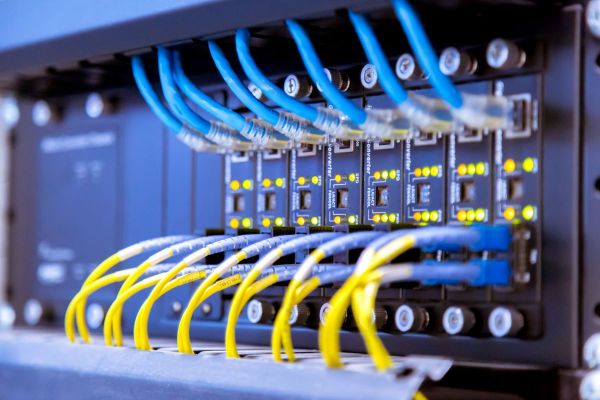
Carrier hotels are a specialized class of data center built for network-to-network interconnection at scale. Here is what sets them apart and why it matters.
Most providers focus on interconnection features. The real differentiator is customer experience: understanding requirements, eliminating friction, and delivering service excellence.
Data center interconnections deliver better performance, security, and cost savings. Discover how DataBank's Interconnection Marketplace makes finding connectivity providers much easier.
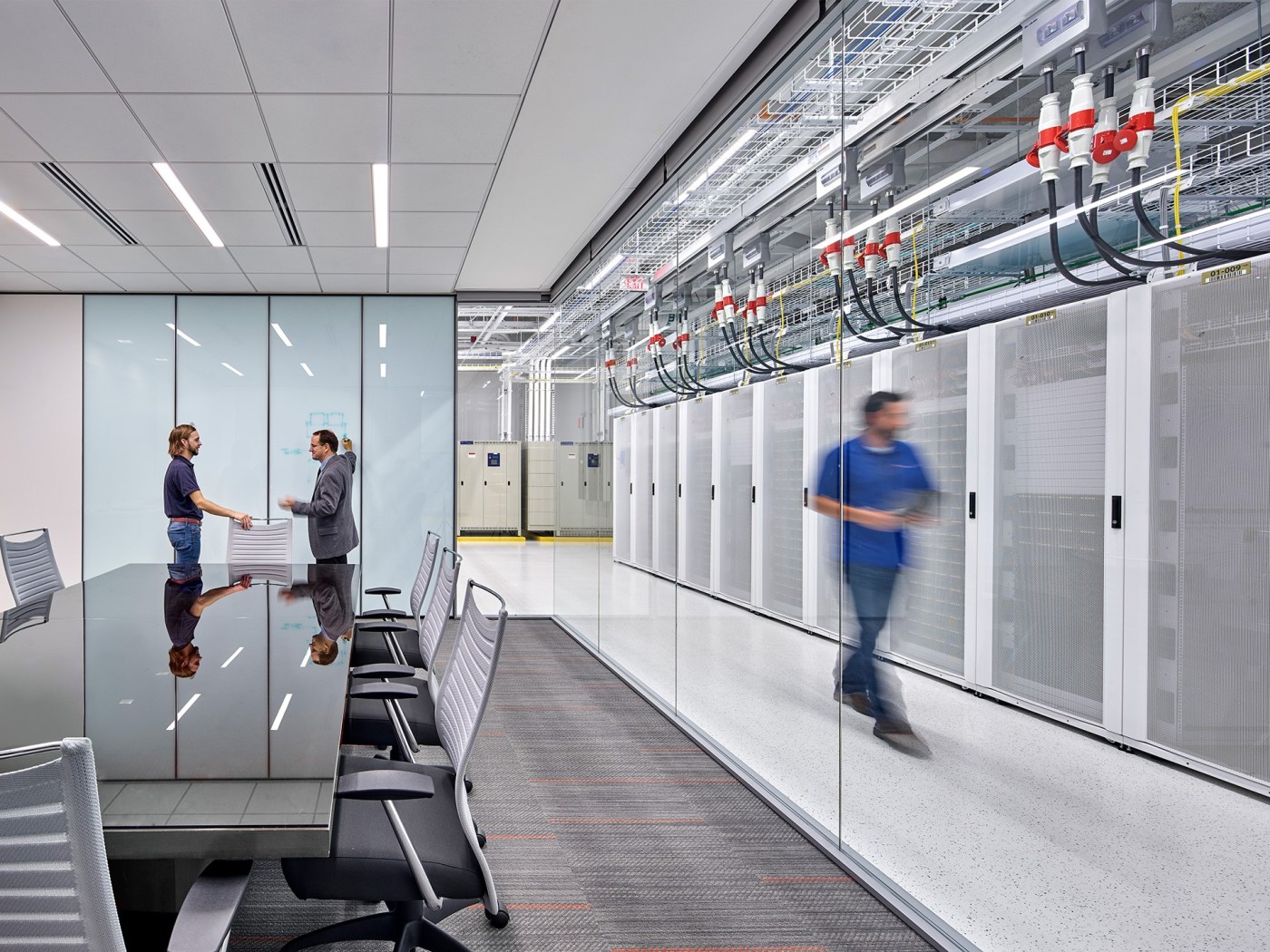
Discover the DataBank Difference today:
Hybrid infrastructure solutions with boundless edge reach and a human touch.
Tell us about your infrastructure requirements and how to reach you, and one of our team members will be in touch shortly.
Can’t see the form? Click here.
Let us know which data center you'd like to visit and how to reach you, and one of our team members will be in touch shortly.
Please understand that we might not be able to accommodate every request for a physical data center tour.
Please allow a minimum of 24-48 hours for a response.
Can’t see the form? Click here.
Enjoying our resource? Get the latest news and articles delivered straight to your inbox.
Can’t see the form? Click here.
Can’t see the form? Click here.