Summarize with:
read in < 1 min


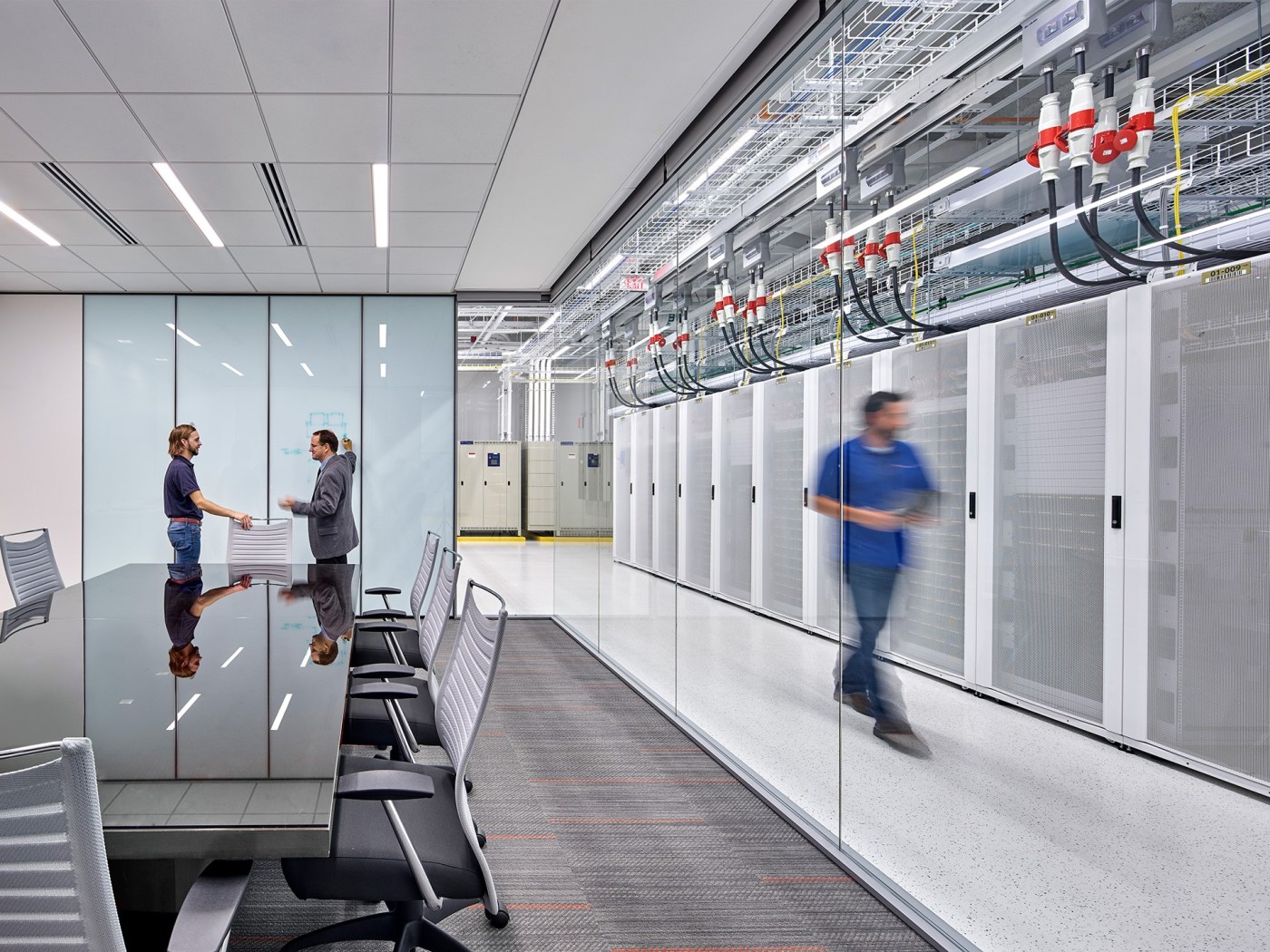
A modular data center is built from prefabricated components, including power, cooling, and structural modules, manufactured off-site in a controlled factory environment, then shipped and assembled at the final location.
This approach addresses a specific problem: traditional data center construction is slow, risky, and increasingly hard to predict. New builds that once took two to three years can now stretch past that when permitting delays, environmental reviews, and supply chain disruptions stack up. Modular construction shortens that timeline by moving most of the work into a factory, where weather, labor shortages, and site conditions can’t cause delays.
Instead of building a facility entirely on-site, modular data centers are assembled from standardized components: power modules, cooling modules, and IT space modules, each designed, built, and tested in a factory before ever reaching the deployment site.
Approaches range across a spectrum. Some deployments use a single, all-in-one modular unit for a complete small facility. Others use a hybrid model, adding pre-built power or cooling modules to an existing structure. Larger deployments may combine multiple modules, sometimes including office and support space, into a full-scale facility.
Because design, assembly, and testing happen in a controlled factory environment, most of the risk factors that slow down traditional construction, including bad weather, local labor shortages, and on-site coordination problems, simply don’t apply until final assembly. Once modules arrive on-site, installation and testing typically take a fraction of the time a ground-up build would require.
Traditional data center construction carries risk at nearly every stage:
AI-driven demand has only intensified the pressure to move faster. Data center operators are now frequently pursuing multiple builds simultaneously, and the average development cycle for a first-of-its-kind site in a new territory has compressed to roughly 18 to 24 months, down from what was once closer to five years (Source: Data Center Dynamics, 2025). Modular construction is one of the primary ways the industry has responded to that compressed timeline.
Modular deployments tend to fit a specific set of business needs rather than serving as a universal replacement for traditional construction.
Modular construction reduces many traditional risks, but it introduces a few of its own, mainly around customization and coordination.
Off-site, factory-based construction generally produces less waste and better quality control than on-site building. That has a measurable effect on a facility’s whole building life cycle assessment (WBLCA), the total embodied carbon across design, construction, and end-of-life.
Because modular facilities are also easier to disassemble than traditionally built ones, materials at end-of-life are more likely to be recycled or repurposed rather than discarded, further reducing the facility’s long-term carbon footprint.
Modular data centers solve a real problem: they let organizations willing to take on a construction project deploy new capacity faster and with less risk than a traditional build. But for most enterprises, there’s a faster path that skips the construction project entirely: colocating with a provider that has already solved the power, cooling, compliance, and interconnection problem.
Building modular still means owning a construction timeline, however compressed, along with the operational responsibility of running the facility once it’s live. Colocation removes both. Instead of manufacturing, shipping, and assembling modules, enterprises can deploy directly into existing, HPC-ready capacity, often in weeks rather than months.
The right choice depends on the goal. A neocloud or hyperscaler entering a new region at massive scale may still need to build, and modular construction is very often how they’ll do it. An enterprise that simply needs more compute capacity, closer to its users, faster than its internal team could build it, is usually better served by colocation.
DataBank’s HPC-ready colocation across 70+ facilities in 25+ U.S. markets gives enterprises the same core benefits a modular build is designed to deliver: speed, predictable deployment, and access to high-density power and cooling, without the capital cost or operational responsibility of owning a facility (Source: DataBank).
DataBank’s Universal Data Hall Design supports flexible power distribution and multiple cooling methods, including liquid and direct-to-chip cooling, so growing compute needs, including AI and HPC workloads, can scale into existing capacity rather than waiting on a new build. For most enterprises evaluating build versus colocate, that’s the difference between a multi-month project and a deployment that starts this quarter.
Modular data centers exist because traditional construction stopped being fast enough for how quickly digital infrastructure needs to move. For organizations that need to own and operate new capacity, they’re a genuinely faster, lower-risk way to build.
But speed doesn’t have to mean construction at all. For most enterprises, the fastest path to new capacity is colocating with a provider that has already solved the power, cooling, and compliance problem modular construction is designed to work around.
Talk to a DataBank solutions engineer about deploying into existing HPC-ready capacity this quarter, not after a multi-month build.

Sign Up For Our Resource Library
Enjoying our resource? Get the latest news and articles delivered straight to your inbox.
Can’t see the form? Click here.
Share Article
Popular Categories
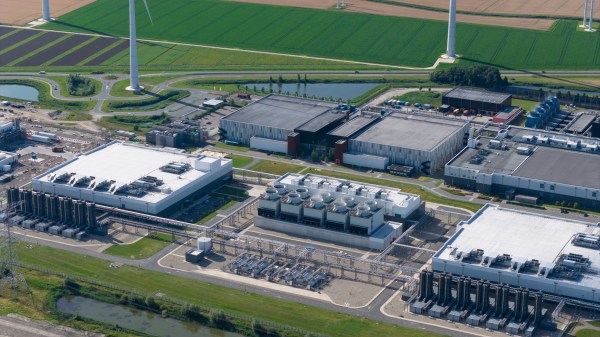
The fundamentals that worked for decades no longer apply in data center construction. Single campuses now require 4,000 workers instead of 750 as the industry adapts to unprecedented scale.
Executive Summary Artificial intelligence and machine learning workloads are fundamentally different from traditional enterprise applications. Training large language models, running inference at scale, and processing massive datasets require infrastructure that...

Executive Summary Artificial intelligence has fundamentally changed the physics of the data center. Traditional enterprise racks were designed for 5-8 kW. Modern virtualization pushed that to 10-15 kW. AI and...
Discover the DataBank Difference today:
Hybrid infrastructure solutions with boundless edge reach and a human touch.
Tell us about your infrastructure requirements and how to reach you, and one of team members will be in touch shortly.
Can’t see the form? Click here.
Let us know which data center you'd like to visit and how to reach you, and one of team members will be in touch shortly.
Can’t see the form? Click here.
Enjoying our resource? Get the latest news and articles delivered straight to your inbox.
Can’t see the form? Click here.
Can’t see the form? Click here.