Sometimes, the best career move isn’t the one you originally planned. It’s the one that reveals a new way to put your experience to work.
After three years on the road as a Class A over-the-road truck driver, Gunner Rubay was ready for a new challenge. He wanted a career that would push him to learn, give him room to grow, and keep him thinking.
In February 2025, he joined DataBank as a Data Center Operations Technician. As he gained experience and advanced to Technician II, he began exploring what might come next. He initially had his sights set on becoming a Data Center Manager (DCM), drawn in part to the opportunity to work closely with customers.
Through DataBank’s Corporate Mentorship Program, Gunner connected with Steve Callahan, Executive Vice President of Sales. Their conversations introduced him to another side of the business — and helped him see how his operational experience and interest in solving customer problems could translate into account management.
Today, Gunner is beginning a new chapter as an account manager supporting the eastern region, bringing firsthand data center experience to his work with customers.
His path offers a look at how mentorship and connections across the business can help employees discover new opportunities while bringing valuable perspective to customer relationships.
Here’s Gunner’s story, in his own words.
A Plan, a Mentor, and an Unexpected Detour
“After visiting 42 states in three years of over-the-road trucking, I decided it was time to find a career that would challenge me, help me grow, and, most importantly, keep my brain fueled. So, I traded the open road for a different kind of journey.
“When I walked into my first mentorship meeting, I had one goal: Find the fastest route to becoming a DCM. I had applied for the position just six months after joining the company, so I was ready to understand what it would take to get there.
“What I didn’t expect was to take a few detours along the way.
“Steve, an amazing human and mentor, introduced me to a side of the business that was heavily focused on the customer. Ironically, that was exactly what had attracted me to the DCM role in the first place. I knew I had the technical skills but I quickly discovered that what I really enjoyed was solving customer problems, working through challenges, and figuring out how to make things happen.”
Discovering a Different Side of the Business
For Gunner, exploring account management meant stepping into unfamiliar territory.
“Then came sales, a world I knew almost nothing about. In fact, when I started, I barely knew what an account manager was. My entire sales career consisted of a little over a month selling cars in 2019, where I sold exactly one car and then left because the business model wasn’t for me.
“Steve helped me see B2B sales in a completely different way. It wasn’t just about making a sale; it was about building relationships, earning trust, understanding customers, and creating long-term value. Surprisingly, I really enjoyed it.”
That shift in perspective helped Gunner see how the experience he had already built in logistics and data center operations could serve him in a customer-facing role — bringing an operational perspective to his work with customers.
Rather than following the career path he originally envisioned, he found an opportunity to apply his skills in a new way.
The Value of Staying Open to What’s Next
Looking back, Gunner sees his mentorship experience as an opportunity to learn more about DataBank, explore his strengths, and rethink what his future could look like.
“Looking back, I started this mentorship trying to find the fastest route to one specific position. Instead, I ended up learning more about the business, discovering what kind of work energizes me, and realizing that sometimes the best part of the journey is the detour.
“My advice: Know what you want to accomplish, find a mentor who can help you get there, and then stay open to where the journey takes you. Show up ready to learn, ask questions, and build a genuine connection. You might just discover a path you didn’t expect.”
Building Careers Through Connection
Gunner’s experience with DataBank’s Corporate Mentorship Program shows how connections across the business can help employees recognize new ways to apply their skills.
The program supports professional growth through mentor-mentee partnerships, with an emphasis on learning, confidence, skill development, and taking ownership of one’s career.
Gunner began with a specific career goal. Conversations with a leader outside his own function helped him explore another possibility — one that connected his operational experience with his interest in working with customers.
As Gunner moves into account management, he brings firsthand familiarity with the data center environment his customers rely on. His role is changing, but the experience he gained in operations remains part of what he brings to the relationship.
Want to see more stories about DataBank’s community involvement and industry leadership? Check out DataBank Digest for more insights on data center industry trends and infrastructure strategy.
A hybrid or multicloud architecture can look reassuringly straightforward on a diagram. Connections link colocated infrastructure to cloud environments, redundant paths support resilience, and each component has a defined role. Then an application slows down, a routing change disrupts access, or a new connection takes weeks longer to activate than planned. For the business, that can mean interrupted customer transactions or a delayed service launch.
These are the moments when the operating model gets tested. Enterprise network engineers, cloud operations teams, and security teams each manage part of the environment, alongside colocation and connectivity providers. Each may understand its own responsibilities without having a complete picture of how the service behaves across organizational boundaries. When ownership is unclear, troubleshooting stalls and delays become harder to resolve.
A colocation, hybrid, or multicloud strategy, therefore, needs to account for operational handoffs: the points where one team or provider depends on another to move work forward. That might mean passing a provisioned connection to the cloud team for configuration, getting security approval for a routing change, or escalating an incident to a connectivity provider. Each handoff needs a clear owner and an agreed definition of completion.
Designing these handoffs alongside the network helps keep the environment manageable as it grows. This article explores practical ways to do that, from defining application requirements and traffic paths to sharing diagnostic evidence and testing recovery across teams.
Plan for Application Needs and Ownership
For an enterprise IT team deploying infrastructure in colocation, interconnection planning often starts with bandwidth and connectivity options. Those decisions should reflect the applications the connection will support. For example, a customer-facing application accessing a cloud-hosted database may be sensitive to latency, while an overnight backup transfer may depend more on having enough capacity to finish within its scheduled window.
Before ordering connectivity, agree on the performance targets and tests you’ll use to confirm the connection supports those applications. For the customer-facing application, that could mean testing response times from the colocated servers in the colocation facility under expected load. For the backup service, it could mean verifying that transfers finish on schedule without degrading other traffic. These checks give the team a practical way to determine whether the complete service is ready for use.
Next, map responsibilities across the connection. Depending on the service arrangement, the colocation provider might deliver the cross-connect, a connectivity provider might supply transport to the cloud, and the enterprise team might configure its own routers and cloud-side networking. Confirm those boundaries explicitly, including who validates each component and handles faults within it.
Assign an enterprise-side owner to coordinate delivery and end-to-end validation. If the cross-connect is complete but the cloud connection is still awaiting configuration, that person should know who needs to act and track the dependency through to resolution. The role can sit within an existing infrastructure or network team, provided it has clear escalation paths. This gives the business an accountable point of coordination while keeping each provider responsible for its contracted service.
Plan Traffic Paths and Access Rules
As an enterprise connects its colocation environment to additional clouds, routing changes can have unexpected effects. A backup connection may send traffic through a different firewall or a lower-capacity path. Document normal and failover paths and establish who approves changes. Test failover with application traffic to confirm that services remain reachable, and backup capacity is sufficient. Where firewalls are involved, verify that failover keeps both directions of traffic flowing through a firewall path that can maintain the connection
Apply the same discipline to access rules across the colocation and cloud environments. If an application in colocation needs access to a cloud-hosted database, specify which systems can connect and on which ports, then verify that each environment’s controls enforce that policy. Assign responsibility for reviewing exceptions and removing temporary access so permissions remain aligned with application needs as the environment changes.
Coordinate Visibility Across Providers
When an application slows down, an enterprise IT team may need evidence from several sources. The connectivity provider might report a healthy circuit between the colocation facility and the cloud, while the cloud team sees no platform incident. Neither finding rules out packet loss, congestion, or a problem with the application itself.
Before an incident, agree on how teams will investigate the connection from servers in the colocation facility to the affected cloud service:
Identify the traffic path. Record which connections the application uses and where responsibility passes between the enterprise and its providers.
Check recent changes. Keep routing and firewall change records accessible so investigators can compare them with the timing of performance problems.
Confirm available evidence. Determine which metrics each party can provide, such as interface utilization or packet loss, and where visibility is limited.
Set up information sharing. Establish escalation contacts and a secure way to exchange diagnostic records, including timestamps and affected endpoints.
Visibility will vary by provider and service. The goal is to give the enterprise team enough evidence to narrow the problem and coordinate the next action, without losing time finding contacts or requesting access during an outage.
Test Recovery Across Teams
Include operational handoffs in failover testing. For example, if the primary connection between the colocation facility and the cloud fails, can the enterprise team confirm that applications are using the backup path? If service remains impaired, does everyone know who leads the investigation and who can authorize changes?
Run that scenario with the relevant internal teams and providers where practical. Use the exercise to identify unclear responsibilities and update the recovery plan before an outage exposes those gaps.
Keep Operations Manageable as You Grow
A manageable colocation, hybrid, or multicloud strategy depends on clear responsibilities at every service boundary. Define what applications need, document traffic paths and access rules, and agree on how teams will share evidence when problems arise.
As connectivity expands, revisit those arrangements and test them alongside the technology. That preparation helps enterprise IT teams bring new services into operation with fewer avoidable delays and coordinate recovery more effectively when disruptions occur.
Want to learn more about connecting your colocation infrastructure to cloud environments and keeping your network ready for growth? Explore DataBank Digest for more insights on interconnection, network resilience, and hybrid IT strategy.
From Pearl River Day to the Little League fields, DataBank’s local involvement reflects a commitment to putting people first.
Being part of a community means more than operating a facility there. It means getting to know the people who live nearby, understanding what matters to them, and finding meaningful ways to contribute.
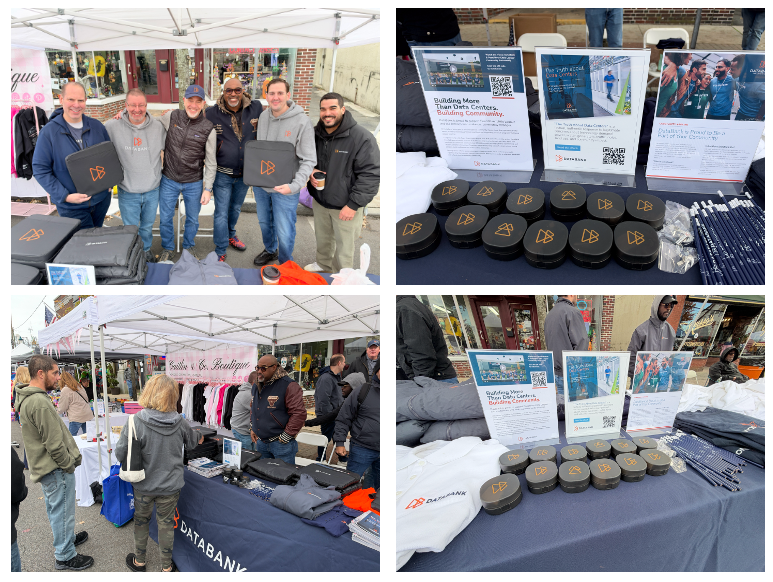
For DataBank, a recent opportunity to put that commitment into practice was Pearl River Day, where employees from our nearby LGA3 data center joined residents and local businesses for a day of conversation and community celebration.
Showing Up at Pearl River Day
Each fall, Pearl River Day brings approximately 25,000 people to Central Avenue to celebrate the businesses, organizations, and traditions that make the area special. With more than 200 businesses and vendors, food trucks, and live music, the festival gives neighbors a chance to connect — and businesses like DataBank a chance to introduce the people behind their local operations.
DataBank employees staffed a Pearl River Day booth to meet community members, answer questions, and build connections with local neighbors.
DataBank has been a premier sponsor of the festival for several years. This year, employees from our data center operations, construction, and sales teams also staffed a booth, spending the day meeting residents and introducing the people behind our local operations.
Despite cold, blustery weather, the team welcomed hundreds of visitors, answered questions, and handed out DataBank blankets, stadium cushions, and warm jackets that were particularly appreciated as temperatures dropped.
Alongside those giveaways, our employees distributed more than 150 copies of The Truth About Data Centers, providing a resource to help residents better understand these facilities, their role in everyday life, and important context needed in the public dialogue. Just as importantly, the booth created space for face-to-face conversations. Visitors could ask questions about DataBank and our local presence, while our employees had an opportunity to listen, learn, and get to know the people who live and work around LGA3.
That personal interaction matters, especially when development brings questions or concerns. A community festival offers something a website or project announcement cannot: an informal conversation with the people who work at a facility. Building trust takes time, and showing up is an important part of that work.
A Partnership Built Next Door
DataBank’s community connections also extend to the baseball fields neighboring our Orangeburg property. When work on the facility initially prompted concerns among local residents, conversations with Pearl River Little League representatives helped establish a relationship with an organization that has long been important to area families. Meeting league representatives during construction gave our team an opportunity to understand their needs and identify practical ways to help.
DataBank invested nearly $20,000 to help improve the dugout sheds and provide field lighting, contributing to facilities used by young athletes throughout the season. Our involvement has continued through approximately $5,000 in annual support for general sponsorship and student-athlete scholarships, helping sustain the partnership beyond that initial investment.
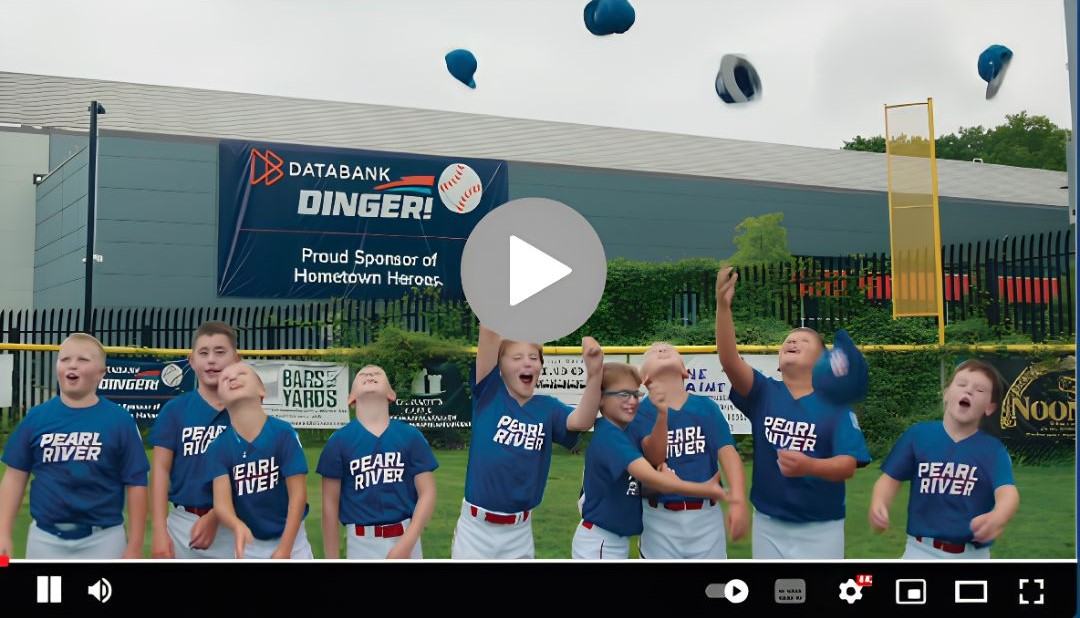
The relationship also includes a creative connection between the data center and the diamond: the “DataBank Dinger.” A poster on the facility gives players a home-run target, with qualifying home runs generating DataBank contributions toward scholarships. It adds excitement to the game while supporting opportunities for young people—a way to make the partnership both meaningful and memorable.
A Personal Connection to the Fields
For Ryan Buchan, a Junior Critical Infrastructure Engineer at LGA3, supporting Pearl River Little League is more than a workplace initiative. Ryan grew up in Orangeburg and played on these same fields. His father was also a dedicated league supporter and a member of its board, making the organization an important part of his family’s life. Today, Ryan works for a company helping care for the place where he once played.
Discover how DataBank supports Pearl River Little League through field improvements, sponsorships, and scholarships, and hear employee Ryan Buchan share his personal connection to the league.
“One of DataBank’s core values is ‘putting people first,’” Ryan says. “We want to be a positive influence on the community.”
For Ryan, that means supporting the people who live near the facility and contributing to the organizations that matter to them. Seeing DataBank help improve the fields where he played carries personal significance and connects his work today with his own childhood experiences. His story is also a reminder that the people working inside a data center can have deep roots in the surrounding area, with family histories and personal ties to the programs DataBank supports.
Continuing to Build Community Relationships
Pearl River Day and the Little League partnership put the same commitment into practice in different ways. One creates opportunities to meet residents, answer questions, and make our team accessible. The other supports an organization that brings families together and helps young athletes build confidence, learn teamwork, and make lasting memories. Both reflect the importance of listening and following through.
As DataBank continues its work in Orangeburg, we’ll keep looking for meaningful ways to support the people and programs that help the local community thrive.
Our recent food drive continued that commitment, bringing DataBankers together to support hunger relief in the communities we call home. Through hands-on volunteering, local food donations, and an Amazon wish list that let employees contribute from wherever they work, DataBankers supported a shared goal: helping our neighbors put food on the table.
Denver Volunteers Make a Hands-On Impact
Our Denver Metro team took a hands-on approach to hunger relief by volunteering at the Food Bank of the Rockies.
Employees volunteered their time sorting and packing food boxes for distribution to the community. During their shift, the team helped move 508 boxes containing 12,620 pounds of food — the equivalent of 10,516 meals.
Sorting and packing are essential steps in getting donated food to the people who need it. By taking on that work together, our Denver team helped the Food Bank of the Rockies get thousands of meals ready for local families.
Doubling Down on Giving in Dallas
Our Dallas Metro team built on last year’s food drive in a big way, collecting more than twice as much food.
The team delivered 440 pounds of food, representing 337 meals, to the North Texas Food Bank. The increase highlights how individual donations can add up to meaningful support our neighbors.
Participation also reached beyond the Dallas team. Through an Amazon wish list, employees across DataBank could purchase food and have it shipped directly to our Dallas headquarters. This gave DataBankers in other locations a straightforward way to join the effort and support hunger relief in the Dallas community.
Part of an Ongoing Commitment
The food drive is one of many ways DataBank Cares puts our commitment to our communities into action. Throughout the year, employees have opportunities to contribute their time and resources to causes that matter in the places where we live and work.
This year’s effort showed how different forms of participation can support a common goal. From packing food boxes in Denver to collecting donations in Dallas and contributing through the Amazon wish list, DataBankers helped provide food for neighbors facing hunger.
Thank you to everyone who volunteered, donated, or helped organize the drive. Your generosity made this effort possible and continues to shape a culture of giving back at DataBank.