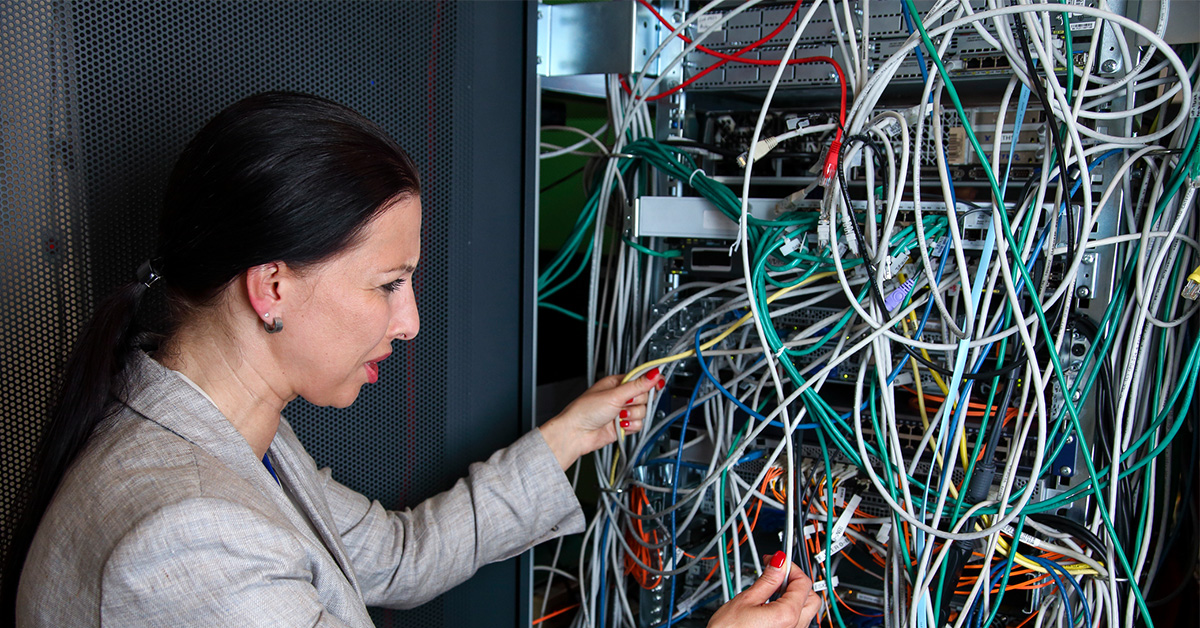
You are an IT Manager and have a junior technician working in your data center attempting to “rack and stack” new servers in a cabinet. As you read one of your power strips, you see that you have 10 kilowatts (kW) available on the A side. You translate the reading as 20kW of total power availability for your cabinet because you have A and B power circuits. The problem with this assessment is that you will over-allocate power to your environment, leading to wasted time and effort, re-racking, re-cabling – or worse, a complete power outage for any infrastructure within your cabinet.
Before You Get Started
Since most data center providers supply A and B circuits for redundancy and failover, we need to think about these circuits working in tandem when plugging in. In other words, these A/B circuits are a single circuit in terms of total load for your cabinet. In this case, 10kW for the cabinet. Now let’s translate the total power to your equipment. If your equipment has two power supplies, you will plug one of those power supplies into the A side and one into the B side. Since any single circuit cannot be loaded beyond 8kW (recommended max), neither side can be loaded to more than 4kW because if either the A side or B side experiences a disruption, the entire 8kW load will be drawn from the surviving circuit.
Here is a simple formula:
Assumptions –
A Side = 208V, 60A, Single Phase (10kw)
B Side = 208V, 60A, Single Phase (10kw)
Two power strips
Dual power supplies for equipment
Power cords for the A power supply on each server are plugged into the A power strip
Power cords for the B power supply on each server are plugged into the B power strip
Customer has the goal of balancing power for redundancy to avoid outage
Customer is following recommended load of 80% per circuit
In this example, consumption on the A circuit and B circuits cannot exceed 40% at any time. Following these guidelines will ensure you are implementing power within your environment for everything within your control.
Why Can’t I Fully Load My Circuits?
Data centers have planned maintenance windows to ensure uptime. There are several reasons data center providers may need to schedule a maintenance window, but these events usually need to occur because of changes within the provider’s environment such as utility feeds, transfer switches, UPS, diesel generators, or breaker panels. A typical situation impacting you as a customer would involve the data center provider needing to shut down the A side or the B side entirely.
Adhering to the guidelines is a shared responsibility in the sense that we all have a shared uptime goal. Ultimately, data center providers must maintain and protect the data center infrastructure for the benefit of all customers within each data center.
How can DataBank Help
DataBank helps our customers monitor their power use, and if needed, offers the right expertise to answer any questions and resolve potential issues – before they become larger problems. While it depends on each customer and where they need assistance, the DataBank team is able to support a full range of monitoring and troubleshooting potential consumption issues.
Assessment and requirements gathering: The process typically starts with an assessment of the customer’s requirements and current infrastructure. This includes understanding the customer’s workload demands, growth projections, and any specific power constraints or regulations they need to comply with.
Capacity planning: Based on the assessment, DataBank can help the customer determine their power capacity requirements. This involves calculating the power needed to support current and future IT equipment, as well as accounting for redundancy and scalability needs.
Infrastructure design: Once the power requirements are understood, we also can help design the power infrastructure to meet those needs. This may involve selecting appropriate power distribution units (PDUs), uninterruptible power supplies (UPS), backup generators, and other components necessary to ensure reliable power delivery to the data center equipment.
Efficiency optimization: The DataBank team also can focus on optimizing power usage efficiency. This may involve implementing energy-efficient hardware, deploying cooling solutions to reduce power consumption for cooling systems, and utilizing power management features in servers and other equipment.
Monitoring and management: After the power infrastructure is deployed, the team will set up monitoring and management systems to track power usage. We encourage all of our customers to register and use the DataBank Customer Portal. This valuable resource gives them everything they need to monitor and see power consumption by cabinet and device so they can better balance power in the cabinets and avoid outages. We even have some customers who triangulate the data they see in the Customer Portal with their own power monitoring and billing information for even more insight into their power setup.
Continuous optimization: Power consumption needs may change over time due to factors such as workload fluctuations, hardware upgrades, or changes in business requirements. The professional services team will continue to work with the customer to assess and optimize power consumption as needed to ensure ongoing efficiency and reliability.
Throughout this process, communication and collaboration are essential to ensuring that the power infrastructure effectively meets the customer’s needs and objectives effectively.
Other Ways We Can Help
At Databank, we use branch circuit monitoring for most of our customers – whether they are an official power customer or not – and are in the process or rolling it out in all our data centers. This helps us keep a close eye on customers’ power, so if we ever see spikes in any given circuit, we can immediately notify them so they can take a closer look.
We are also willing to help any customer with any configuration at any time to make sure they’re in good shape. For example, if we’re working with a particular company and see that they’re getting close to an 80% threshold for total power use, we’ll do all we can to educate them and help them resolve the issue. There are often many ways to approach this, such as using our remote hands-support service to change power configurations or move a server to a different rack.
Sometimes things can happen, even with server manufacturers. We once had a customer who bought complete server racks that were pre-assembled from a well-known manufacturer. As we later found out, they were assembled incorrectly. Instead of being set up for approximately 30% for the A, B, and C phases, they were configured at 45%-45%-10%.
This customer’s initial loads were initially low, so nothing went wrong at first. Yet, as they increased, our floor power distribution alarms went off. We engaged with their team, audited the entire system, and helped them rebalance all the power set ups in all their servers before they tripped a circuit breaker.
Let DataBank Help
Despite having highly experienced and knowledgeable IT staff, sometimes things just go wrong in the data center. We’ve experienced many of these types of issues and want to do all we can to help our customers protect themselves against any avoidable power outage.
If you have specific questions or would like to learn more about how DataBank can help you optimize power load balancing in your environment, please contact us today.
Data centers are inherently much less hazardous than some working environments (e.g., construction sites). Even so, they do present hazards that need to be managed. With that in mind, here is a quick guide on how to ensure data center health and safety.
Understanding the risks of data centers
Data centers house complex infrastructure and high-density equipment. This means that they pose a very specific range of risks to personnel. Here are the five main ones.
Heat exposure: Although data centers implement robust cooling systems, heat exposure can pose a risk to personnel working in close proximity to the equipment.
Electrical hazards: Exposure to high-voltage electricity poses a severe risk of electric shock, burns, and even fatalities. Additionally, improper handling of electrical equipment or overloading circuits can lead to short circuits and fires.
Fire risks: The presence of numerous electrical components and the high concentration of heat-generating equipment increase the risk of fire in data center environments. The rapid spread of fire in such environments can pose a grave threat to the safety of data center staff.
Air quality concerns: Data centers require controlled airflow to maintain optimal operating conditions for equipment. The circulation of air within these environments can, however, lead to the accumulation of airborne contaminants such as dust, particulate matter, and volatile organic compounds (VOCs). Prolonged exposure to poor air quality can cause respiratory issues and exacerbate existing health conditions.
Chemical exposure: Data centers often utilize various chemicals for cleaning, maintenance, and fire suppression purposes. Improper handling or accidental spills of these chemicals can result in exposure to hazardous substances, leading to skin irritation, respiratory problems, or more severe health issues.
Best practices for maintaining data center health and safety
The details of managing data center health and safety can be complex. Industry focus is shifting toward automated environmental controls, predictive maintenance using IoT sensors, and zero-touch operations. Expect AI-powered safety dashboards and proactive hazard detection in next-gen facilities. At a fundamental level, however, all the measures needed to ensure data center health and safety typically relate to one or more of the following 10 key best practices.
Appropriate employee training: Comprehensive training programs equip personnel with the knowledge and skills necessary to work safely in data center environments. Training sessions should cover topics such as hazard recognition, emergency procedures, equipment operation, and best practices for maintaining health and safety standards.
Regular safety briefings and updates: Continuous education through regular safety briefings and updates is crucial for reinforcing safety protocols and keeping personnel informed about any changes or developments in procedures or regulations. These briefings serve as opportunities to address emerging risks, share lessons learned from incidents, and reinforce a culture of safety within the organization. Proactive health and safety protocols in data centers reduce downtime by 25% and improve operational efficiency.
Proper use and maintenance of equipment: Strict adherence to manufacturer guidelines for the installation, operation, and maintenance of equipment is key to preventing accidents and equipment failures. Regular inspections, preventive maintenance schedules, and prompt repairs are essential to ensure the reliability and safety of critical infrastructure components.
Personal protective equipment (PPE): Providing appropriate personal protective equipment, such as gloves, safety glasses, helmets, and ear protection, is essential to mitigate risks associated with handling equipment and working in potentially hazardous environments. Personnel should be trained in the correct use and care of PPE to maximize its effectiveness.
Temperature and humidity regulation: Maintaining optimal temperature and humidity levels is essential for preserving the integrity and functionality of data center equipment. Proper HVAC systems, temperature monitoring, and humidity control measures help prevent equipment overheating, condensation, and corrosion, while also creating a comfortable working environment for personnel.
Air filtration systems: High-efficiency air filtration systems are critical for removing airborne contaminants and particulate matter from the data center environment. These systems help improve indoor air quality, reduce the risk of equipment damage due to dust accumulation, and safeguard personnel against respiratory issues associated with poor air quality.
Fire prevention and suppression systems: Implementing robust fire prevention measures, such as regular equipment inspections, proper cable management, and adherence to fire safety codes, is essential to minimize the risk of fire incidents in data centers. Additionally, installing automatic fire suppression systems, such as sprinklers or clean agent systems, and conducting regular fire drills contribute to swift and effective response in the event of a fire emergency.
Emergency response plans: Developing comprehensive emergency response plans that outline procedures for various scenarios, including fires, power outages, natural disasters, and medical emergencies, is essential to ensure a coordinated and efficient response. Personnel should be trained in emergency protocols, evacuation procedures, and roles and responsibilities during emergencies to mitigate risks and minimize potential harm.
Scheduled equipment checks: Implementing regular equipment checks and maintenance schedules helps identify and address potential issues before they escalate into safety hazards or equipment failures. These checks should encompass electrical systems, cooling infrastructure, fire suppression systems, and environmental controls to ensure optimal performance and reliability.
Routine facility inspections: Conducting routine facility inspections allows organizations to identify and rectify any potential hazards or deficiencies in the physical environment. Inspections should cover structural integrity, lighting, signage, emergency exits, and housekeeping practices to maintain a safe and orderly working environment for personnel.
Understanding FedRAMP compliance in the data center
Just what is FedRAMP? The Federal Risk and Authorization Management Program (FedRAMP) is a government-wide program established to standardize the security assessment, authorization, and continuous monitoring of cloud products and services used by federal agencies. The FedRAMP regulation seeks to ensure that agencies’ cloud services meet rigorous security standards.
FedRAMP certification ensures that cloud service providers (CSP) follow strict security protocols and meet the security requirements necessary to handle federal government data. This certification process involves rigorous security assessments conducted by authorized third-party assessment organizations.
By achieving FedRAMP certification, cloud service providers demonstrate their commitment to meeting the stringent security standards set forth by the federal government. This helps federal agencies confidently adopt cloud services while ensuring the protection of sensitive information.
Here’s a closer look at how FedRAMP works and what is required to achieve certification (and how DataBank delivers).
Standardized approach:
FedRAMP provides a standardized approach to security assessment, authorization, and continuous monitoring for cloud services. In this case, it defines a set of security controls based on National Institute of Standards and Technology (NIST) guidelines, specifically NIST SP 800-53.
Collaborative effort:
Achieving compliance involves collaboration between many federal agencies. These include the General Services Administration (GSA), NIST, the Department of Defense (DoD), the Department of Homeland Security (DHS), and others.
Three authorization levels:
FedRAMP categorizes cloud security into four security levels: LI-SaaS, low, moderate, and high. These levels are based on the potential impact on confidentiality, integrity, and availability of federal information.
Security assessment:
Cloud service providers seeking FedRAMP authorization must undergo a rigorous security assessment conducted by an accredited third-party assessment organization. This assessment evaluates the cloud service against the FedRAMP security controls.
Authorization process:
Once the security assessment is completed, the CSP submits a package to the FedRAMP Program Management Office (PMO) for review. If the package meets all requirements, the PMO grants a FedRAMP Authorization to Operate (ATO).
Continuous monitoring:
FedRAMP requires continuous monitoring of authorized cloud services to ensure ongoing compliance with security requirements. CSPs must report security incidents, conduct periodic security assessments, and provide updates to the FedRAMP PMO.
Re-use of authorizations:
FedRAMP promotes the re-use of authorizations across federal agencies through the FedRAMP Marketplace. Agencies can use existing authorizations to streamline the procurement process for cloud services.
How DataBank Enables FedRAMP Compliance
As companies move computing infrastructure to the cloud, complying with industry-specific regulations is imperative. FedRAMP is no different.
DataBank has a proven track record deploying highly compliant systems to comply with FedRAMP and other regulations. Our seasoned team of experts supports the full cycle of hosting and cloud infrastructure, including design, deployment, testing, validation, and defense-in-depth protection.
At each network operation center (NOC), DataBank fully manages all aspects of cloud infrastructure: operating systems, applications, and day-to-day operations. Additionally, DataBank undergoes a complete 3PAO audit annually to ensure validation of processes using the latest NIST 800-53 security framework.
FedRAMP plays a crucial role in promoting the adoption of secure cloud computing within the federal government. By maintaining FedRAMP compliance, DataBank can confidently and securely host cloud services and infrastructure. Federal agencies – as well as virtually any company in any industry – can trust DataBank to ensure the protection of their most sensitive data.
Interested in learning more about DataBank’s FedRAMP compliance capabilities? Contact us today.
The technology sector is known for being fast-moving and data centers need to keep up with it (or even lead it). With that in mind, here is a quick overview of the data center industry outlook for 2024 and beyond.
Data center industry outlook for 2024 and beyond
Here is a brief overview of the data center industry outlook for 2024 and beyond.
Current trends in the data center industry
The main current trends in the data center industry relate to improving efficiency, particularly flexibility.
Rise of colocation facilities
Colocation facilities provide data center infrastructure businesses can use to house their own equipment. Using colocation enabled businesses to leverage the benefits of private data centers without the commitment of building and running them.
Adoption of hybrid IT solutions
Hybrid IT solutions combine different IT environments so that they function as a single unit. They enable organizations to leverage the benefits of each environment however best suits their workloads. For example public clouds can be used for dynamic scalability and real-world data centers for high levels of customizability.
Growth of edge computing
Edge computing is revolutionizing data processing by bringing computing resources closer to the point of data generation and consumption. This trend is driven by the proliferation of Internet of Things (IoT) devices, real-time applications, and the need for low-latency processing. Edge data centers are deployed at the edge of the network, enabling faster data processing, reduced latency, and improved user experiences.
Focus on sustainability and energy efficiency
Sustainability and energy efficiency have become top priorities for data center operators as they strive to minimize environmental impact and reduce operational costs. This trend involves implementing energy-efficient technologies, such as advanced cooling systems, server virtualization, and renewable energy sources.
Emphasis on compliance and data sovereignty
Stakeholders from the general public to governments have become highly aware of data privacy issues. This is leading to increased compliance requirements and data sovereignty considerations. Data center providers are there continually updating their (aleady stringent) security protocols to ensure that they keep ahead of regulatory and governmental concerns.
Challenges facing the data center industry
The main challenges facing the data center industry relate to its phenomenal growth over recent years and the need to put this on a sustainable, long-term footing.
Strain on infrastructure and resources
Data centers consume vast amounts of energy to power servers, networking equipment, and cooling systems, leading to environmental concerns and escalating operational costs. Additionally, the limited availability of suitable locations for building new data centers exacerbates the strain on infrastructure and resources, necessitating innovative solutions for optimizing resource utilization and minimizing environmental impact.
Cybersecurity threats and data breaches
Data center operators face an escalating threat landscape characterized by sophisticated cyberattacks, malware, and ransomware incidents. Cybersecurity breaches can have devastating consequences, including data loss, financial damages, reputational harm, and regulatory penalties.
Protecting data center infrastructure, networks, and sensitive information from security threats requires robust cybersecurity measures, including intrusion detection systems, firewalls, encryption, and regular security audits. Moreover, ensuring compliance with industry standards and regulations is essential for safeguarding data integrity and privacy.
Skills gap and workforce challenges
The data center industry is facing a shortage of skilled professionals with expertise in areas such as network engineering, cloud computing, cybersecurity, and data management. Recruiting and retaining qualified personnel to design, deploy, and manage data center infrastructure poses a significant challenge for organizations.
Moreover, the rapid pace of technological innovation and evolving industry trends necessitate ongoing training and upskilling initiatives to address the skills gap and ensure a competent workforce capable of meeting the demands of the data center industry.
Future projections for the data center industry
The key future projections for the data center industry relate to doing more with less.
Expansion of edge computing networks
The growth of the IoT shows no sign of abating, quite the opposite. It is very much continuing to expand both in terms of the number of IoT devices and in terms of the number of IoT applications. In particular, there is likely to be strong growth in applications requiring superfast processing. This will drive the continued growth of edge computing.
Integration of AI and automation
Artificial intelligence (AI) and automation will play a pivotal role in optimizing data center operations, enhancing efficiency, and reducing operational costs. AI-powered analytics and predictive maintenance algorithms will enable proactive monitoring, fault detection, and performance optimization. Automation tools will streamline routine tasks, improve resource utilization, and enable self-healing capabilities to ensure uninterrupted service delivery and enhance the overall resilience of data center infrastructure.
Emergence of quantum computing
Quantum computers have the potential to solve complex problems exponentially faster than classical computers. This will open up new opportunities for data-intensive applications, such as those used in cryptography, and scientific research. As quantum computing technologies mature, data center operators will explore ways to integrate quantum systems into their infrastructure to leverage their transformative potential.
Value of a Cloud-Based Workplace
In the swiftly changing world of digital technology, cloud computing emerges not just as a trend but as a fundamental shift in how businesses operate, offering unparalleled opportunities for growth and innovation.
Yet, the path to cloud adoption is strewn with challenges, from ensuring robust security and privacy to navigating intricate compliance landscapes, managing costs effectively, and achieving seamless integration and migration.
This blog delves into these critical challenges and equips you with expert insights and actionable solutions to turn potential hurdles into stepping-stones for success.
Security and Privacy
The cornerstone of a successful cloud strategy is the assurance of data security and privacy.
Cyber threats are evolving rapidly, and adopting a proactive stance on security is imperative.
Key strategies include implementing multi-factor authentication and encryption, conducting regular security assessments, and employing a cloud access security broker (CASB) for better visibility and control.
Compliance and Regulations
With the global nature of cloud services, compliance becomes a complex web of regional and international regulations.
The key to navigating this maze is understanding the specific requirements of your industry and the jurisdictions you operate in.
Actionable steps involve conducting comprehensive compliance audits, engaging with cloud service providers who demonstrate compliance with relevant standards, and staying updated on regulatory changes.
Cost Management
One of the cloud’s most appealing features is its cost-efficiency.
However, without careful management, cloud costs can spiral.
Effective cost management practices include utilizing cloud cost management tools for visibility and monitoring, opting for scalable cloud solutions to adjust resources according to demand, and implementing policies to prevent unnecessary spending.
Integration and Migration
Migrating to the cloud should not disrupt your operations.
A smooth transition and effective integration with existing systems are crucial for maintaining business continuity.
Tips for a seamless process involve detailed planning and assessment before migration, choosing the right cloud integration tools and platforms, and testing extensively in the cloud environment before going live.
Performance and Scalability
Ensuring that your cloud infrastructure can grow with your business is essential.
Scalability and performance go hand-in-hand, demanding a strategic approach to cloud resource allocation.
Strategies for success include regular performance testing and capacity planning, leveraging auto-scaling capabilities of cloud services, and optimizing applications for cloud efficiency and scalability.
As you implement cloud solutions into your business operations, it’s crucial to ensure a smooth transition and effective management of your cloud-first environment. Here are key steps to guide you through this phase:
Plan Your Transition:
Conduct a comprehensive assessment of your current infrastructure and identify areas suitable for migration to the cloud.
Develop a detailed migration plan, outlining timelines, resource allocation, and potential risks.
Consider factors such as data sensitivity, application dependencies, and regulatory requirements during the planning phase.
Implement Cloud Solutions:
Select cloud services and solutions that align with your business objectives and scalability requirements.
Deploy a hybrid or multi-cloud strategy to leverage the strengths of different cloud providers and optimize performance.
Ensure proper configuration and integration of cloud services to maximize efficiency and interoperability.
Manage Your Cloud-First Environment:
Implement robust monitoring and management tools to track performance, usage, and costs across your cloud infrastructure.
Establish governance policies and controls to enforce security, compliance, and resource allocation guidelines.
Regularly review and optimize your cloud environment to address evolving business needs and technology trends.
Foster a Cloud-Adaptive Culture:
Provide ongoing training and support to employees to enhance their cloud literacy and proficiency.
Encourage collaboration and knowledge-sharing among teams to drive innovation and best practices in cloud usage.
Cultivate a culture of experimentation and agility, empowering teams to explore new cloud technologies and approaches.
By following these steps, you can successfully navigate the implementation phase of building a cloud-first workplace.
Remember, the journey to cloud adoption is ongoing, and continuous improvement is key to maximizing the benefits of cloud technology.
How DataBank Can Make the Difference
At DataBank, we understand the challenges and complexities involved in transitioning to a cloud-based environment.
That’s why we offer cloud solutions designed to empower businesses to embrace the full potential of cloud technology while minimizing risks and maximizing value.
We work closely with clients to assess their unique business and IT infrastructure needs, develop tailored cloud strategies, and execute seamless migrations to the cloud.
Whether you’re looking to leverage public, private, or hybrid cloud environments, we have the expertise and resources to support your journey every step of the way.
Here’s how we can help you achieve your cloud-first goals:
1. Cloud Strategy and Consulting:
Our solution engineers will collaborate with your team to define a clear cloud strategy aligned with your business objectives and growth ambitions.
We’ll conduct comprehensive assessments of your current infrastructure, applications, and workloads to identify opportunities for cloud adoption and optimization.
Our strategic recommendations will address key areas such as security, compliance, cost management, and scalability to ensure a robust and future-ready cloud architecture.
2. Cloud Migration and Deployment:
Leveraging industry-leading migration methodologies and tools, we’ll orchestrate seamless migrations of your workloads, applications, and data to the cloud.
Our migration experts will minimize downtime, mitigate risks, and optimize performance throughout the migration process, ensuring a smooth transition for your business.
We’ll provide ongoing support and guidance to help you deploy and configure cloud services, enabling you to unlock the full potential of your cloud infrastructure.
3. Cloud Management and Optimization:
With our comprehensive cloud management services, we’ll monitor, optimize, and secure your cloud environment to ensure peak performance and reliability.
Our advanced monitoring and analytics tools will provide real-time visibility into your cloud resources, enabling proactive management and cost optimization.
We’ll help you implement best practices for governance, compliance, and security, allowing you to maintain control and confidence in your cloud operations.
4. Cloud Support and Training:
Our dedicated support team is available 24/7 to provide expert assistance and resolve any issues or challenges you may encounter with your cloud environment.
We offer customized training programs and workshops to empower your teams with the skills and knowledge needed to leverage cloud technologies effectively.
From troubleshooting to performance tuning, our cloud support services ensure that you receive the support you need to maximize the value of your cloud investment.
With DataBank as your trusted cloud partner, you can accelerate your journey to a cloud-first workplace, drive innovation, and achieve sustainable growth in today’s digital economy.
Contact us today to learn more about our cloud services and solutions and discover how we can help you achieve your business objectives with confidence.
In a rapidly evolving digital landscape, businesses are increasingly turning to hybrid IT strategies to stay competitive.
Hybrid IT, which combines on-premises and colocation infrastructure with public and private cloud services, offers the flexibility, scalability, and agility that modern businesses need.
However, integrating these diverse systems presents its own set of challenges, including complexity and security concerns.
Understanding Hybrid IT and Colocation
Hybrid IT is an infrastructure design that allows for a more dynamic IT environment. It enables companies to leverage both their existing on-premises resources and the scalability of cloud services, providing the best of both worlds.
Yet, managing this hybrid environment requires a nuanced approach to ensure efficiency and security. Colocation facilities provide a bridge in this hybrid ecosystem.
These data centers are where businesses can rent space for servers and other computing hardware, offering the benefits of enhanced security, increased connectivity, and greater scalability.
Colocation acts as the physical backbone that supports the seamless integration of cloud and on-premises solutions, ensuring businesses can achieve their hybrid IT objectives.
The Strategic Advantages of Colocation
Integrating colocation into a hybrid IT strategy brings several key benefits:
Seamless Connectivity: Colocation facilities are interconnected hubs that facilitate efficient data exchange between cloud environments and on-premises infrastructure, ensuring high-speed access to applications and services.
Robust Security and Compliance: With advanced physical security measures and compliance certifications, colocation centers ensure that sensitive data is protected according to industry standards.
Cost-Effective Scalability: By leveraging the shared infrastructure of a colocation facility, businesses can scale their IT resources up or down as needed, without the capital expenditure of expanding their data centers.
Guaranteed Uptime: High operational reliability is critical for business continuity. Colocation offers SLAs that guarantee uptime, minimizing the risk of downtime and its associated costs.
Real-World Success Stories
Case studies across industries—from finance to healthcare and e-commerce—demonstrate how colocation can enhance hybrid IT strategies.
Businesses have realized improved operational efficiency, enhanced security posture, and significant cost savings by leveraging colocation as part of their hybrid IT infrastructure.
The Future of Hybrid IT with Colocation
As businesses continue to navigate the complexities of digital transformation, colocation stands out as a strategic enabler of hybrid IT strategies.
Looking Ahead
Colocation is a strategic approach that enables businesses to harness the power of hybrid IT. As we move into the next decade, the role of colocation in supporting digital infrastructure will continue to grow in importance.
For businesses exploring how to optimize their IT strategies, colocation offers a compelling solution. Whether you’re looking to enhance connectivity, ensure security, achieve cost efficiency, or guarantee operational uptime, colocation can support your hybrid IT goals.
Explore How Colocation Can Transform Your IT Strategy
Interested in learning more about how colocation can benefit your business? Contact our team for a consultation and to discover the potential of integrating colocation into your IT infrastructure.
By: Scott Palsgrove, vice president of sales Northeast, and Rob Lerner, vice president of sales — DataBank
Migrating to the cloud has become less of a trend and more of a necessity for businesses seeking scalability, flexibility, and efficiency. However, the journey to the cloud is not without its complexities. To ensure a smooth transition and maximize the benefits of cloud adoption, it’s crucial for organizations to carefully evaluate various considerations. Let’s delve into some key factors to keep in mind when making the leap to the cloud. Watch the video HERE.
Assessment of Current Infrastructure: Before embarking on the cloud migration journey, it is essential to conduct a comprehensive assessment of your current infrastructure. This involves evaluating existing hardware, software, and applications to determine compatibility with cloud environments. Understanding your organization’s unique IT landscape will help in devising a tailored migration strategy and minimizing potential disruptions during the transition.
Security and Compliance: Security concerns often top the list of reasons why businesses hesitate to migrate to the cloud. While cloud providers offer robust security measures, organizations must ensure compliance with industry regulations and data protection standards. The critical steps in safeguarding sensitive data throughout the migration process and beyond are assessing the security posture of cloud providers, implementing encryption protocols, and establishing access controls.
Cost Management: While the cloud offers cost-saving benefits through pay-as-you-go models and resource optimization, it is essential to have a clear understanding of pricing structures and potential hidden costs. Establishing a cost management strategy involves accurately estimating usage requirements, optimizing resource allocation, and regularly monitoring cloud spending. Implementing cloud cost management tools and leveraging discounts and reserved instances can help in controlling expenses and maximizing ROI (return on investment).
Data Migration and Integration: Migrating vast amounts of data to the cloud requires careful planning and execution to avoid data loss or corruption. Organizations must assess data dependencies, prioritize migration tasks, and choose the appropriate migration methods, whether it is through bulk transfers, streaming, or hybrid approaches. Additionally, integrating cloud services with existing systems and applications requires seamless connectivity and compatibility to ensure uninterrupted operations.
Scalability and Performance: One key advantage of cloud computing is its ability to scale resources dynamically based on demand. However, achieving optimal scalability and performance requires strategic planning and resource optimization. Organizations should design architectures that can efficiently handle fluctuating workloads, leverage auto-scaling capabilities, and implement performance monitoring tools to ensure consistent performance and user experience.
Training and Skill Development: Transitioning to the cloud often necessitates upskilling or reskilling IT teams to effectively manage cloud environments and technologies. Assessing internal expertise and identifying skill gaps can help in developing targeted training programs and initiatives to bridge the knowledge gap. Providing comprehensive training programs and certifications can empower employees with the knowledge and skills required to leverage cloud platforms efficiently. Additionally, fostering a culture of continuous learning and experimentation encourages innovation and enhances the organization’s ability to adapt to evolving cloud technologies.
Vendor Selection and Support: Choosing the right cloud provider is a critical decision that can significantly impact the success of your migration journey. Evaluating factors such as reliability, performance, service-level agreements (SLAs), and customer support is essential in selecting a vendor that aligns with your business needs and goals. Additionally, establishing clear communication channels and building strong partnerships with cloud providers can ensure timely support and assistance throughout the migration process and beyond.
Assessment of Internal Expertise, Skills, and Priorities: Evaluating your organization’s internal expertise, skills, and priorities is crucial for a successful cloud migration. Assessing your IT team’s capabilities and understanding their proficiency with cloud technologies can help determine the level of support and training required. Additionally, aligning cloud migration priorities with business objectives and IT initiatives ensures that resources are allocated effectively, and migration efforts are focused on achieving tangible outcomes.
Planning, Roadmap, and Implementation Timelines: Developing a comprehensive migration plan and roadmap is essential for guiding the cloud migration process from start to finish. This involves defining clear objectives, identifying migration strategies, and establishing realistic timelines and milestones. Collaborating with key stakeholders and cloud partners helps in prioritizing workloads, allocating resources, and ensuring alignment with business goals. Implementing phased migration approaches and conducting regular progress reviews facilitate smooth execution and minimize disruptions to ongoing operations.
Impact on Operations: Assessing the potential impact of cloud migration on existing operations is critical for managing change and mitigating risks. Organizations should evaluate factors such as application dependencies, user workflows, and performance expectations to anticipate and address operational challenges effectively. Implementing contingency plans, conducting thorough testing, and providing adequate user training and support help to minimize downtime and ensure business continuity during the migration process.
RACI with Your Partner: Establishing clear roles and responsibilities (RACI) with your cloud migration partner is essential for ensuring accountability and collaboration throughout the migration journey. Defining who is Responsible, Accountable, Consulted, and Informed for each task and decision streamlines communication, fosters teamwork, and minimizes misunderstandings. Collaborating closely with your partner enables efficient knowledge transfer, risk management, and resolution of issues, ultimately leading to a successful cloud migration outcome.
Application Modernization: As organizations migrate their applications to the cloud, they should seize the opportunity to modernize their application architecture and design. Legacy applications may require refactoring or redesigning to take full advantage of cloud-native features such as microservices, containerization, and serverless computing. Application modernization not only improves performance and scalability but also enhances agility and enables faster time-to-market for new features and updates.
Disaster Recovery and Business Continuity: Implementing robust disaster recovery (DR) and business continuity (BC) plans is essential to mitigate the risk of downtime and data loss in the cloud environment. Organizations should replicate critical data and workloads across multiple geographic regions to ensure high availability and resilience against infrastructure failures or natural disasters. Regular testing of DR/BC procedures and automation of failover processes are key to maintaining operational continuity and minimizing downtime during unforeseen events.
Governance and Compliance Management: Effective governance frameworks are essential for maintaining control, visibility, and compliance in the cloud. Establishing clear policies, procedures, and controls helps in managing cloud resources, enforcing security standards, and ensuring regulatory compliance. Implementing cloud governance tools and conducting regular audits can help organizations monitor and enforce adherence to compliance requirements, data privacy regulations, and internal policies across cloud environments.
Performance Optimization: Continuous performance optimization is crucial for maximizing the efficiency and cost-effectiveness of cloud resources. Monitoring key performance metrics, identifying performance bottlenecks, and fine-tuning configurations are essential for achieving optimal performance and resource utilization. Employing performance optimization techniques such as caching, load balancing, and content delivery networks (CDNs) can enhance application responsiveness and user experience while minimizing latency and infrastructure costs.
Data Governance and Management: As data volumes grow exponentially in the cloud, organizations must prioritize data governance and management to ensure data quality, integrity, and security. Implementing data governance frameworks, metadata management solutions, and data lifecycle management policies helps in effectively managing data assets, enforcing data governance policies, and facilitating regulatory compliance. Leveraging
By incorporating these considerations into your cloud migration strategy, organizations can enhance the success and sustainability of their cloud initiatives while addressing key challenges and maximizing the benefits of cloud adoption. From application modernization and disaster recovery to governance and performance optimization, each aspect plays a vital role in shaping a comprehensive and resilient cloud strategy that aligns with the organization’s objectives and drives long-term business value. Embracing the cloud as a strategic enabler can empower businesses to thrive in today’s dynamic digital landscape.
After you’ve read our blog, be sure to watch our video featuring Rob Lerner, DataBank’s Principal Cloud Architect, and Scott Palsgrove, DataBank’s VP of Strategic Cloud Sales, as they discuss conversations with customers about moving to the Cloud.
The integration of edge computing and data centers is significantly altering digital infrastructure, responding to the increasing demands for agility, scalability, and user proximity.
This strategic collaboration is crafting a future where digital systems are more distributed, facilitating swift innovation and improved user experiences.
The Convergence of Edge Computing and Data Centers
Edge Computing: This technology transforms data processing by relocating it closer to the data source or user, significantly reducing latency and enabling real-time analysis for a wide array of applications, from IoT devices to autonomous driving.
Data Centers: These facilities have evolved from central computing and storage hubs into crucial elements of a broader, more dispersed network.
They now enhance edge computing’s capabilities, supporting the expanding data and processing requirements of contemporary digital applications.
Enhancing Real-time Data Processing
In our rapidly evolving digital landscape, instant data processing and minimal service delays are invaluable.
Sectors reliant on real-time data, like smart cities, healthcare, and autonomous vehicles, greatly benefit from edge computing’s capacity for quick, localized processing.
Importance of Immediate Processing: Applications needing quick feedback, such as emergency services or real-time analytics, gain significantly from reduced data processing times.
Operational Advantages: Decreasing the data travel distance for processing not only accelerates response times but also reduces core network strain, optimizing system performance.
Synergy for Enhanced Digital Infrastructure
Integrating edge computing with data centers fosters a relationship that boosts digital infrastructure with more adaptability, efficiency, and scalability. This strategy allows businesses to deploy services more tactically, ensuring accessibility and responsiveness.
Expanded Capabilities: This approach marries the centralized resources of data centers with the localized computing power of edge solutions, enabling robust and agile services.
Strategic Benefits: Businesses enjoy reduced bandwidth costs, heightened service reliability, and ultra-low latency delivery, directly benefiting user satisfaction.
5G Networks: 5G technology facilitates edge computing with higher connectivity speeds, reduced latency, and increased device connectivity, enhancing edge solutions.
AI and IoT Growth: AI’s expanding capabilities and the proliferation of IoT devices thrive on the immediate data analysis enabled by edge computing, fostering smarter, autonomous systems.
Demonstrating Value Through Real-World Applications
Combining edge computing with data centers is proving beneficial across diverse sectors, showcasing marked improvements in service delivery and operational efficiency:
Healthcare: Instantaneous data analysis for more timely care and personalized treatments.
Retail: Leveraging IoT for better inventory management and customer insight, optimizing operations and enriching shopper experiences.
Navigating the Challenges of Integration
Merging edge computing with data center operations entails navigating complexities:
Security Risks: Distributed data processing heightens the need for robust security across numerous sites.
Compliance and Management: Ensuring data legality and managing an extensive, decentralized network demand advanced strategies.
Future Outlook for Digital Infrastructure
The deepening relationship between edge computing and data centers, driven by technological progress, is set to transform digital services into more personalized, efficient, and scalable offerings.
Empowering Future Digital Infrastructure
DataBank stands prepared with Cloud and Bare Metal solutions that enable businesses to tap into the transformative potential of edge computing and data centers. Our expertise ensures that organizations are well-equipped for innovation and expansion in the digital age.
The synergy between edge computing and data centers marks a pivotal shift towards a future where digital infrastructure is ubiquitous, intelligent, and tailored to evolving business and consumer needs. By leveraging these advancements, companies can achieve new levels of operational efficiency and market position.
Explore with DataBank how this shift in digital infrastructure can revolutionize your business operations and strategic direction.
To learn more about our services, contact us here and be sure to follow us on LinkedIn to stay up to date.
A CONCISE OVERVIEW OF COMPLIANCE GUIDELINES, DEFINITIONS, METHODOLOGIES, AND RESPONSIBILITIES THAT COMPLIANCE DEMANDS OF ORGANIZATIONS AND THEIR SOLUTION PROVIDER.
Understanding Compliance: Definitions and Clarifications
At the heart of compliance lies many terms and acronyms, each carrying significant weight in data security. Our guide starts by demystifying these terms, providing clear definitions and explanations to lay the groundwork for a deeper understanding of compliance requirements.
The Importance of Compliance
Why does compliance matter? This section delves into the critical reasons why organizations cannot afford to overlook compliance mandates. Information security and compliance are fundamental to safeguarding organizational integrity, from protecting sensitive data to maintaining trust with customers and stakeholders.
Exploring Compliance Frameworks
The DataBank Guide offers an in-depth exploration of various compliance frameworks, including FedRAMP, FISMA, CMMC, ISO 27001, SSAE 18 – SOC 1, SOC 2, SOC 3, NIST, ITAR, HIPAA, PCI-DSS, GDPR, and Data Privacy Framework.
Each framework is dissected to provide a concise overview of its requirements, methodologies, and implications for organizations and their solutions. Whether you operate in the government sector or healthcare industry or handle financial transactions, our guide equips you with the knowledge to navigate the specific compliance landscape relevant to your industry.
These Are the Ways Your Service Provider Protects You
A reliable service provider goes beyond just offering compliance certifications. This section outlines the key measures and practices that reputable providers like DataBank employ to safeguard your data and ensure compliance.
Things to Think About Along the Way to Compliance
When You Think Compliance, Think Security – While compliance is commonly thought of as policies and procedures to comply with various authorities, the underpinnings of how organizations comply are often by implementing multiple security platforms, products, services, and tools to enable those policies and procedures. Deploying these tools and services allows organizations to perform the required ‘executable’ tasks and show the authorities that the organization is complying. Those tools could include data backup, disaster recovery, intrusion prevention, intrusion detection, and log management, among others.
Why Compliance in the Cloud is so Important – As organizations increasingly migrate their data to the cloud, ensuring compliance becomes paramount. Cloud environments present unique challenges and opportunities, emphasizing the need for robust security measures, data protection, and adherence to compliance standards to mitigate risks effectively. Many times, compliance (and security) are an afterthought. Choose wisely before pulling the trigger on where and what you host.
Why Partnering with the Right Service Provider Makes All the Difference – Selecting the right service provider solutions is crucial in achieving compliance objectives. Consider the importance of partnering with a trusted and experienced provider who understands your compliance requirements and can effectively offer tailored solutions to meet your needs. This can make all the difference as your business (and your business applications) evolve.
Why You Need a Trusted Partner, Not Just Certifications and Stamps of Approval – While certifications are essential, they do not represent the whole story. Consider the importance of having access to knowledgeable personnel within your service provider who can offer guidance, support, and expertise in navigating complex compliance requirements. Simply “checking the boxes” without deeply understanding your organization’s unique needs and challenges can introduce unnecessary risks.
Embracing Compliance for a Secure Future
In an era of data breaches and regulatory scrutiny, compliance is not merely a checkbox but a strategic imperative. Our guide empowers organizations to embrace compliance proactively, fostering a culture of security, trust, and resilience in the face of evolving threats.
Your journey to data center management and compliance may seem daunting, but with the proper guidance and resources, it becomes a manageable and rewarding endeavor. Stay ahead of the curve with “The DataBank Guide to Data Center Compliance,” your trusted companion in navigating the intricate landscape of compliance standards and obligations.
To learn more about our services, visit here or contact us anytime.
Find us on LinkedIn and follow our page for more insights.
Cloud computing’s evolution from a simple hosting solution to a complex ecosystem supporting innovation signifies a transformative journey in the tech landscape.
This blog delves into pivotal developments propelling cloud technology forward, promising a future where digital infrastructure becomes more intelligent, sustainable, and secure.
Cloud technology’s path mirrors the broader tech industry’s shift toward more adaptive, efficient solutions. Initially, cloud platforms primarily offered storage and scalability to meet burgeoning data needs.
However, as digital demands evolved, so did cloud capabilities, expanding to support diverse applications and services.
Today, cloud computing stands at the forefront of technological innovation, integrating advanced technologies like edge computing and AI to redefine the limits of what cloud platforms can achieve.
Edge Computing Integration
The integration of edge computing into cloud services marks a significant advancement, particularly for IoT devices and real-time applications where speed is crucial.
By processing data closer to its source, edge computing reduces latency, enhances operational speed, and maintains data privacy and security. This symbiosis between cloud and edge computing facilitates a more distributed computing model, ensuring data-intensive applications operate smoothly and efficiently.
Key benefits include: Reduced latency for faster data processing.
Improved speed and efficiency for IoT and real-time applications.
Enhanced data privacy and security.
Sustainability and Green Cloud
As environmental concerns become increasingly pressing, the cloud computing sector is stepping up to prioritize sustainability.
The adoption of green cloud initiatives reflects a commitment to reducing the environmental impact of digital operations.
Data centers, the backbone of cloud services, are leading the charge by incorporating renewable energy sources, optimizing energy use, and developing more energy-efficient computing technologies.
These efforts not only contribute to a healthier planet but also align with growing consumer and business demand for eco-friendly technology solutions.
Sustainability efforts include: Utilizing renewable energy sources such as wind and solar power.
Implementing strategies to reduce overall energy consumption and carbon emissions.
Innovating in cooling technologies and server efficiency to lower the environmental footprint of cloud computing.
AI and Machine Learning Enhancements
The fusion of cloud computing with AI and machine learning is perhaps one of the most exciting developments in the tech world.
Cloud platforms offer the computational power and scalability that AI systems require, making advanced analytics, automation, and innovation more accessible to businesses.
This partnership is driving the creation of AI-driven cloud services, enhancing everything from data analysis to operational efficiency and enabling businesses to leverage AI for competitive advantage.
Quantum Computing in the Cloud
Quantum computing’s potential integration into cloud platforms could unlock computational capacities and offer solutions to problems currently intractable for traditional computers.
This emerging technology promises to significantly enhance cloud computing capabilities significantly, providing unprecedented processing power and opening up new possibilities in research, finance, and beyond.
Cloud Security Trends
As cloud technology evolves, so does the emphasis on security.
Recent advancements aim to fortify cloud services against the ever-growing spectrum of cyber threats.
Innovations in network architectures, data encryption, and security monitoring are setting new standards for cloud security, ensuring that businesses can rely on cloud platforms to safeguard their most critical assets.
Hybrid and Multi-cloud Strategies
The trend towards hybrid and multi-cloud strategies reflects businesses’ desire for greater flexibility and control over their cloud environments.
By leveraging multiple cloud services, companies can optimize their operations for cost efficiency, performance, and compliance, ensuring they’re equipped to meet the diverse challenges of the digital age.
The Role of DataBank in Cloud Computing
As cloud technology continues to evolve, DataBank stands at the forefront, offering Cloud and Bare Metal solutions that empower businesses to leverage the full potential of cloud computing.
DataBank’s robust infrastructure and expertise in cloud services ensure that organizations can innovate freely, with the assurance of scalability, security, and support.
The cloud technology of tomorrow promises to be more integrated, sustainable, and powerful than ever before.
DataBank’s comprehensive cloud services exemplify this commitment to innovation and excellence, providing the foundation for businesses to explore new horizons in the cloud.
To learn more about our services visit hereor contact us anytime.
Find us on LinkedIn and follow our page for more insights.