This article continues our series on the facts shaping the debate around data centers and the grid. If you would like to follow the full discussion, you can read parts one, two, three, and four, or download The Truth About Data Centers for a more complete view of the topics covered so far.
Data centers have become an easy symbol for a power system under strain. They are large, visible, and many are tied to AI, which makes them a natural target in a public debate about electricity demand. Yet, the pressure showing up across the grid did not begin with data centers, and it will not be resolved by treating them as the main cause of the problem.
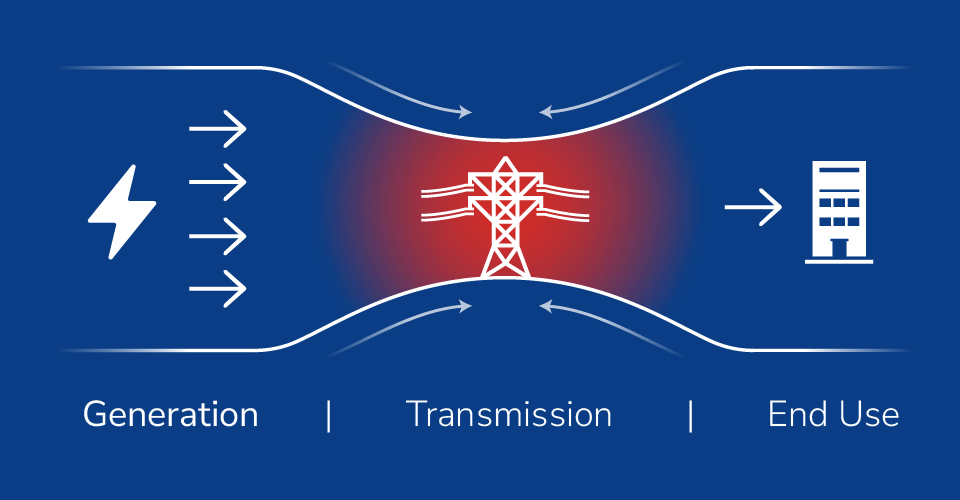
The bigger issue is structural. Much of the grid was planned for an era of slower load growth, more centralized generation, and fewer competing demands on the system. That planning model is now colliding with a very different economy, one shaped by online interactions, electric vehicles, building electrification, growth in domestic manufacturing, and a shift from traditional power plants toward a larger share of wind, solar, and battery storage. In that environment, the limiting factor is increasingly the network itself, especially transmission.
This is why the current conversation needs more context. The question is no longer simply how much electricity the economy will need. The harder question is whether the system can move power to the places where demand is rising, connect new loads and new generation fast enough, and do so with infrastructure that in many regions is already aging or congested.
A data center announcement is easy to see. A decade of underbuilt transmission is not.
Transmission Is Where Grid Stress Becomes Visible
That challenge is showing up across the country. Utilities are extending timelines for large new power connections. Developers are waiting years for transmission upgrades, new substations, and other system work needed before a project can be served reliably. Grid operators are also dealing with long backlogs of proposed power plants and battery projects that are waiting for approval to connect to the system.
The real grid challenge is not only adding power, but expanding transmission so electricity can reach where growth is happening.
According to Lawrence Berkeley National Laboratory, interconnection queues in the United States now contain more than 2 terawatts of generation and storage capacity. That number reflects how much planned supply is waiting on grid readiness rather than market interest alone. The issue is often less about whether new projects exist than whether the system can accommodate them.
Transmission sits at the center of this problem. High-voltage lines move electricity from where it is produced to where it is needed, whether that means carrying wind power from remote areas to population centers or serving fast-growing regions with rising commercial and residential demand. When transmission capacity falls behind, the effects show up quickly. Congestion increases, project timelines stretch, reliability margins tighten, and costs rise as utilities are forced into more expensive fixes.
Part of the challenge is geography, but that is only one piece of it. The transmission system was largely built around older patterns of generation and demand. Many of today’s fastest-growing sources of electricity, especially wind and solar, are being added in places far from major load centers. At the same time, demand is rising in regions shaped by population growth, manufacturing investment, digital infrastructure expansion, and transportation electrification.
The infrastructure itself also takes a long time to expand. New transmission lines can take years to permit and build. Substations and transformers are expensive, specialized, and often in short supply. Local opposition can slow projects. So can the difficulty of coordinating approvals across utilities, regulators, landowners, and in some cases multiple states. Even when everyone agrees new capacity is needed, adding it is rarely quick.
That is why transmission has become such a critical pressure point. The grid needs more than enough generation on paper. It needs the physical network required to deliver that power where growth is happening.
Electrification Is Expanding Demand from Every Direction
The economic shift now underway is making existing grid constraints harder to ignore. Electric vehicle adoption is beginning to reshape both total electricity consumption and local demand patterns. Residential charging, fleet depots, and highway fast-charging all place new demands on local distribution systems.
Those changes also add up at the regional level. As EV adoption grows, utilities have to plan for more electricity demand, different daily load patterns, and new infrastructure in places that were not built for it. With gasoline and diesel prices remaining elevated in 2026, that shift may accelerate as more drivers and fleet operators look for alternatives.
Building electrification adds another layer of pressure as heat pumps, water heaters, and other electric appliances shift energy use away from fossil fuels and onto the grid. Manufacturing is doing the same in some regions, as companies expand domestic production and pursue lower-emissions operations. In many cases, that new demand is showing up in areas where transmission capacity was already tight.
Data centers belong in that mix, but they are one category of large load seeking access to a system with limited spare capacity in many places. Their growth is significant, particularly in concentrated markets such as Northern Virginia, Texas, and parts of the West. Goldman Sachs has projected that global power demand from data centers could increase by 50 percent by 2027 and by as much as 165 percent by the end of the decade. Those numbers deserve serious attention, especially for utilities and regional planners.
They also point to a larger reality: Data center growth is happening alongside a much wider expansion in electric demand across transportation, buildings, and industry.
Years of Deferred Grid Investment Is Catching Up
Another important part of this story is deferred investment. Transmission projects take years to permit, approve, and build. So do substation expansions, transformer replacements, and many other core upgrades. In periods of relatively modest demand growth, it was possible to delay some of that work.
Today, the cost of that delay is becoming visible. The American Society of Civil Engineers has repeatedly warned that much of the nation’s energy infrastructure is aging and in need of modernization, and utilities across multiple regions have reported that lead times for major electrical equipment have stretched sharply in recent years. A grid that was once managed through incremental upgrades is now facing simultaneous pressure from new loads, changing generation patterns, and equipment constraints.
This is one reason the public discussion can become misleading. A data center announcement is easy to see. A decade of underbuilt transmission is not. A new large customer can be tied to a location and a megawatt figure. The planning assumptions that failed to anticipate overlapping growth from EVs, electrified buildings, domestic manufacturing, and digital infrastructure are harder to see, even though they sit much closer to the heart of the problem.
What the Grid Debate Should Focus on Now
A more useful way to frame the issue is to ask what kind of grid a more electric economy requires. The answer begins with transmission, but it does not end there. It includes faster processes for connecting new generation and large loads, better regional planning, modernization of substations and local delivery networks, and a regulatory framework that supports investment before constraints become urgent.
The pressure on the grid is real, and so is the growth in data center demand. Focusing too narrowly on data centers reduces a much larger infrastructure challenge to a single category of customer. The more important question is whether the grid can keep pace with an economy that is becoming more electric, more digital, and more dependent on reliable power delivery across every sector.
Transmission is at the center of that challenge, but the larger issue is grid readiness. That is the work in front of utilities, regulators, developers, and large power users alike.
Looking for clearer perspective on the issues driving the data center debate? DataBank Digest brings you analysis, insights, and the latest developments across digital infrastructure, energy, and growth.
This is the third article in a series of articles exploring the facts behind the data center debate. Read part one here or part two here, and download our full eBook, The Truth About Data Centers, for a closer look at the issues covered in this series.
If your electricity bill has crept up over the past year, there’s a clear reason for it, though data centers are only part of the story. Rates have risen across most of the country, and data centers are often named as the reason. The truth is shaped by fuel costs, aging infrastructure, market design, and how efficiently power moves across the grid, not by any single industry alone.
Data Centers Don’t Set the Price of Power
It’s a common misconception that data centers set electricity prices. They don’t. In states with regulated utilities, they pay standard commercial or industrial rates approved by state regulators. In deregulated markets, they negotiate rates the same way any other large business does. Either way, the price is set by the same system that determines what every household and business pays.
That distinction matters because it changes where the real questions belong. A data center’s electricity bill is not a private negotiation happening behind closed doors. It runs through the same regulatory approval process, the same rate structures, and the same oversight that governs every other commercial customer on the grid. If rates are climbing, the answer lies in the larger system, not in any single customer’s contract.
So What Is Actually Driving Rates Up?
Electricity bills reflect a long list of pressures, and most have nothing to do with data centers. For example, natural gas prices rose 56% in 2025 compared to the year before, driven largely by overseas demand for U.S. liquefied natural gas exports. Utilities have also poured money into aging infrastructure replacement, wildfire mitigation, and grid hardening after years of extreme weather events. These costs are recovered through rate increases regulators approve.
Rising demand from electric vehicles, home electrification, and industrial reshoring adds further pressure, along with policy costs like clean energy fees passed directly to ratepayers. Add it all up, and the story behind your bill has very little to do with any single industry.
Growth and Higher Bills Don’t Always Move Together
Many people assume that rising demand automatically means rising prices, but the data often tells a different story. A Lawrence Berkeley National Laboratory report found that states with the fastest-growing electricity demand often saw smaller rate increases, and in some cases prices actually fell. PG&E has projected that data center growth in its territory could lower average household bills by up to 2%.
Texas, home to one of the country’s largest AI data center buildouts, operates under ERCOT, the grid operator for most of the state. ERCOT runs on real-time pricing, where electricity costs shift throughout the day based on actual supply and demand rather than being locked in through long-term capacity contracts. Rates there rose about 3.8% in 2025, close to the 2.9% inflation rate.
Some PJM states, part of a separate grid operator spanning much of the mid-Atlantic and parts of the Midwest, use a capacity auction model instead, where utilities pay in advance to guarantee power availability years ahead of when it’s needed. While data centers are often blamed for the strain on PJM’s capacity market, several other factors play a role too, including a slow interconnection process that has left new generation, some of it lower cost, stuck in a lengthy approval backlog instead of coming online.
California tells a similar story: Rates rose just 2.1% in a year when national electricity prices jumped 6.9%, even as the state added significant data center capacity. Growth and moderate rate increases can coexist. The market rules governing how power is priced matter more than the presence of data centers themselves.
The Bottleneck Isn’t Generation. It’s Delivery.
Most of the public debate over data center energy use focuses on how much power they consume. That framing misses the real cost driver: getting power from where it’s generated to where it’s needed. The country can generate enough electricity to meet demand. The constraint, and the source of most delays and costs, is an aging transmission grid built for a different era.
Dominion Energy in Virginia has faced multiyear delays connecting new facilities because transmission infrastructure isn’t ready. PG&E has said substation upgrades for large interconnections can take five years or more. Every major regional grid operator outside of Texas has reported it will miss federal deadlines for transmission upgrades. This is a systemic problem decades in the making. It existed long before the current data center buildout, and it will require the same investment and planning regardless of how fast that buildout continues.
If demand and delivery are two pieces of the puzzle, efficiency is the third, and it’s an area where the industry has spent decades improving on its own initiative.
Long before regulation required it, data center operators created Power Usage Effectiveness, a metric comparing total facility power draw to the power actually delivered to computing equipment. A score of 1.0 would mean zero energy lost to cooling or overhead, a theoretical ideal no facility reaches. The industry average today stands at 1.56, and leading facilities operate between 1.2 and 1.3.
DataBank has made the same commitment. Our own PUE improved from 1.81 in 2020 to 1.5 by the end of 2025, a 17% improvement driven by ongoing investment in cooling technology and facility design. That progress reflects an operating discipline the industry built for itself, long before anyone required it.
The Full Picture
Rising electricity bills are real, and the frustration behind them is fair. The full picture shows a national grid under pressure from many directions at once, with data centers representing one piece of a much larger story utilities and regulators have been managing for years.
Fuel costs, aging infrastructure, market design, and transmission constraints all played a role long before this current wave of data center growth. The industry’s own track record on efficiency shows a sector already working to shrink its footprint rather than expand it unchecked. Getting your bill under control means addressing the grid as a whole, not singling out any one piece of it.
Want to stay ahead of the trends shaping digital infrastructure? DataBank Digestdelivers analysis, insights, and the latest news from the world of colocation and digital infrastructure.
This is the second in a series of articles exploring the facts behind the data center debate. Read part one here, and download our full eBook, The Truth About Data Centers, for a deeper look at the issues covered in this series.
Data centers are in the news for reasons that make a lot of people uncomfortable. New facilities are appearing in communities that weren’t expecting them. Electricity bills are rising. Questions about water use, noise, and neighborhood impact are real and deserve straight answers.
These are legitimate concerns, and DataBank is committed to addressing them directly rather than letting the debate outpace the facts.
Your Day Is Already Running on This Infrastructure
Most people think of essential infrastructure as the things they can see: power lines, water towers, roads and bridges. Data centers belong in that same category but they’re invisible by design. What powers your phone, your bank app, and your streaming service is a building full of servers running somewhere, around the clock, every day of the year.
Think about a typical day. Your alarm goes off, you check the weather, scan your email, and order coffee through an app on your way out the door. Every one of those interactions touches a data center. So does the navigation that reroutes your commute, the video call you join at the office, the prescription your pharmacy fills automatically, and the news alert that arrives while you’re making dinner.
By the time you fall asleep, you’ve touched data center infrastructure thousands of times. This is the infrastructure required for modern life as we all know it, and stepping away from it, even for a day, isn’t really an option anymore.
Download our full eBook, The Truth About Data Centers, for a deeper look at the facts behind the concerns communities are raising.
What 24 Hours Without Them Would Look Like
Data centers aren’t a new invention. They powered the early internet, enabled Web 2.0, made smartphones possible, brought streaming into living rooms, and kept businesses running when the world went remote during the pandemic. For decades, they have been the foundation beneath every major shift in how we live and work.
AI is the latest chapter in that story, accelerating demand faster than anyone anticipated, but the dependency was already there long before the first ChatGPT query was ever typed.
Consider what a single day without data centers would actually look like:
Stock markets halt and payroll systems go offline
At the office, shared documents are inaccessible and video calls won’t connect
Cash becomes the only payment option, at lunch, at the gas station, everywhere
Hospitals work from paper records and flights are grounded
The 911 dispatch system runs on backup protocols
Weather forecasting goes dark, and GPS navigation becomes unreliable
Your bank balance is inaccessible, and online pharmacies can’t fill prescriptions
This list doesn’t stop there. Data centers are woven into the fabric of modern life in ways most people never have reason to consider.
None of this is speculation about what might happen someday. It reflects what modern life already depends on and why getting this right matters for everyone.
The demand was already substantial before AI arrived. Now it is growing faster than at any point in the history of the internet.
Growth and Responsibility Aren’t Opposites
We understand why rapid data center expansion raises questions. It’s visible, it’s fast, and it’s happening in communities already managing real pressures around energy costs and land use. Those concerns are valid, and responsible operators have an obligation to take them seriously rather than expect the public to simply accept growth as inevitable.
Understanding why the demand exists is only part of the conversation. The questions communities are raising go further, touching on electricity costs, strain on local power grids, water consumption, and the overall impact of large facilities moving into their neighborhoods. Those concerns deserve the same honest, fact-based treatment as the demand argument.
In the next article in this series, we take a closer look at one of the most frequently misunderstood pieces of that puzzle: the relationship between data centers and your electricity bill.
Want to stay ahead of the trends shaping digital infrastructure? DataBank Digest delivers analysis, insights, and the latest news from the world of colocation and digital infrastructure.
AI is reshaping nearly every corner of the technology industry, and its relationship with energy is one of the most consequential examples. The same technology driving unprecedented growth in power demand is also one of the most powerful tools available for managing that demand more intelligently.
According to the International Energy Agency, global data center electricity consumption is projected to nearly double by 2030, reaching close to 945 terawatt-hours, which is roughly equivalent to Japan’s entire annual electricity use. AI is the primary driver of that growth. It’s also one of the best tools we have for managing it.
For IT leaders and infrastructure decision-makers, the opportunity may outweigh the challenge. AI is already helping operators run leaner, smarter networks, and the organizations that get ahead of that curve will have a real advantage as energy costs and infrastructure demands continue to rise.
The Problem Side: AI’s Growing Energy Appetite
The scale of AI’s energy demand is difficult to overstate. Training and running large AI models requires massive amounts of compute, and that compute lives in data centers that run around the clock. AI is accelerating electricity consumption at a pace the industry has not seen before. For networking infrastructure specifically, higher-density AI workloads mean more data moving faster between more devices.
The same capabilities that make AI so compute-intensive also make it remarkably effective at finding inefficiencies that humans would never catch. For example, operators are now using AI-driven monitoring tools to analyze network traffic patterns in real time, dynamically rerouting workloads to reduce congestion, lower latency, and cut unnecessary power draw. The result is a network that adjusts itself continuously rather than running at static capacity.
The following examples illustrate where AI-driven efficiency gains are showing up most clearly across networking, cooling, and interconnection infrastructure.
Network Traffic and SD-WAN
Software-Defined Networking, intent-based routing, and AI-assisted telemetry are increasingly central to this approach, giving operators the ability to automate routing and bandwidth allocation across both on-premises and cloud infrastructure.
SD-WAN is one area where efficiency gains are becoming particularly tangible. Traditional wide-area networks were built for predictable, centralized traffic patterns that no longer reflect how enterprises actually operate. AI-enhanced SD-WAN platforms prioritize traffic dynamically, routing performance-sensitive workloads through the lowest-latency paths while deprioritizing less time-sensitive traffic.
As enterprises lean into multi-cloud and hybrid cloud environments, AI-based traffic optimization is emerging as one of the defining trends driving SD-WAN adoption, with the market projected to reach $35 billion by 2030. The practical result is not just better performance — it is less wasted bandwidth and lower energy consumption across the network fabric.
Cooling Optimization
AI is also transforming how data centers manage cooling, historically one of the largest energy drains in any facility. Machine learning models can predict thermal loads before they occur and adjust cooling systems proactively rather than reactively. That approach works by training neural networks on thousands of sensor data points to predict temperature and pressure conditions up to an hour in advance.
As operators adopt direct liquid cooling for high-density AI compute racks, the physical network topology shifts alongside it — denser rack configurations, shorter interconnect distances, and a re-evaluation of optical versus copper trade-offs at the rack and row level. These topology changes carry their own energy implications, which means cooling infrastructure decisions and network architecture decisions can no longer be made in isolation.
Interconnection and Network Slicing
On the interconnection side, AI-driven network slicing allows operators to dynamically allocate and reconfigure resources on demand rather than provisioning for peak capacity that sits idle most of the time. Predictive maintenance is adding another dimension to this efficiency story. AI models continuously monitor telemetry from network switches, routers, and optical transceivers to detect performance degradation before failure occurs.
By flagging at-risk hardware early, operators can schedule replacements during planned maintenance windows rather than responding to emergencies — avoiding the unplanned load spikes and inefficient power draw that reactive fixes typically cause. Together, these approaches are reframing network efficiency as an ongoing operational discipline rather than a one-time design decision, and one that improves continuously as AI systems learn.
These efficiency gains do not exist in isolation. Where enterprises choose to run their workloads plays an equally important role in determining how well their infrastructure strategy holds up as AI demands continue to grow.
Infrastructure Strategy is the New Competitive Advantage
The next few years will likely bring a sharper divide between organizations that treat energy efficiency as an afterthought and those that build it into their infrastructure strategy from the start. A significant part of that strategy is deciding where workloads run. Legacy enterprise data centers are often not designed for today’s power densities, and retrofitting them is rarely practical or cost-effective.
Modern colocation facilities offer a purpose-built alternative, combining high-density power capacity, advanced cooling infrastructure, and the network connectivity AI workloads require, without the capital burden of building and operating it yourself. For IT and sustainability leaders balancing growing compute needs with ESG commitments, that environment is increasingly difficult to replicate independently.
Hardware improvements will help, as newer GPU architectures are delivering more compute per watt than their predecessors, but they will not be enough to offset the volume of AI workloads coming online. Software-level approaches like model distillation are gaining traction as a practical way to reduce inference energy costs at scale. Organizations that get ahead of these approaches now will be better positioned as energy costs and sustainability scrutiny continue to rise.
The Path Forward Starts with Infrastructure Strategy
AI’s relationship with energy efficiency is genuinely complicated, and anyone claiming it is purely a problem or purely a solution is not seeing the full picture. The demand side is real and growing. So is the opportunity to use AI as a tool for smarter, leaner infrastructure operations.
The organizations best positioned to navigate this are those that take both sides seriously, investing in the right infrastructure partnerships, staying current on efficiency innovations, and treating energy strategy as part of their broader technology roadmap rather than a facilities problem to address later.
Sustainability has become considerably more complicated for the data center industry heading into 2026. Political shifts, policy changes, and other new market dynamics are creating an environment where progress may become harder to achieve.
Here are five predictions for how new trends and market forces will reshape data center sustainability in 2026.
Prediction #1: Greenhushing Will Replace Transparency
The trend toward greater sustainability and transparency will somewhat reverse in 2026. We’re already seeing cases where companies across many different industries are pulling back from public commitments and reducing visibility into their environmental programs—a trend now known as “greenhushing.”
This isn’t because sustainability efforts are stopping or even slowing down. It’s because the political and legal environment has made too much transparency risky. A large hyperscale cloud provider recently removed its net zero target from its website despite continuing to work toward this goal. In many other cases, terms like “ESG” are being rebranded to avoid too much political scrutiny.
This creates a dilemma for data center operators. Customers’ RFPs still require renewable energy commitments and sustainability certifications, and investors still evaluate ESG performance. Yet, the appetite for public messaging has diminished significantly.
The result is a disconnect where meaningful sustainability work continues behind the scenes while public communication will become more cautious or disappear completely. In response, data centers will need to balance legitimate customer and investor requirements against the risks of visible or perceived ESG-related advocacy in 2026.
Prediction #2: The Renewable Energy Cliff Draws Closer
Federal tax incentives are continuing to drive a surge in solar and wind deployments through mid-2026, but chances are good that the momentum will hit a wall soon after. Projects must either (1) begin construction by mid-2026 and be placed into service by 2030, or (2) be placed into service by the end of 2027 to receive clean energy tax credits.
This compressed timeline is forcing data center operators to accelerate procurement decisions and lock in renewable power agreements now or face a significantly different market landscape to address renewable and clean energy targets.
The consequences may extend beyond individual project timelines. When these incentives disappear, new solar and wind capacity will slow while older coal plants will remain operational longer than planned. Data center operators working toward net zero targets may find few options for new renewable power purchases.
Companies will likely turn to longer-term renewable energy procurement now, while those who don’t may face higher costs and limited supply in a constrained market. The window for taking advantage of current renewable energy economics is closing fast.
Prediction #3: Market Consolidation Follows the Power
The data center boom attracted a flood of new entrants over the past two years. Developers from other sectors recognized opportunity and rushed in, acquiring land and requesting power without always securing the infrastructure or capital needed to execute. This speculative activity is creating artificial scarcity and inflated competition for resources.
Yet not all these companies will survive 2026. The combination of limited available land, constrained power supply, and substantial capital requirements will force weaker players out. Chances are good that companies that purchased property without confirmed power access will struggle to deliver. Those without deep pockets or committed customers will find themselves unable to compete.
The resulting consolidation will benefit those established operators with proven execution capabilities. As speculative players exit, pressure on land and power resources should ease. The market correction will be painful for some, but it should ultimately push the industry toward more sustainable growth patterns built on real demand instead of speculative bets.
Prediction #4: Cooling Strategies Shift Toward Water Conservation
Data center operators are increasingly adopting waterless cooling technologies and closed-loop systems as part of water-conscious facility design strategies in areas of high water stress. Traditional evaporative cooling remains energy efficient in suitable climates and appropriate in many locations, but operators are recognizing that cooling choices should match local conditions rather than following a one-size-fits-all approach.
Closed-loop chilled water systems are becoming more popular because they recirculate coolant continuously with minimal or no water loss. Some facilities are exploring entirely waterless approaches using advanced air cooling or alternative fluids. However, local water availability is becoming an increasingly important factor in that cost equation. In water-stressed regions or communities particularly concerned about water usage, the economic and reputational costs of evaporative cooling may outweigh its energy efficiency advantages, making closed-loop and waterless systems more attractive.
The key change is strategic thinking about cooling decisions. Rather than defaulting to a single approach across all facilities, operators are evaluating local water availability and community concerns when designing cooling infrastructure. This geographic sensitivity to water resources represents smarter engineering practice as data centers balance energy efficiency against environmental stewardship and community relations.
Prediction #5: Nuclear, Geothermal, and Energy Storage Gain Momentum
While solar and wind incentives face expiration, nuclear power, geothermal energy, and energy storage systems retained their tax credits, creating a policy environment that favors these technologies through 2027 and beyond.
Data center operators are responding accordingly. Nuclear and geothermal power offer the constant baseload capacity that facilities require, without the intermittency challenges of renewables. Energy storage systems provide grid flexibility and backup power while supporting renewable integration. These technologies align with customers’ sustainability requirements while offering operational advantages.
The challenge is getting these technologies deployed quickly enough. Small modular reactors and advanced nuclear technologies show promise but face lengthy development and approval processes. Energy storage supply chains need domestic scaling to meet demand. Despite these hurdles, expect accelerated investment in both technologies as the renewable incentive cliff approaches and operators seek alternative paths to clean energy goals.
Preparing for What Comes Next
Data center operators face a different sustainability situation in 2026 than anyone expected two years ago, but the core business drivers haven’t changed.
The operators who succeed will be those who stay focused on these fundamentals and keep their heads down when necessary, building the right infrastructure for local conditions, and making decisions based on what customers request rather than whatever’s dominating the news cycle. When politics change again, the companies that spent their time executing will be better off than those who spent it talking.
Want to stay ahead of the sustainability trends reshaping the data center industry? Check out DataBank Digest for more insights on data center industry trends and infrastructure strategy.
Data center construction trends reflect changes in power density, cooling design, sustainability requirements, and deployment speed.
The data center construction industry enters 2026 facing challenges that would have seemed unimaginable just two years ago. Rapid growth is straining every aspect of traditional construction approaches, from securing skilled labor to managing unprecedented project scales.
The fundamentals that worked for decades no longer apply. Single campuses now require 4,000 workers instead of 750. Customer specifications shift mid-deployment as technology evolves faster than buildings can rise. Construction teams must adapt to a new reality where flexibility and forward planning matter more than following established playbooks.
Based on what we’re seeing across our projects, here are the trends that will define data center construction in 2026.
Talent Shortage Will Be the Biggest Challenge
The skilled labor shortage in the data center industry will intensify significantly in 2026 as leased capacity from 2024 and 2025 finally comes online. The second half of 2026 into 2027 will see massive activation across the country, and the industry simply doesn’t have enough qualified workers to meet demand.
Project scales have multiplied beyond recognition. Where peak crew sizes once reached 750 workers, sites like DataBank’s Red Oak campus will hit 4,000 to 5,000 workers by early 2026. That’s the size of a small city, requiring entirely different management approaches than data center builds in the past.
Labor costs are rising accordingly. Workers are relocating from markets like Arizona, where power constraints have slowed construction, to booming regions like Dallas. Increased wages, per diem expenses, and relocation costs are adding up. Some operators are even establishing on-site housing with high-end amenities to attract workers.
The operators who secure skilled labor now, through early contractor commitments and creative workforce strategies, will have significant advantages over those waiting until projects break ground.
Costs Will Continue Rising
Cost increases are hitting every aspect of data center construction: power, materials, and especially people. While DataBank maintains multi-year stocking programs to lock in material pricing and minimize tariff impacts, labor cost escalation is harder to control given the talent shortage.
The type of construction matters significantly for cost management. Operators building exclusively for AI workloads can opt for cheaper approaches like steel buildings with metal panels rather than robust precast structures. However, versatile construction capable of serving any client type costs more upfront while providing long-term flexibility.
Leasing rates are rising to reflect these realities. The question becomes whether operators can absorb increased costs or must pass them to customers. Those with strong vendor relationships, economies of scale through project bundling, and long-term procurement strategies will be better positioned to manage cost pressure than competitors making reactive, project-by-project decisions.
Construction Innovation Will Address Labor Challenges
The industry is turning to technology and new construction methods to offset the skilled labor shortage. AI tools are already analyzing pull schedules to identify float and delays that would take humans hours to find manually. Robotics like autonomous site scanners perform 360-degree analysis, comparing progress against 3D BIM models with greater accuracy than human inspections.
These tools won’t immediately replace construction roles. The industry still needs experienced boots on the ground, particularly the skilled general foremen and project leaders who manage complex deployments. Quality control and administrative positions may evolve over the next five years as AI handles more analytical work.
Modular construction and prefabrication are accelerating in parallel. Electrical components, power rooms, and building modules assembled in controlled factory environments address labor constraints more effectively than on-site work. A crew of 20 to 50 workers in a factory can be more productive than managing thousands on a sprawling campus, where workers lose two hours daily just commuting to and from the site.
Managing 4,000-plus workers on a single site can also lead to safety challenges that didn’t exist at smaller scales. Setting clear rules and maintaining safety protocols becomes critical when construction sites rival small cities in population.
Financial Pressure Will Drive Market Consolidation
Power infrastructure costs are creating a significant barrier to entry. Operators pursuing geothermal energy, high-pressure gas lines with turbines, or small modular reactors face capital requirements in the hundreds of millions before a single tenant moves in. Without committed customers, it’s a major challenge to secure approval for an additional $200 million to $300 million in power infrastructure on top of base construction costs.
Utility commitments amplify the risk. Non-refundable deposits of multi-millions of dollars force developers to decide who will roll the dice and who won’t. Operators with purchase power agreements and facility engineering agreements already locked in can build more speculatively because they’ve de-risked the power equation. Those without these commitments will struggle.
Creditworthiness issues compound the challenge. Many AI-focused tenants lack strong credit profiles, forcing hyperscale cloud providers to serve as backstops for lease financing. This dynamic will intensify in 2026, particularly for shorter-term leases. The combination of massive power infrastructure costs and tenant credit concerns will separate well-financed operators with proven execution from speculative players who entered the market recently. Some will exit entirely when the financial reality becomes insurmountable.
Customer Design Requirements Will Keep Changing
Every liquid cooling deployment involves different customer requirements, and specifications continue shifting mid-project as technology evolves. For example, at our Red Oak campus, a customer’s requirements shifted from nine liquid-cooled data halls to seven mid-deployment as network capacity needs outweighed GPU processing requirements.
Design variations are significant. Some deployments require complex programmable logic controller integration while others use simpler approaches. Cooling distribution unit placement varies from exterior-mounted to in-cabinet configurations. Air cooling remained relevant even in late 2025, with enterprise customers and some financial firms still specifying significant air-cooled capacity alongside liquid infrastructure.
The key is building flexibility into designs from the start rather than attempting expensive retrofits later.
Permitting and Community Engagement Will Intensify
Despite administration comments about fast-tracking AI data centers, the reality on the ground is moving in the opposite direction. Permitting processes are becoming more delayed, with additional third-party engineers reviewing applications and more stringent approval requirements. This trend will continue as a significant challenge over the next few years.
Community engagement has become essential to successful project development. Many communities harbor misconceptions about data centers, conflating them with AI development or robotics manufacturing rather than understanding they enable everyday digital services. Education and early relationship building with local stakeholders are now critical components of the development timeline, not optional add-ons.
Building for What’s Next
The only certainty in data center construction for 2026 is uncertainty. Technology will evolve faster than project timelines. Customer requirements will shift mid-deployment. Costs will surprise even the most careful planners.
Success belongs to construction teams built for adaptation rather than those optimized for efficiency in stable conditions. The ability to pivot quickly, maintain optionality in designs, and solve problems creatively matters more than following the playbook that worked last decade.
Want to see how DataBank is navigating the evolving data center construction landscape? Check out DataBank Digest for more insights on managing talent challenges, cost pressures, and the innovative approaches shaping infrastructure development in 2026.
AI-driven power demand refers to increased energy requirements from AI workloads, which data centers manage through efficiency improvements and infrastructure planning.
A version of this article first appeared in The AI Journal.
The current AI boom has quickly created unprecedented demand for data centers, and with it, exponentially higher demands for power.
The estimates and trends would have seemed impossible just a short time ago. Recent research projects that power requirements from AI data centers could grow more than 30 times by 2035, with some facilities scaling from traditional 10-50MW power requirements to 100-500MW or more.
Can the current grid handle such explosive growth without triggering brownouts or forcing a return to fossil fuels?
Is this growth sustainable in the long term?
While many of today’s headlines seem to paint a gloomy picture of these new power demands —and data centers’ role— a closer look shows that there’s no reason to panic.
Innovative Power Strategies Taking Hold
The industry isn’t waiting for these problems to solve themselves. Data center operators are already rolling out proven technologies that tackle power constraints head-on. These new innovations are proving to be effective responses to growing power demands and are helping prevent what could become an infrastructure crisis.
A 2025 Duke University study found that if data centers can be flexible for just 0.25% of their operating time —representing just 22 hours per year— the U.S. grid can accommodate 76GW of new data center load without building new power plants.
Forward-thinking data center operators are now implementing a wide range of new strategies to deliver exactly this type of grid-connected flexibility.
Energy Storage Systems
For example, advanced storage technologies are quickly revolutionizing how data centers manage power fluctuations and grid interactions. Beyond traditional lithium-ion systems, data centers are implementing diverse storage solutions, including alternative chemistries like aluminum-ion and sodium-ion systems, solid-state technologies that offer enhanced safety profiles, and flow batteries that provide scalable, long-duration storage capabilities.
Additionally, emerging approaches such as thermal storage systems and gravity-based storage are also gaining traction for their ability to store large amounts of energy with minimal degradation over time.
These systems excel at managing the daily “duck curve” of renewable energy availability: storing excess solar generation during peak production hours and releasing it during evening demand spikes. This capability allows data centers to maintain consistent operations, reduce strain on the grid during peak demand periods, and maximize their use of renewable energy sources.
Virtual Power Plants
Additionally, virtual power plant (VPP) networks are transforming facilities from simple energy consumers into active grid participants. By connecting their storage or backup generation systems into coordinated networks, data centers provide grid stability services, participate in demand response programs, and optimize renewable energy utilization across entire regions.
DataBank has implemented VPP technology in California, demonstrating how storage systems can operate profitably while supporting renewable integration and reducing peak demand on fossil fuel plants. This example provides valuable insights into how data centers can contribute to grid stability while maintaining operational excellence.
While these flexibility innovations show significant promise, they also highlight the fundamental infrastructure challenges that must be addressed to fully unlock AI’s potential.
Why We Need to Focus on the Grid
While so much attention tends to focus on whether the U.S. can generate enough power for AI’s explosive growth, the real challenges lie in two areas: making data centers more flexible so they can work with existing grid capacity and upgrading transmission infrastructure to deliver power where it’s needed.
Flexibility Over Generation
The data center industry isn’t necessarily facing a fundamental power generation problem. The U.S. grid already maintains substantial reserves, with operators typically utilizing only about 50% of available generating capacity by design. This conservative approach ensures adequate power remains available to meet peak demands that occur during a small fraction of the time, such as the coldest winter mornings and the hottest summer nights.
This creates real potential for new operations strategies, such as demand response capabilities, energy storage systems that shift power usage to off-peak hours, and workload management that schedules non-urgent computing during times of grid abundance. Google’s recent agreements with Indiana Michigan Power and Tennessee Valley Authority represent the first implementations of data center demand response targeting machine learning workloads specifically.
In these cases, Google will temporarily reduce or pause energy-intensive AI and ML tasks during peak demand periods, enabling their data centers to operate as more flexible resources that don’t further strain the electrical grid.
The Transmission Bottleneck
While flexibility solutions help, the real constraint isn’t power generation capacity but utilities’ ability to deliver electricity where it’s needed. Transmission and distribution limitations, rather than generation shortfalls, are creating the bottlenecks that utilities must address through infrastructure investments.
The numbers tell the story. For example, Dominion Energy’s transmission constraints have created multiyear backlogs for Northern Virginia data centers, with relief coming only when new grid infrastructure comes online in 2026. This pattern repeats across major markets, where planning and construction of new transmission lines can take five to ten years, depending on regulatory approval, permitting, and right-of-way acquisitions.
These timelines simply don’t line up. While data center developers can build facilities in two to three years, the time required to complete associated interconnection studies and infrastructure upgrades usually spans four to eight years. Goldman Sachs Research estimates that $720 billion of grid spending through 2030 may be needed, but the infrastructure development cycle simply can’t keep pace. This explains why operators are increasingly forced into expensive behind-the-meter (BTM) solutions rather than waiting for grid connections that may take half a decade or more.
Next Steps for Stakeholders
Moving forward means addressing both sides of the equation: transmission bottlenecks and data center innovation working together. While grid modernization, faster permitting, and better transmission technology are essential, data center operators are also stepping up with solutions that reduce grid dependence. The combination of smarter infrastructure and more flexible facilities will unlock sustainable AI growth.
The industry response shows that progress requires both utility infrastructure and data center adaptation. As the Duke University research demonstrates, even minimal data center flexibility can accommodate massive new capacity without additional generation. Meanwhile, behind-the-meter power solutions, clean energy adoption, and strategic facility placement are creating new pathways that work around current grid limitations.
Making this work requires coordination on multiple fronts. Utilities need to update their planning and speed up approvals while data center operators continue to utilize flexible power solutions such as energy storage, demand response, and behind-the-meter solutions. Regulators should prioritize transmission investment while encouraging data center innovations that support grid stability. Both sides are bringing solutions to the table.
The data center industry is adapting with proven technologies while pushing for better grid infrastructure. This isn’t a crisis spinning out of control but more of a two-sided infrastructure challenge where both transmission upgrades and smarter data center design will create more efficient and sustainable digital infrastructure. The question isn’t whether one side can solve this alone, but how quickly both transmission modernization and data center innovation can work together to power AI growth sustainably.
By Tony Qorri, Vice President of Construction, DataBank.
The artificial intelligence revolution has completely changed so many aspects of virtually every industry today. Organizations have already achieved game-changing, permanent improvements and continue to envision more innovations and benefits.
At the same time, AI is so transformative that it also presents new questions as many companies must develop strategies to take advantage of all it has to offer, outpace their competition or both.
The data center industry is no different, and one subset of our business —data center design and construction— could be affected even more than most. Like any other business, we’re accustomed to responding to market demands and other external factors to constantly pivot when building traditional enterprise data centers.
If those past conditions represented once-predictable winds of change, AI has now created a perfect storm of innovation, opportunity and transformation when designing and building the next generation of AI data centers. Once-standard, long-accepted practices and approaches have now become outdated almost overnight, forcing data center operators and their customers to come up with new ways of thinking related to data center construction.
AI Infrastructure Flexibility
This new environment calls for infrastructure flexibility that adapts as customers’ changing requirements. That means offering multiple configurations for power, space and cooling to accommodate their future computing needs without complete redesigns.
While that flexibility to date has served enterprise and hyperscale customers effectively, AI workloads are now presenting an entirely new dimension. Data center builders are now experiencing “hard right and hard left” requests from different customers. For example, one might need complete air-cooling for network infrastructure while another is looking for extensive liquid cooling equipment for GPU-intensive operations.
These aren’t minor variations. They represent fundamentally different infrastructure approaches and completely new construction strategies.
AI data centers require specialized approaches that go far beyond traditional design considerations and project management approaches. In some cases, they present logistical and technical complexities that didn’t exist just a short time ago.
Liquid Cooling
The shift to liquid cooling represents one of the most dramatic construction changes. Until recently, most traditional data centers used raised floors and perimeter cooling, but more intense AI workloads are now causing facilities to replace computer room air handler units with cooling distribution units. Those systems use secondary chilled water loops made from welded stainless steel components.
This change creates a domino effect that now requires specialized welding capabilities and stronger structural designs to support heavier thermal storage systems. These implications are affecting once-standard construction timelines and processes. It’s more challenging to attempt to fit more specialized work into the same schedules while also engineering new structural designs.
Supply Chain Constraints
Supply chain constraints add another layer of complexity to AI data center construction. Past procurement approaches can be inadequate when attempting to source specialized materials such as high-grade copper components or stainless steel piping and control valves. As a result, we face the risk of dealing with limited availability and extended lead times.
In response, data center builders need to go two to three tiers deeper into the supply chain than in the past. For example, instead of working exclusively with switchgear vendors, form direct relationships with breaker manufacturers and cable suppliers. It’s evidence of more dominos falling: We need to forecast facility requirements years in advance and begin negotiating letters of intent for raw materials before the actual contracting occurs.
This deeper engagement creates a partnership model where suppliers now actively participate in the success of the project as opposed to simply fulfilling purchase orders. This new approach still requires careful attention to economies of scale, but it helps improve the supply chain security that AI infrastructure timelines now demand.
Labor Challenges
Specialized mechanical and electrical trades are in critically short supply today, creating the most challenging aspect of AI data center construction.
Estimates suggest that in North America an additional 439,000 new workers are required to meet pending construction demand for data center projects. Additional research showed the total number of unfilled skilled trade jobs could hit two million by 2033.
If not managed effectively, this growing gap can force construction timelines and costs into unpredictable territory where past relationships with general contractors and current project management processes could come up short.
Builders need to forecast labor requirements up to three years ahead and, if appropriate, bring contractors into pre-construction activities three to six months earlier. Instead of following conventional bidding procedures, owners should engage contractors in design evolution and resource planning before breaking ground.
The scale of this challenge is evident across the industry. Projects that begin with predictable labor costs often face dramatic shifts as construction progresses. It’s not uncommon to see 20% to 30% price increases for mechanical and electrical trades between phases of the same development.
That’s just the new reality of sourcing qualified workers from other markets with increased per diem costs and competitive wages. It’s reached the point where labor escalation is now recognized in multiple active developments and markets.
Adapting to the Speed of AI
One thing is clear: Data center construction needs to quickly adapt to keep pace with the AI revolution. While these new challenges are unprecedented, they may also present new opportunities for operators who can identify new solutions early in the process.
Success now requires treating every aspect of construction—from supply chains to labor partnerships—as strategic investments rather than transactional relationships. As AI workloads continue to evolve, the data center operators who thrive will be those who view adaptation not as an obstacle but as a potential differentiator in an industry being redefined in real time.
The infrastructure choices organizations make for AI workloads have significant implications for performance, cost, security, and compliance. Our survey reveals that while cloud remains important, a major shift toward hybrid and distributed infrastructure is already underway.
Today’s Reality: Cloud Dominates, But Not Exclusively
Currently, nearly two-thirds (64%) of AI workloads run in either public cloud (49%) or private cloud (15%) environments. Another 15% favor third-party SaaS/web-based platforms like Salesforce.
On-premises and colocation data centers represent a much smaller portion today – just 22% of AI workloads according to our survey (15% on-premises/company-controlled and 7% colocation data centers).
This makes sense. Public cloud and SaaS solutions offer easy starting points for AI adoption, with minimal upfront investment and quick deployment times. However, as AI implementations mature, the limitations of a cloud-only approach become apparent.
Tomorrow’s Strategy: The Hybrid Shift
Looking ahead five years, 96% of respondents expect their AI infrastructure distribution to change. Only 4% report “no significant changes planned.”
Over half of respondents are planning substantial expansions in physical infrastructure:
31% will build more AI-dedicated private/on-premises data centers
22% plan to expand colocation data center deployments
Meanwhile, 43% still expect to increase their reliance on cloud for AI workloads, confirming that the future isn’t about choosing between cloud and physical infrastructure. It’s about strategically combining both.
What’s Driving the Hybrid Approach?
When we asked which factors are most critical in choosing between cloud and colocation for AI workloads, three priorities emerged:
Security and compliance requirements (37% rated this most critical): Colocation facilities like those operated by DataBank provide robust physical security features including 24/7 surveillance, restricted access controls with biometric scanners and security guards, and secure equipment cabinets. They’re also certified with various industry and regulatory compliance standards such as ISO 27001, SOC 1/2, and PCI DSS.
Performance considerations (33%): Low-latency requirements for advanced AI applications demand infrastructure closer to where data is generated and consumed.
Scalability and flexibility (27%): Different workloads have different needs; hybrid approaches allow organizations to optimize each application’s infrastructure placement.
As Philips’ Chief Innovation Officer Shez Partovi noted in the research process: “In a de-globalized world, there is an increasing need to ensure that data is housed and processed in compliance with the specific country or jurisdiction, which is leading to a more decentralized approach.”
Geographic Distribution: AI Is Going Local
Perhaps, the most striking finding in our survey is the extent to which AI is driving geographic expansion of infrastructure. Over three-quarters of respondents (76%) expect their infrastructure to expand geographically over the next five years:
44% need expansion to be closer to data sources
32% need expansion to be closer to end-users
Only 11% anticipate consolidation into fewer, but larger, data hubs, while just 13% expect no significant impact on geographic distribution.
This geographic dispersion addresses multiple needs simultaneously. For compliance, it enables organizations to meet data sovereignty requirements by storing and processing data within specific countries or jurisdictions. For performance, it reduces latency for real-time AI applications like autonomous vehicles, smart city sensors, and industrial IoT.
“We operate in every corner of the world and there are obviously sovereign data requirements,” said Chris Bedi, ServiceNow’s Chief Customer Officer. “To make sure we are serving customers in each region, we need to have a geographically dispersed data center strategy.”
Training vs. Inference: Different Workloads, Different Strategies
Interestingly, while inference is becoming more distributed, AI training is moving in the opposite direction. Nearly three-quarters of respondents (73%) said that “training will be centralized while inference will be more distributed.” This split makes technical sense.
Training requires massive computational power and benefits from centralized, GPU-rich environments. Inference, by contrast, needs to happen close to users and data sources to minimize latency and ensure compliance with local regulations.
Challenges in Scaling Geographically
Expanding AI infrastructure across multiple regions isn’t without challenges. When we asked about major obstacles to geographic scaling, respondents cited:
Security risks in distributed AI (27%)
Access to GPU infrastructure for training (25%)
Data sovereignty and compliance (23%)
Network and latency concerns for inference (20%)
Cost of infrastructure in key regions (19%)
Power and energy constraints (18%)
According to DataBank CEO Raul Martynek, infrastructure readiness varies significantly by location. “It’s not just access to GPUs that matters. You also need somewhere to put them. Not all data centers can accommodate the power and cooling requirements of these infrastructures, and new facilities take time to deploy. That’s why we developed a Universal Data Hall Design for all our new data center builds. It allows us to configure each data hall more quickly in a new facility for whatever infrastructure need that market might have – from traditional air-cooled configurations capable of 15-30kW per cabinet, to liquid-cooled systems capable of 100-200kW per cabinet.”
The Bottom Line
The future of AI infrastructure isn’t an either/or proposition between cloud and physical data centers. It’s a strategic hybrid approach that places workloads where they perform best, meet compliance requirements, and deliver optimal cost-efficiency.
Less sensitive workloads leveraging public datasets can reside in public cloud. More sensitive applications requiring stringent security, compliance, or low-latency performance are increasingly deployed in colocation or private data centers—and those deployments are spreading geographically to be closer to the data and users that need them.
In our next article, we’ll explore how AI strategies are improving with approaches such as blending off-the-shelf applications, custom solutions, and tailored deployment models.
This is the third in a five-part series examining key trends in enterprise AI adoption based on our 2025 AI infrastructure survey. You can read our previous posts on AI ROI findings and what’s blocking AI success, or download the full report, “Accelerating AI: Navigating the Future of Enterprise Infrastructure.”
At DataBank, we understand that being a good neighbor means going above and beyond to actively contribute to the communities where we operate. That’s why we’re always looking for meaningful ways to support local organizations and demonstrate our commitment to being a positive community partner.
Recently, a scheduled building demolition on our Culpeper, VA campus presented exactly that kind of opportunity.
An Unexpected Partnership: Turning Teardown into Training
When an old house on DataBank’s Culpeper County property was scheduled for demolition, what seemed like a routine teardown became an opportunity to address a critical community need.
The connection began when both Culpeper County government and the Culpeper County Volunteer Fire Department became aware that the building was due for demolition and reached out to DataBank. What started as a simple inquiry quickly evolved into something much more significant. The chance to provide firefighters with the kind of realistic training opportunity that’s exceptionally rare.
This was an attractive option because Culpeper County lacks a dedicated fire training facility. Their training facilities are located 30-90 minutes away in neighboring counties. This results in taking critical resources outside the county for the duration of the training. While the fire department is occasionally offered buildings for training, most of these structures don’t meet the necessary safety and structural standards required by the Virginia Department of Fire Programs for comprehensive firefighter drills.
“We do have access to training facilities about once a year, but firefighters can get too familiar with those spaces,” said Cody Fairfax, Firefighter and Instructor, Culpeper County Volunteer Fire Department. “The issue is that they tend to know where everything is, which reduces the realism of the training. Firefighters’ skills are perishable, so it’s important that we give them the best training environment possible to enhance their abilities.”
Data Center Community Partnership
DataBank’s building was different. It was in good structural condition and perfectly suited for the advanced training techniques that local firefighters needed to practice.
Rather than simply proceeding with demolition, DataBank worked closely with Culpeper County government representatives to ensure all legal and insurance requirements were met. This enabled the fire department to coordinate a three-day training program that would benefit the entire county.
“This partnership with the Culpeper County Volunteer Fire Department perfectly exemplifies our approach to community engagement,” said Antonia Passalacqua, Public Policy Lead at DataBank. “We’re always looking for creative ways to work with local organizations through meaningful opportunities that deliver real benefits to the communities where we operate.”
The Training Program
The training program followed a three-day “crawl-walk-run” methodology, with a total of 46 volunteers participating, including two other fire companies and career EMS personnel. Each day focused on different training techniques and created progressively more complex scenarios, allowing firefighters to build skills systematically while working in realistic conditions.
The residential building could be customized to change room layouts and possible scenarios each day. This led to a better training environment that couldn’t be replicated in a typical training facility.
The comprehensive nature of the training program allowed firefighters to practice a wide range of critical skills and scenarios:
Structural Operations:
Vertical ventilation techniques using chainsaws, ladders, and roof access
Wall breaching for emergency access and egress
Maneuvering through building studs during rescue operations
Search and Rescue:
Search and rescue operations using mannequins of different sizes
Basement exercises to simulate rescue operations in confined spaces
Hoarder environment simulations with realistic clutter and obstacles
Fire Suppression and Support:
Hose line advancement in various building configurations
Water supply operations, including portable water supply systems
Smoke machine exercises for reduced visibility training
Emergency Response Coordination:
Rapid Intervention Team (RIT) drills for firefighter rescue scenarios
Victim treatment and transport coordination with EMS teams positioned outside the building
This type of comprehensive, hands-on training is exactly what firefighters need to maintain their skills and readiness. Yet finding suitable buildings for these exercises tends to be an ongoing challenge for volunteer departments.
A Unique Perspective: From Data Center Manager to Fire Chief
Charles Perryman understands both sides of this collaboration, having spent 39 years as a data center manager while also dedicating time to the Culpeper County Volunteer Fire Department before becoming Fire Chief.
“I’ve rarely seen corporate partners step up like this for public safety training,” said Charles “Jr.” Perryman, Fire Chief, Culpeper County Volunteer Fire Department. “We rarely receive donated buildings from commercial providers, and certainly not from data center operators.
“What DataBank provided was truly exceptional. Not just a building, but a fully coordinated training opportunity that directly enhances our ability to protect our community.”