When Today’s Right Decision Becomes Tomorrow’s Constraint
Imagine signing a long-term lease for an office that fits your company perfectly. The layout works for your team, and the rent fits the budget. You move in, confident that you have made the right decision.
A few years later, the business has changed, but the space cannot change with it. The walls you need to move are structural, and your lease still has years to run. At renewal, the landlord tells you the rent is doubling. Staying strains the budget; leaving means a costly relocation.
Infrastructure decisions can create a similar bind. An environment that served you well can become harder to justify when licensing costs rise or application requirements change. Recent changes in the VMware ecosystem have made that exposure more apparent. The question becomes which parts of your environment warrant a change and how to pursue it without creating unnecessary operational risk.
At DataBank, we approach that decision workload by workload, with attention to the investments you already have in place. Some applications may justify remaining on VMware for years. Others may warrant evaluating an alternative sooner. Putting choice into practice requires understanding those differences and ensuring your provider relationship gives you a workable path to act on them.
Decide Where Change Actually Makes Sense
A higher renewal quote can prompt a review, but it does not tell you which workloads should move. That decision requires understanding what each application needs and whether the benefit of changing platforms justifies the work involved.
Start with questions that connect the immediate pressure to a possible course of action:
If licensing costs rise, which workloads still justify the expense of the current platform?
Which applications depend on integrations or support requirements that could make a move more difficult?
Where could you test an alternative hypervisor before committing production workloads?
If hardware replacement costs exceed your budget, which workloads could move to cloud instead?
Which changes offer enough value to warrant a migration, and which can wait?
The answers may support keeping parts of your environment exactly where they are. An application with extensive VMware integrations may justify its licensing cost, while another workload may warrant evaluating Nutanix or Proxmox. The business case should account for migration effort and ongoing support, not just the difference in platform pricing.
DataBank supports VMware, Nutanix, and Proxmox alongside cloud, bare metal, and colocation options. That gives us room to help you evaluate different paths within one provider relationship. You can retain a platform where it serves the business and investigate alternatives where the economics or requirements warrant a closer look.
Once you identify a candidate for change, establish what needs to be validated before moving it. Testing against application requirements and mapping dependencies can help your team determine whether to proceed and when. A selective approach allows you to build a plan around the workloads with a credible case for change.
Watch Choice in Practice
Explore how to evaluate platform alternatives and match workloads to the right environment. Watch DataBank’s on-demand webinar, Choice is the New Enterprise Cloud Strategy, for a closer look at the decisions shaping enterprise infrastructure.
Preserve What Works While Creating Options
Consider a company that needs to move its servers out of an office but still has several years of useful life remaining in the equipment. Moving everything into cloud immediately could mean retiring hardware before the business has realized the value of its investment. The company needs a solution that respects the equipment’s remaining life while accounting for its eventual replacement.
Colocation in a cloud-connected DataBank facility can meet that immediate need. The company continues using its hardware while working with DataBank to assess which workloads might eventually move into cloud. Planning can proceed while the existing environment continues serving the business.
As replacement approaches, the company can make decisions using current requirements. Some workloads may make economic sense in DataBank Cloud, while others may still warrant dedicated infrastructure. The company has time to evaluate those options and plan the transition around application dependencies and support deadlines.
Leave Room for What Comes Next
The best time to ask which walls can move is before signing the lease. Apply that same scrutiny to your infrastructure decisions. Know which workloads justify staying where they are and what would warrant a change. Confirm that your provider can support the alternatives you may need and that your agreement allows the transitions you anticipate.
At DataBank, we help you turn those considerations into a workable plan, grounded in application requirements and the investments you already have in place. Putting choice into practice means making informed decisions now while preserving the ability to act when circumstances change. Your next move should be planned around what serves your business, with a provider relationship that supports it.
With data centers increasingly in the headlines, it can be easy to assume they are all enormous facilities with extraordinary power demands. Coverage of large AI developments can reinforce that impression, but data centers also support the systems hospitals use to care for patients and the applications businesses rely on to operate.
Demand for this infrastructure was growing well before ChatGPT brought generative AI into the public spotlight in 2022. Today’s facilities serve different purposes, from housing equipment for regional businesses to training large AI models. Understanding those differences helps people make sense of the headlines and evaluate what a proposed facility could mean for their community.
The following sections explain the different types of data centers and offer examples of the work they support.
Multi-Tenant Colocation Data Center
Multi-tenant colocation is the model DataBank operates. In this shared environment, multiple organizations house their servers and networking equipment in a facility managed by a colocation provider. The provider supplies the power and cooling systems, along with physical security and digital security frames while customers generally manage their own equipment.
For businesses, colocation offers access to professionally managed infrastructure without the cost and complexity of building a dedicated data center. Customers lease space and power capacity that fit their requirements, with options to expand as their needs grow. This model serves organizations ranging from regional businesses to global enterprises.
Example:A colocation facility might house infrastructure for dozens of customers, including a regional bank running transaction systems and a healthcare organization supporting patient care applications. Each customer manages its equipment in designated space. The provider operates the facility and may offer connectivity services and on-site technical assistance, such as replacing a component.
Edge Data Center
An edge data center places computing infrastructure close to the people or systems it serves. These facilities are typically smaller and help reduce latency, the delay as data travels between locations. They can support applications that need a fast response.
Location is central to this model. Edge facilities can extend a provider’s computing footprint into areas where users would otherwise rely on more distant infrastructure.
Example:An edge facility located near a cell tower can bring computing capacity closer to mobile users. By processing certain workloads nearby instead of sending data to a distant facility, it can help improve response times for applications such as interactive gaming.
Enterprise Data Center
An enterprise data center is a private facility owned and operated by one organization to support its computing needs. It may be located on the company’s campus or at a separate site. These facilities may be less visible to the public when they are part of an existing corporate campus rather than a standalone development.
This model gives a company direct control over its infrastructure, along with responsibility for keeping it operating reliably. An enterprise data center can also be part of a larger technology strategy, with some systems housed internally and other workloads supported through colocation or cloud services.
Example:A large manufacturer might operate a data center on its campus to support engineering applications and production management systems. Its technology team maintains the equipment and plans capacity around the company’s needs, helping keep essential systems available as employees design products and oversee production.
Cloud Data Center
A cloud data center houses the physical infrastructure used to deliver computing services over the internet. Customers access resources such as storage or processing capacity without owning the underlying hardware, typically paying based on usage. Amazon Web Services, Microsoft Azure, and Google Cloud are well-known providers.
“Cloud” describes how customers access computing resources, while “hyperscale” (discussed next) describes the scale of the infrastructure supporting them. A cloud provider may operate large hyperscale campuses or lease space in colocation facilities. Although customers access the services remotely, they still depend on physical equipment housed in data centers.
Example:An online retailer preparing for a holiday shopping surge can use cloud services to increase computing capacity as traffic rises, then reduce it when demand falls. The cloud provider manages the underlying hardware, allowing the retailer to handle seasonal demand without purchasing and maintaining additional servers.
Hyperscale Data Center
A hyperscale data center supports computing operations at very large scale. Companies such as Amazon, Google, Microsoft, and Meta develop these facilities to support services used by millions of people. They may deliver cloud computing to business customers or power the company’s own platforms, such as search engines and social networks.
Hyperscale facilities are designed to accommodate enormous computing demands and expand as those demands grow. A campus may include multiple buildings developed in phases. Their substantial electricity requirements and physical size often attract public attention, although individual projects differ in design and resource use.
Example:A technology company might develop a multi-building campus to support its video streaming platform. As more people use the service, the company can add computing capacity to process and deliver video. The campus provides infrastructure for a global audience, rather than primarily serving businesses in the surrounding region.
AI Data Center
Large AI data center projects have attracted considerable attention, and their size and power demands can shape what people picture when they hear “data center.” Some of the most prominent developments support major technology companies training large language models, or LLMs, that power generative AI tools.
These facilities use specialized processors, often graphics processing units, or GPUs, to perform enormous numbers of calculations. Training a large model can require thousands of processors working together on extensive datasets. Concentrating that equipment creates high electricity demand and considerable heat, often requiring advanced cooling systems such as liquid cooling.
AI facilities also support running trained models, which can have different infrastructure requirements. These workloads may operate in dedicated facilities or colocation environments, so the scale and resource needs of an AI deployment depend on the work it performs.
Example:A major technology company might develop a dedicated AI facility to train its next large language model. Thousands of interconnected GPUs process training data, supported by high-capacity electrical systems and liquid cooling. This computing-intensive work requires a different infrastructure design than a facility primarily supporting everyday business applications.
Looking Beyond the Label
Data centers support everything from patient care to the development of new AI models. The largest projects may dominate the headlines, but they do not represent every facility or the work it performs.
For anyone evaluating a proposed development, the useful questions concern the project itself: What will it support? How much power and water will it require? How will it fit into its surroundings? Looking at those specifics helps communities weigh potential benefits and concerns with a clearer understanding of what is being proposed.
Want to better understand the different types of data centers and the work they support?DataBank Digestbrings you analysis, insights, and the latest developments across digital infrastructure, energy, and growth.
When you’re evaluating data center infrastructure, you need clear information to make confident decisions. Where are the facilities? What capabilities do they offer? How can they support your workloads? Most importantly, what’s the character and culture of the people behind it all?
We’ve launched our newly redesigned website to make those answers easier to find. With interactive maps, more detailed facility pages, valuable new content, and clearer navigation, you can explore your options and connect with DataBank more easily.
Our first major website redesign since 2022 was informed by feedback from several hundred IT decision-makers. Their input helped shape an experience built around how you research, compare, and select infrastructure.
Here are a few highlights of the new website.
A New National Map: Find the Right Location More Easily
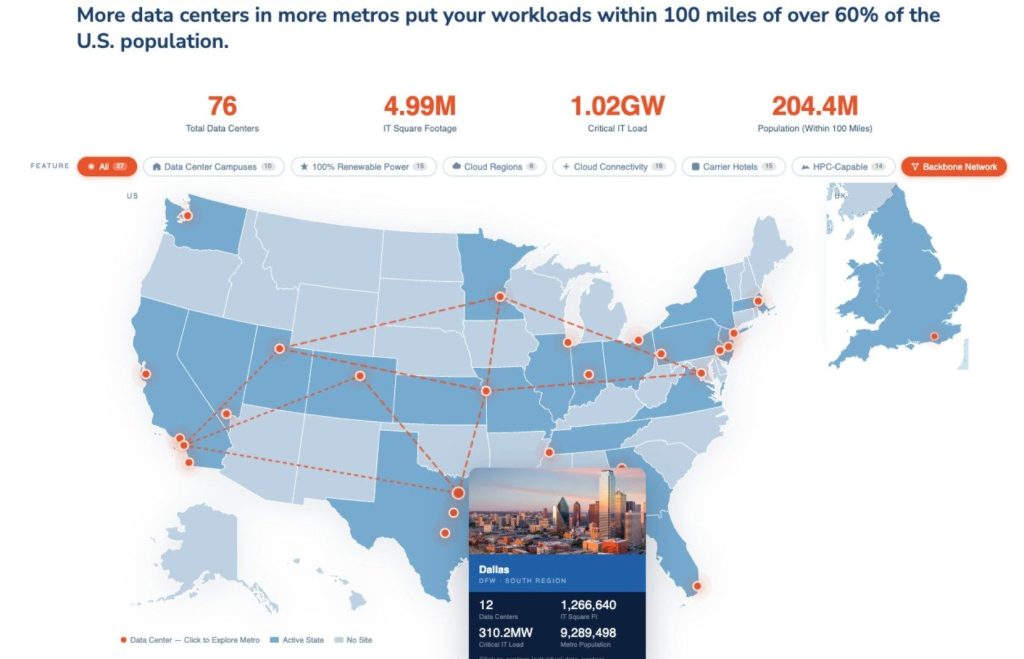
Whether you’re exploring a new market or looking for a specific facility, our redesigned national map helps you move quickly from the big picture to local details.
From the homepage, you can see DataBank’s footprint and the backbone network connecting sites. Select a city to open an interactive Google Map showing every DataBank data center or campus in that metro, making it easier to see where facilities are located and identify options in your target market.
Explore DataBank’s footprint and backbone network, find facilities by city, view site details, get directions, and request quotes — all from the interactive homepage map.
The map makes it easy to:
Explore locations by zooming in and out
Visit individual data center pages
Get driving directions
Request a quote
These options are available directly from the homepage map, so you can explore a market and take the next step without searching through multiple sections of the website.
It’s a faster path from exploring locations to finding detailed facility information and connecting with DataBank about your next deployment.
New Homepage: Get to Know the Team Behind the Technology
Our redesigned homepage brings more of DataBank’s people into view. In response to feedback requesting more video, we’ve added footage and images of DataBank team members, giving you a closer look at the people behind our services.
You’ll see new video footage at the top of the homepage featuring DataBank team members. We also plan to introduce a “Meet a DataBanker” feature, highlighting different team members through photos and videos and giving you a closer look at the people and culture that shape your DataBank experience.
Interactive 3D Diagrams: Explore a Data Hall Design That Fits Your Needs
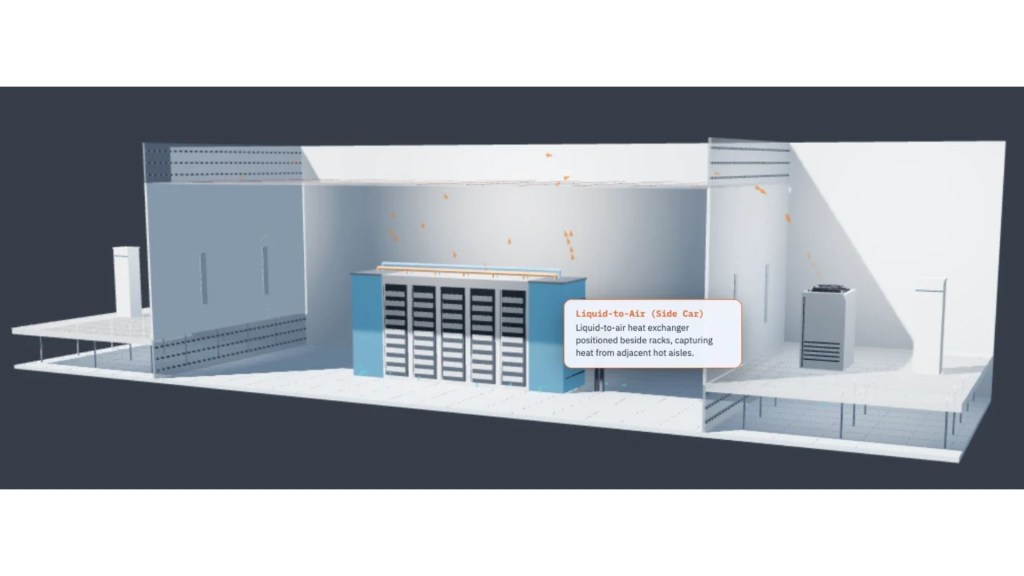
DataBank’s Universal Data Hall Design (UDHD) offers a flexible approach to configuring data center infrastructure around your requirements. Our redesigned homepage diagrams bring that flexibility to life with a 3D, interactive experience.
You can rotate the diagrams, zoom in for a closer look, and click through different configuration options to see how we power and cool even the most demanding workloads.
It’s a hands-on way to explore the possibilities and better understand how UDHD can support a data center build that works for you.
Data Center Evolved: Discover What Sets Your DataBank Experience Apart
Choosing a data center partner means looking beyond the facility itself. Our new Data Center Evolved section brings together eight factors that shape what you can expect from DataBank: our footprint, facilities, network, solutions, compliance, support, culture, and investors.
Accessible from the main menu and the rotating videos on the homepage, this section explores how we’ve evolved the data center experience around our customers’ needs. You can see all eight factors on a single page, making it easier to understand our approach and evaluate what matters most to your business.
Redesigned Metro and Data Center Pages: Get a Clearer View of Your Options
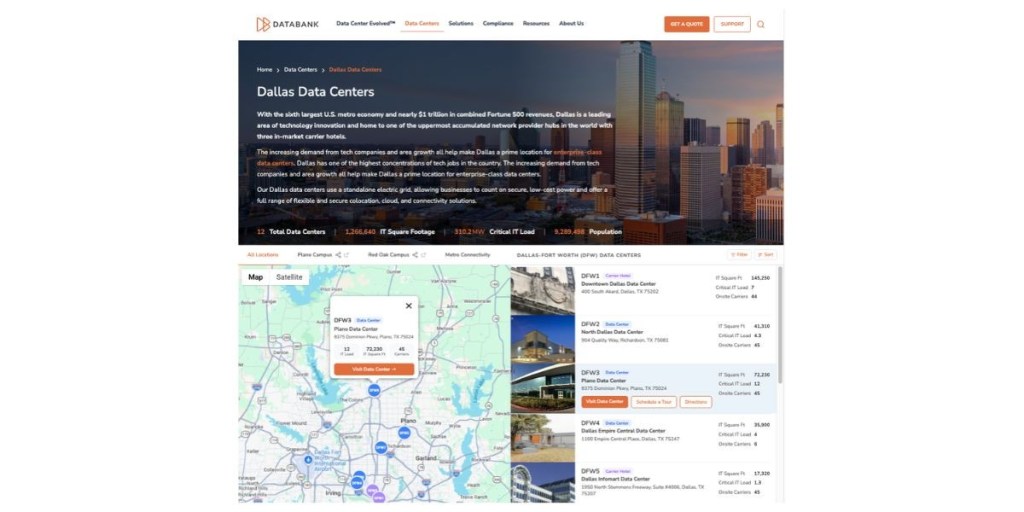
Within the Data Centers section, we’ve redesigned our metro and individual data center pages to make it easier to explore locations and find the information you need.
Each metro page now pairs an interactive Google Map on the left with a list of local data centers and their key specifications on the right. You can zoom in and out and click through to individual facilities, just as you can with the national map on the homepage.
Explore redesigned metro and data center pages with interactive maps, facility stats, photos, services, and certifications as well as convenient options for directions and tour requests.
Now you can select a data center listing to get driving directions, request a tour, or visit that facility’s dedicated page. There, you’ll find specifications, photos, videos, services, and compliance certifications together for an at-a-glance view of the location.
With locations and specifications together in one view, you can more easily compare facilities within a market and identify options that fit your requirements.
Updated Solutions Section: Find the Services and Tools You Need
Our redesigned Solutions section makes it easier to explore DataBank’s offerings and find information about the customer tools available to you.
An expanded portal subsection replaces the previous single Customer Portal page with dedicated pages for:
DataBank Customer Portal: Manage and monitor your DataBank infrastructure, submit support tickets, and access reports through a centralized portal to stay informed and in control of your services.
Platform DataBank Portal: Order and administer your cloud and bare metal services through a dedicated portal that brings infrastructure management and ordering together in one place.
DataBank Trust Center: Review compliance certifications, request security documentation, and explore DataBank’s security practices, policies, and controls to support compliance reviews and understand how we protect your data.
These pages help you understand what each portal offers and identify the right tool for the task at hand.
We’ve also grouped our Data Protection and Storage services into their own subsection, making it easier to explore options for protecting and storing your data.
Take a Look Around
We invite you to explore the new DataBank.com and hope you enjoy the updated experience. Whether you’re planning your next deployment or getting to know DataBank, we’re here to help you find what you need.